1031 Exchange Rules in Hawaii
Quick answer
Hawaii follows the federal 1031 rules, with the same 45-day identification and 180-day closing deadlines and the same qualified intermediary requirement. What is specific to the state is HARPTA, the Hawaii Real Property Tax Act withholding on sales by non-residents, which has to be addressed alongside the exchange.
Executing a successful 1031 exchange in Hawaii is a race against the rules, where one misstep can cost thousands of dollars in taxes. Some of these rules include strict IRS timelines, thorough documentation, and adherence to the Hawaii Real Property Tax Act (HARPTA).
In addition, you must work with a competent Qualified Intermediary (QI) who is saddled with the responsibility of handling the exchange funds and ensuring the transaction is compliant with state and federal regulations. That’s why you need a trustworthy QI well-versed in Hawaii’s legal requirements and its highly competitive market.
Universal Pacific 1031 Exchange is an experienced provider of Qualified Intermediary services in Hawaii. With 35+ years of professional experience, we’ve helped thousands of real estate investors defer capital gain taxes through successful 1031 exchanges. Contact us now to start an exchange.
This article explains how a 1031 exchange works in Hawaii. It also discusses the relevant 1031 exchange rules that Hawaii investors must observe and provides a step-by-step guide on how to navigate the exchange process.
How Does a 1031 Exchange Work in Hawaii?

A 1031 exchange in Hawaii allows real estate investors to defer capital gains taxes by reinvesting the proceeds from the sale of an investment or business-use property into another qualifying “like-kind” property. This process follows federal rules established under the Internal Revenue Code §1031, and like all U.S. 50 states, Hawaii fully conforms to these guidelines.
According to the Hawaii Revised Statutes (HRS §235‑2.3(a)), Hawaii adopts the federal tax treatment for 1031 exchanges through its state income tax laws. If your exchange meets the requirement under federal law, Hawaii generally allows the same deferral of state-level capital gains taxes. There are no additional restrictions or recapture rules specific to the location of the property.
However, Hawaii real estate transactions are subject to the HARPTA regulations, which could complicate the process. It’s important to work with professionals familiar with both IRS rules and Hawaii’s local real estate landscape to ensure a smooth and compliant exchange.
Types of 1031 Exchanges in Hawaii
You can execute any of the following types of 1031 tax-deferred exchanges in the State of Hawaii:
- Simultaneous Exchange: This occurs when the sale of your relinquished property and the purchase of your replacement property happen on the same day. It is rare in practice, especially in Hawaii, due to title issues, island-specific delays, and escrow complexities. However, it can be done if both closings are coordinated precisely. It requires an airtight execution and a competent Qualified Intermediary to prevent a taxable event.
- Delayed Exchange: This is the most common form of 1031 exchanges in Hawaii. It involves selling your investment property first and identifying a replacement property within 45 days using either the three-property rule, 200% rule, or 95% rule. In all, you must complete the entire exchange within a 180-day window. The delayed exchange structure gives you time to find the right property and is especially valuable in Hawaii’s competitive and unique market.
- Reverse Exchange: In a reverse exchange, you buy the replacement property before selling your existing one. This is ideal in fast-moving areas like Honolulu or Maui, where you don’t want to lose a valuable opportunity. However, you can’t own both properties at the same time. So, a separate holding entity called an Exchange Accommodation Titleholder (EAT) will temporarily hold the title to the new property until your original one sells. It’s more complex, often requires upfront capital, and must still meet the 45/180-day timeline.
- Improvement (Construction) Exchange: With this structure, you not only exchange into a new property but also use exchange proceeds to build or improve the replacement property before officially taking ownership. Improvement exchange is common in Hawaii when acquiring underdeveloped or underutilized land that needs upgrades. The catch, however, is that improvements must be completed, or at least the allocated funds spent, within the 180-day exchange period. Also, note that the property (including the intended improvements) must be identified upfront and stated in writing.
What Properties Qualify for a 1031 Exchange in Hawaii?
A wide variety of real estate can qualify for a Hawaii 1031 exchange, as long as they are business properties or held for investment use, not personal enjoyment. One of the most common types is vacation rental condos. These are especially popular in places like Waikiki, Maui, and Kona.
If they are rented out and not used as a second personal residence, then they qualify for an IRS-compliant 1031 exchange. Other properties include multi-family residential buildings, which consist of duplexes, triplexes, and small apartment buildings that generate rental income.
These types of rental properties are very common in Hawaii, where investors are continually seeking to increase income flow. Commercial properties are another solid choice. They include office buildings, retail storefronts, and mixed-use spaces, and are mostly located in urban places like Honolulu.
Vacant lands and agricultural parcels are commonly exchanged, especially in regions like Kauai, the Garden Island, where large tracts are used for farming or long-term investment. Although they’re more complex, Leasehold properties can qualify for a Hawaii 1031 exchange if it’s properly structured.
The number one rule is that the new property owner or lessor must have up to 30 years on the lease. Other kinds of qualified properties include hotels and industrial warehouses used for storage, shipping, or light manufacturing. Lastly, certain timeshares may qualify, but only if there is deeded ownership and the asset is legally classified as real property.
Benefits of a 1031 Exchange for Hawaii Real Estate Investors

The benefits of 1031 exchanges for Hawaii real estate investors go far beyond simple tax deferral. By postponing capital gains taxes, investors retain more equity to reinvest, an especially valuable advantage in Hawaii’s high-cost, high-demand market.
Rather than losing a large chunk of profit to taxes, investors can trade into higher-value assets, diversify across property types, or consolidate holdings, all without triggering an immediate tax event. It also offers strategic flexibility in a geographically unique and competitive market.
Investors can relocate their capital from one island to another, shift from short-term vacation rentals to long-term residential or commercial properties, or even move their investments to more stable or profitable markets outside Hawaii. This ability to adapt while preserving equity makes the 1031 exchange not just a tax deferral tool but a key strategy for long-term wealth building.
1031 Exchange Rules for Hawaii Investors
Navigating a Hawaii 1031 exchange requires more than knowing local property values or island-specific nuances. It demands strict adherence to the federal tax code that governs every exchange. These are the rules for performing tax-deferred exchanges in Hawaii.
Like-Kind Property Rule
Under IRS rules, like-kind means that the relinquished and replacement properties involved must be of the same nature or character, even if they differ in quality or type. That means they must be real estate properties and not any other type of assets like cars, jewelry, or gadgets.
Most importantly, they must be held for investment or business purposes. In Hawaii, this could mean exchanging a short-term rental condo in Waikiki for a long-term agricultural parcel on the Big Island or swapping a Maui duplex for a commercial building in Hilo.
The flexibility of the like-kind definition gives Hawaii investors the freedom to move capital between islands and across property types while still qualifying for tax deferral. Note that the exchanged property must not be your primary residence unless you converted it to a rental property two years before the transaction.
Same Taxpayer Rule
This is a requirement under the IRS guidelines, which states that an individual who sells an investment property must be the same individual who buys the replacement property. This is because the IRS seeks to ensure that the taxpayer who defers capital gains taxes through a 1031 exchange is the same one who maintains the tax liability throughout the exchange.
This means the relinquished and replacement property’s title must bear the same name. However, there is an exception for single-member LLCs (disregarded entities), where the IRS considers the owner and the company as a single entity.
In this case, the limited liability company may sell the relinquished property, and the owner may buy the new investment property, without breaking any rules. and vice versa. If it’s a multi-member LLC, the same title must be on both properties.
Qualified Intermediary (QI) Requirement
The IRS requires all 1031 exchanges to be facilitated by a Qualified Intermediary (QI), without which the transaction will be disqualified. A QI is an independent third party who will prepare the necessary documentation and also handle the proceeds from the sale of the relinquished property.
You’re not allowed to touch the money from the sale. Doing so will be considered a constructive receipt of payment. In addition to preventing you from making this mistake, the QI will guide you through other rules to ensure the process complies with the IRS rules.
In Hawaii, it is especially beneficial to work with a QI who understands local markets, leasehold structures, and island-specific real estate practices. Although you will pay a fair Qualified Intermediary fee for their services, the cost is insignificant compared to the potential tax savings and legal protection they provide.
Timeline Rules
When executing a 1031 exchange in Hawaii, it is important to keep the IRS’s strict timelines. Once the relinquished property is sold, you have 45 calendar days to identify your preferred replacement properties and 180 calendar days to complete the purchase of one or more of them.
The IRS offers three different identification rules, depending on the number of properties you want to buy and the flexibility you desire. They are as follows:
- The 200% rule: This rule allows you to identify two or more properties provided that their total fair market value (FMV) does not exceed 200% of the relinquished property’s value.
- The three-property rule: You can use this identification rule to identify up to three properties without being bound to buy all of them. So you can decide to eventually buy one replacement property after identifying three.
- The 95% rule: With this option, you can identify multiple properties irrespective of their market values. However, you must buy 95% of the identified properties.
Irrespective of the option you choose, you must submit the list of identified properties to your Qualified Intermediary within 45 days. Otherwise, the exchange will be disqualified.
Equal or Greater Value Requirement
To fully defer capital gains taxes, the replacement property must be of equal or greater value than the relinquished property. You must also reinvest all proceeds from the sold property into the new one. If it had a mortgage or debt, you must take on equal or greater debt to finance the exchange.
Falling short, even slightly, can result in taxable “boot”. This rule hits hard in Hawaii’s high-value market, where replacing a relinquished property can mean stretching into more expensive areas or taking on additional financing. Endeavor to consult your QI and do careful calculations to avoid triggering unexpected tax liabilities.
Hawaii-Specific Considerations
Executing a 1031 exchange in Hawaii means navigating both federal tax law and unique state-level rules that can impact timing, structure, and tax treatment. A proper understanding of the local nuances will make the process smoother.
State-Level Conformity With IRS Code
As earlier stated, Hawaii generally aligns with federal 1031 exchange rules. This simply means that carrying out a 1031 exchange in Hawaii follows exactly the same procedures as every other U.S. state.
This includes the IRS 45-day and 180-day timelines, the presence of a Qualified Intermediary, like-kind requirements, and the same taxpayer rule as explained above. This conformity makes the process easier but doesn’t excuse the need to carefully plan and prepare for the exchange.
Use of Hawaii Property in Exchanges
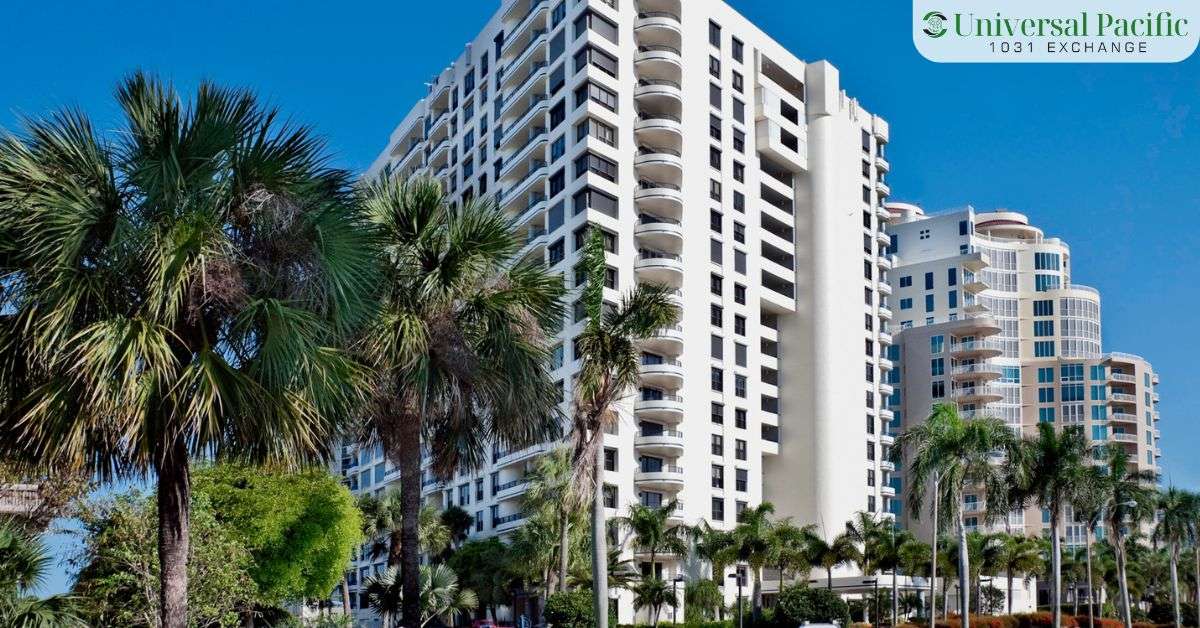
Both inbound and outbound exchanges involving Hawaii properties are allowed. You can sell a property in Hawaii and buy in another state or vice versa, as long as both properties meet the like-kind investment requirement. However, non-resident investors exchanging out of Hawaii must consider the HARPTA regulations as explained below.
Withholding Requirements
When you sell real estate in Hawaii, the buyer is required to withhold 7.25% of their negotiated purchase price and remit it to the state. This is in accordance with the Hawaii Real Property Tax Act, commonly known as HARPTA.
The main purpose of this rule is to ensure nonresident sellers comply with Hawaii’s income tax laws. Even if the seller is a Hawaii resident, withholding still applies unless the seller provides the buyer with a completed Form N-289, which certifies exemption from withholding.
If that form is not given, the buyer must withhold, regardless of whether they know the seller’s residency status. And if the buyer receives a false or misleading N-289, they are still obligated to withhold.
Fortunately, sellers can apply for an exemption or a refund of the withheld amount if the transaction qualifies for full tax deferral under 1031 rules. To request an exemption, complete and submit a copy of Form N-288B to the Hawaii Department of Taxation ten working days before the date of transfer.
It is crucial to plan early and work with knowledgeable advisors to manage HARPTA withholding properly and avoid delays or unexpected costs at closing.
How to Do a 1031 Exchange in Hawaii?
Successfully completing a 1031 exchange in Hawaii can feel overwhelming for many investors, especially when considering federal tax rules, tight deadlines, and state-specific requirements. To help simplify the entire process, here’s a step-by-step breakdown of how to navigate the exchange from start to finish.
1. Consult With a 1031 Exchange Expert
Before initiating a tax-deferred exchange in Hawaii or anywhere else, it is important to consult with a 1031 exchange expert before taking any other step. This could include a tax advisor, Certified Public Accountant (CPA), or QI who understands Hawaii’s legal requirements as well as its real estate landscape. Having a proper knowledge of these can help pave the way for a 1031 exchange consultation.
2. Engage a Qualified Intermediary
As previously discussed, a 1031 exchange cannot be considered valid without a QI. They are responsible for facilitating the exchange and ensuring that you adhere promptly to the IRS guidelines and rules.
A QI must also hold your sale proceeds in a segregated escrow account until you’re ready to buy the replacement property. Hence, you need to find a trustworthy Qualified Intermediary familiar with Hawaii real estate to reduce the risks of fraud.
3. List and Sell Your Investment Property
Once you’ve engaged a QI, you can then go ahead to list your investment property for sale. Clearly state in your sales contract that you intend to pursue a 1031 exchange. This sets expectations early and helps avoid legal or timing issues down the line. Once a buyer who meets your target comes along, you can then sell the property.
4. Work With Hawaii Escrow/Title Companies
When performing a 1031 exchange in Hawaii, it is essential to work with title and escrow companies experienced in Hawaii-based 1031 transactions. They are well-versed in handling the necessary paperwork, coordinating with your QI, and navigating the state-specific requirements that could affect your closing timeline.
5. Identify Replacement Property Within 45 Days
Once you sell the investment property, you have 45 days to identify potential replacement properties. The list must be submitted in writing to the QI for proper documentation. Include the dates they were identified alongside their locations and fair market value.
6. Complete the Purchase Within 180 Days
You are required to wrap up everything about the exchange within 180 days of selling your original property. Failure to meet this deadline could lead to the disqualification of the entire exchange, opening you up to taxable events.
7. File IRS Form 8824 With Your Tax Return
Finally, report the exchange by filing IRS Form 8824 with your federal tax return for the year the sale occurred. Your QI should help ensure the necessary information is documented accurately.
Tips for a Successful 1031 Exchange in Hawaii

Navigating a 1031 exchange in Hawaii requires more than just understanding federal tax law. It demands local insight, strategic timing, and strict attention to detail. One of the things you can do is to start planning early.
Hawaii’s real estate market is competitive, and inventory is often limited, which can create delays that put your exchange at risk. Before selling, consult with a Hawaii-based Qualified Intermediary (QI), real estate agent, and tax advisor who understands both state and federal nuances.
Working with professionals who are familiar with leasehold structures, title issues, and local escrow customs can help you avoid costly missteps. As discussed earlier, mark your 45-day identification window and 180-day closing deadline on your calendar, and stick to them without exception.
It’s wise to identify multiple potential replacement properties, just in case your first choice falls through. Also, ensure you’re only exchanging investment or income-producing properties. Personal-use real estate like vacation homes won’t qualify unless they meet strict IRS rental-use rules.
Finally, it is important to keep proper documentation during the exchange process. Every mail and form can save you time, money, and headaches if the IRS ever comes calling. A well-documented, locally informed approach is your best strategy for a smooth and successful exchange in the Aloha state.
Need Assistance From a Qualified Intermediary?
Executing a successful 1031 exchange in Hawaii doesn’t have to be complicated or stressful. With the right guidance, clear timelines, and local expertise, you can smoothly defer capital gains taxes and grow your investment portfolio. Partnering with a knowledgeable QI ensures your exchange meets all IRS requirements while navigating Hawaii’s specific real estate nuances.
Universal Pacific 1031 Exchange is an experienced Qualified Intermediary that helps investors support their investment goals while remaining aligned with applicable federal and state requirements. We bring deep local knowledge and 35+ years of proven experience to every exchange we facilitate. Contact us to start a 1031 exchange consultation today.
FAQs
Can I Exchange a Hawaii Vacation Rental for a Mainland Commercial Property?
Yes, you can exchange a Hawaii vacation property for a mainland commercial property through a 1031 exchange, as long as both properties qualify as like-kind, meaning they are held for investment or business use.
What Disqualifies a Property From Being Used in a 1031 Exchange in Hawaii?
A property in Hawaii can be disqualified from a 1031 exchange if it’s primarily for personal use, held for quick resale rather than investment, or if it’s a leasehold with a short remaining term. Timeshares without deeded ownership and properties not clearly held for business or investment purposes also don’t qualify.
What Is Meant by ‘Boot’ and Its Tax Implications in a 1031 Exchange?
In a 1031 exchange, “boot’ refers to any cash or non-like-kind property you receive as part of the transaction. It is essentially the “leftover” value that isn’t exchanged for a like-kind property. Boots are taxable, which means that even if you do a 1031 exchange, getting a boot can trigger a tax bill on that amount. Minimizing or avoiding boot is key to maximizing the tax-deferral benefits of a 1031 exchange.
This page was reviewed by Michael Bergman, CPA, California CPA #56113. Verify license.
Disclaimer: This article is for informational purposes only and is not legal, tax, or financial advice. Tax laws change and every situation is different. Please consult a qualified attorney, CPA, or tax advisor before making decisions about your property, sale, or 1031 exchange.
Editorial Policy
All articles are reviewed for accuracy by licensed tax professionals and sourced from official government publications. Read our Editorial Policy →
About The Author
 Michael Bergman is a California licensed CPA and Real Estate Broker with over 35+ years of CPA-supervised 1031 exchange experience in commercial real estate. Specializing in 1031 tax-deferred exchanges and financial oversight, his expertise covers complex real estate transactions. Michael’s unique blend of financial acumen and real estate knowledge positions him as a trusted advisor in the industry, offering sound advice and strategic insights for successful property management and investment.