

Qualified Intermediary for 1031 Exchanges in Oklahoma City
Searching for an experienced qualified 1031 exchange intermediary in Oklahoma City? We take custody of your sale proceeds and draft the paperwork for tax-deferred trades of Oklahoma business and investment real estate. Our office is 1180 S. Beverly Drive, Suite 500, Los Angeles. Nobody from our firm works out of Oklahoma City; sales there are run by phone and wire alongside your title officer. Selling the building your own business occupies? Start with premises versus business exit, below.
Reviewed by Michael Bergman, CPA
Last updated 12 November 2026 · Sources for this page

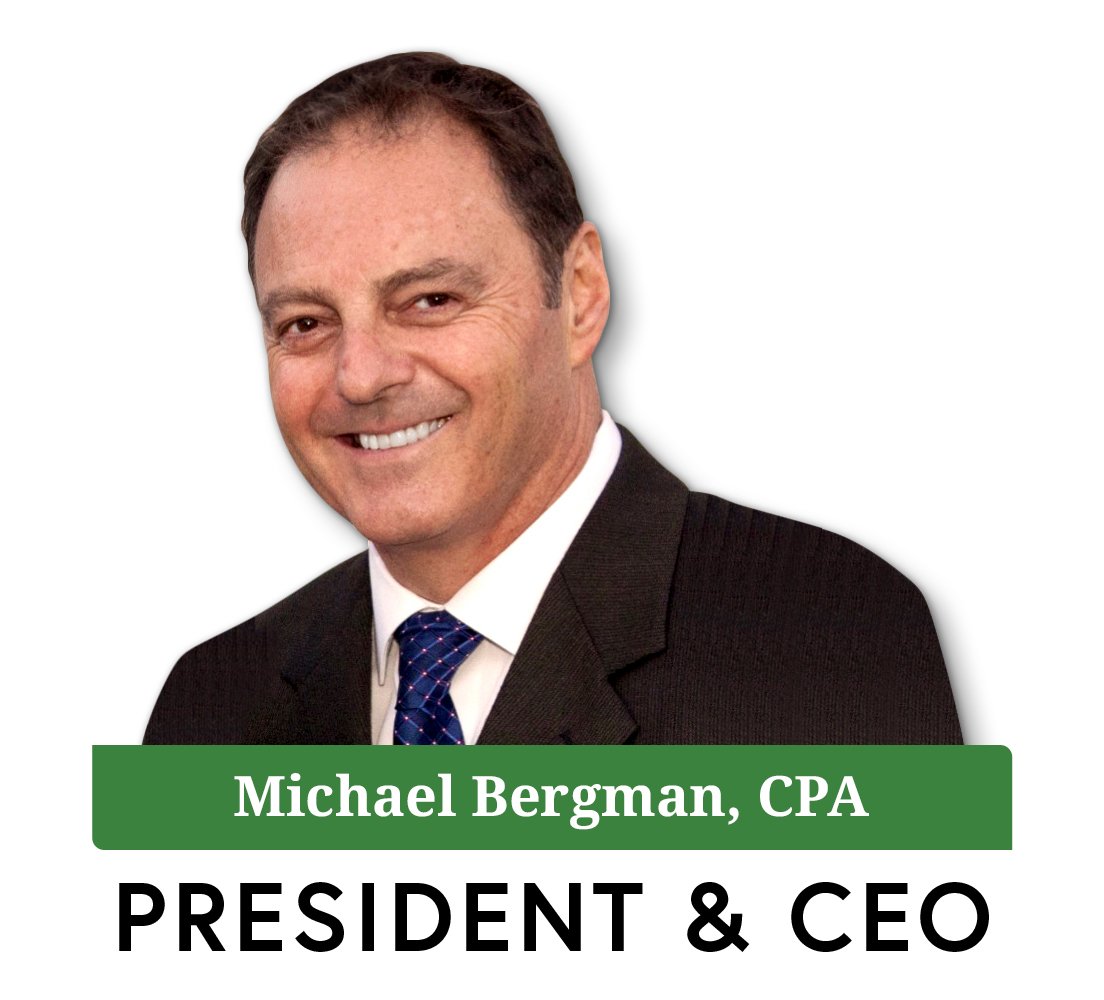
With a professional history managing transactions ranging in price from $100,000 to over $100M, our company combines genuine business acumen, real estate insight, and financial literacy.
Oklahoma City exchange numbers to know
| Item | Figure | Source |
|---|---|---|
| Employed residents who are self-employed | 10.42% (35,850 of 344,062) | Census ACS 2020-2024, B24080 |
| Same share: Oklahoma County / Oklahoma / U.S. | 10.62% / 10.56% / 9.95% | Census ACS 2020-2024, B24080 |
| Oklahoma deduction holding period, Oklahoma real property | Five uninterrupted years | Form 561-NR instructions; 68 O.S. §2358 |
| Holding period for a whole-business asset sale or an ownership interest | Two uninterrupted years | Form 561-NR instructions |
| Documentary stamp tax on a deed | $0.75 for each $500 of consideration or part of $500 | 68 O.S. §3201 |
| Deeds below the stamp threshold | Consideration of $100 or less, after remaining liens | 68 O.S. §3201(A) |
| Top individual income tax rate in the 2026 Oklahoma packet | 4.5% | Oklahoma Tax Commission |
Jump to a section
Oklahoma City 1031 Exchange Intermediary Services for Owners and Investors
Choosing the structure comes down to one question: which closing happens first, and how far apart are they? Our overview of the 1031 exchange process explains the general mechanics. Here we focus on what changes for Oklahoma City property, from business premises to rentals.
Four exchange formats we run for Oklahoma City clients:
Delayed Exchange for an Oklahoma City Sale That Closes First
In the format most sellers use, your Oklahoma City property closes, and the purchase follows within the exchange period. The naming window is 45 days and the buying window 180 (§1031(a)(3)). Read the IRS overview of like-kind exchanges for the federal background; we keep your proceeds and your calendar.
Simultaneous Exchange With Back-to-Back Closings
Sometimes the buyer of your building and the seller of your next one can close on the same afternoon. That leaves no time to fix a missing signature, so we deliver the exchange agreement and both assignments to each closer ahead of time.
Reverse Exchange When the Replacement Must Close First
Found the right building before yours has a buyer? A reverse exchange handles that order. A separate accommodation company owns the parked property in the meantime. The IRS safe harbor for this, Rev. Proc. 2000-37, allows 45 days after the parking to designate which property you will sell and a 180-day limit overall. We explain the reverse exchange structure before any contract is signed.

Improvement Exchange for Build-Out on the Replacement
An owner-operator often needs a new space finished before moving in. Here, exchange dollars pay the contractor while a third party still owns the space, and any construction finished after the deed reaches you is treated as services rather than property. Whether the finished space earns more is a business question; the exchange only shapes the tax result.
What You Get From Universal Pacific on an Oklahoma City Exchange
Plain Updates at Each Step
Acting as your 1031 exchange facilitator, we keep you posted from the day proceeds arrive to the day the purchase closes. Internal procedures are in place to protect the money from fraud and theft.
Documents Fitted to Your Deal
An owner selling a clinic building to a tenant needs different paperwork from an investor trading a duplex. We draft around the facts you bring and flag the decisions that belong to your CPA, attorney or lender.
Funds Held in an Exchange Trust, With E&O Coverage
Deposits sit in an Exchange Trust, not in the firm's own accounts. Errors & Omissions (E&O) insurance is carried as well. Ask to see the account arrangement and the policy summary in writing.
Service Measured by Closed Exchanges
We count a job as done when your exchange closes inside its deadlines and you know why each document was signed.
Thinking about an exchange for an Oklahoma City sale? Talk to us before the listing goes live, while every structure is still open to you.

Schedule a free, no-obligation 1031 exchange consultation. Send the draft contract or letter of intent, the deed showing who owns the property, and, if a business sale is part of the deal, the term sheet for that sale. We will point out which pieces belong in the exchange and which do not.
Start an ExchangeOklahoma City 1031 Exchange Steps, Contract to Closing

Your buyer and you sign the sale contract for the Oklahoma City property.
No later than closing, we are hired in writing as your Qualified Intermediary. Your buyer is then told, in writing, that the seller's side of the deal has passed to us.

The buyer's payment comes to us, never to you, and your deed to the buyer is delivered on our instruction.
Inside 45 days, the signed identification notice must reach our office.

Agreed terms on a replacement? That contract is assigned to us too.

We release the purchase price from the trust account, and the deed into your name is recorded at that closing.

Purchases must close by day 180. An earlier return deadline, extensions counted, ends the window sooner.

That year's federal return carries Form 8824. Oklahoma's return then starts from federal income.
Our role stops at the exchange: agreement, assignments, identification and funds. Deeds, documentary stamps and title insurance belong to the title company, and price allocation between building and business belongs to you and your CPA.
Separate an Oklahoma City Premises Exchange From the Business Exit
About one in ten employed Oklahoma City residents works for themselves: 35,850 of 344,062, or 10.42%, counting incorporated and unincorporated businesses. That is in line with Oklahoma County (10.62%) and the state (10.56%) and a little above the U.S. (9.95%). The figure counts people, not buildings, but it describes a familiar seller: an owner whose company operates out of a building the owner also holds. When that owner retires or sells the company, the real estate and the business are usually sold at the same moment, often to the same buyer. Only the real estate can be exchanged.
Name the Owner of Record Before Anything Else
Pull the current deed first. The building may be in your own name, in a real estate LLC, or in the operating company itself, and whoever holds title is the party that transfers the relinquished property. The exchange agreement should be signed by that party, and the replacement is normally titled the same way. Retitling the building just before or after the exchange can change who the taxpayer is, so let your CPA approve any change first.
Treat the Building Sale and the Company Sale as Two Transactions
A buyer of your business may offer one price for everything. For exchange purposes that price has to be divided, because only the real property portion can be reinvested tax-deferred. Interests in a partnership, stock and similar ownership rights are outside section 1031 entirely, so selling your LLC instead of the building does not create an exchange. A separate purchase agreement for the building, or at least a clear allocation schedule, keeps the deed side and the business side from being blurred.
Sort Fixtures, Equipment and Goodwill Before the Price Is Allocated
Treas. Reg. §1.1031(a)-3 reaches past land and walls to structural components built into the building, for example:
- wiring and plumbing systems
- central heating and air conditioning, with pipes and ducts
- elevators, floors and ceilings
- tenant improvements that are inherently permanent
Inventory, customer lists, trade names and most operating equipment are not. Walk the building with your CPA and list each significant item under one heading or the other before the allocation is negotiated.
Two Parcels, Two Closing Dates, One Clock
Owner-operators often hold more than one parcel: the building and a separate parking lot, or a yard across the street. Closing the building on one date and the lot on another does not give each its own clock; the regulation starts both deadlines at the earliest transfer (Treas. Reg. §1.1031(k)-1(b)(2)(iii)). A lot that closes three weeks after the building leaves you three fewer weeks to identify, so plan the order of closings with that in mind.
Mortgage Payoff on the Premises
A commercial loan paid off from the sale counts toward what you received. To keep that payoff from becoming taxable, the replacement needs new financing at least as large, extra cash from you at the purchase, or a mix of both (Treas. Reg. §1.1031(d)-2). Borrowing more does not cure cash you took out of the exchange, so decide early whether you need any money back.
When Your Business Moves Into the Replacement
Moving your company into the new building does not spoil the exchange: the regulation lets business-use property and investment property be traded for each other (Treas. Reg. §1.1031(a)-1(a)(1)). Many owners buy the new space in a holding entity and lease it to the operating company. If the seller of the replacement is a relative or an entity you control, special rules apply; see the related-party question below before signing.
Confirm Which County Records the Deed
Oklahoma City's limits are not the same as Oklahoma County's, so do not assume the county from the mailing address. Ask the title company to confirm the county of record for both the relinquished and the replacement parcels, since that is where the deed, any mortgage release and the documentary stamp payment are recorded.
Documents to gather before you sign a letter of intent
- The vesting deed, to confirm which person or entity owns the building.
- Any lease between your real estate entity and your operating company.
- A list of fixtures and equipment, marked building or business.
- Payoff statements for every loan secured by the property.
- The closing statement from your original purchase, which fixes the acquisition date for Oklahoma's holding-period test.
- Your depreciation schedule for the building and its improvements.
- The term sheet for the business sale, if there is one.
Realty file and business file
| Item | Exchange (realty) file | Business-sale file |
|---|---|---|
| Contract | Purchase agreement for land and building | Asset or equity purchase agreement |
| Who signs | The entity on the deed | The operating company or its owners |
| What transfers | Deed to the real property | Equipment, inventory, goodwill, contracts, licenses |
| Money | Wired to the qualified intermediary | Paid to the seller under the business agreement |
| Tax reporting | Form 8824 for the exchange | Reported as a taxable sale |
| Advisers | Title company, intermediary, CPA | Business attorney, CPA |
Oklahoma's Capital Gain Deduction Next to Federal Deferral
Oklahoma lets individuals deduct certain capital gains from Oklahoma property and businesses (68 O.S. §2358; Oklahoma Tax Commission Rule 710:50-15-48). Residents claim it on Form 561 and part-year residents and nonresidents on Form 561-NR. The deduction and a 1031 exchange can both apply to the same sale, but they do different jobs.
Gain That Can Qualify for the Oklahoma Deduction
According to the 2025 Form 561-NR instructions, the gain must receive capital gain treatment, be included in federal adjusted gross income, and come from one of these sales:
- Real or tangible personal property located in Oklahoma and owned for at least five uninterrupted years before the sale.
- Stock or an ownership interest in an Oklahoma company, LLC or partnership owned for at least two uninterrupted years.
- Real, tangible or intangible property in Oklahoma sold as part of selling all or substantially all of the assets of an Oklahoma business, where the property was owned for at least two uninterrupted years.
Deferred Gain Leaves Nothing to Deduct
Only gain inside federal AGI can be deducted. With every dollar reinvested, the deduction has no current-year gain to act on. It comes into play when boot makes some gain taxable now, or on a future cash sale of the replacement. The form is silent on how a replacement's ownership period is measured after an exchange, so get your CPA's view before you rely on it.
The Five-Year Clock Is Oklahoma's, Not the IRS's
Section 1031 does not set a minimum number of years. What the IRS asks instead is how you held it: for business or investment use. The five-year and two-year periods above are conditions for the Oklahoma deduction only, so a building held four years can still be exchanged, and a building held ten years does not need to be exchanged to qualify for the state break.
A Partial Exchange for an Owner-Operator, in Numbers
Illustration only, with closing costs, depreciation recapture and remaining liens left out.
| Item | Amount | Working |
|---|---|---|
| Sale price of the building | $900,000 | Owned 7 years, all in Oklahoma |
| Adjusted basis | $400,000 | After depreciation |
| Gain realized | $500,000 | $900,000 − $400,000 |
| Replacement building | $840,000 | Closed within the exchange period |
| Cash kept by the seller | $60,000 | Boot |
| Gain recognized | $60,000 | Lesser of boot and gain realized (§1031(b)) |
| Gain deferred | $440,000 | $500,000 − $60,000 |
| Basis of the replacement | $400,000 | $400,000 − $60,000 + $60,000 (§1031(d)) |
| Documentary stamps on the sale deed | $1,350 | $900,000 ÷ $500 = 1,800 × $0.75 |
If the $60,000 counts as net capital gain and the five-year test is met, the Oklahoma deduction could remove up to that $60,000 from Oklahoma income, worth as much as $2,700 at the 4.5% top rate. The deferred $440,000 stays in the replacement's basis and is not deducted now. Depreciation on a business building usually changes the character of part of the gain, which is why your CPA runs the real numbers.
Documentary Stamps on an Oklahoma City Deed
Oklahoma taxes the deed, not the exchange. Under 68 O.S. §3201, a deed conveying realty that was sold is taxed at 75 cents for each $500 of consideration or fractional part, once the consideration, not counting liens that remain on the property, is more than $100. The statute's definition of consideration includes assumed debt, so a buyer who takes over your loan does not lower the base by doing so. On a $500,000 taxable consideration, the tax is $500,000 ÷ $500 × $0.75 = $750.
Section 3202 lists 15 exemptions, such as deeds that only secure debt, corrective deeds and certain entity mergers, and none of them is for a deed that is part of a 1031 exchange. If the replacement is also in Oklahoma, its deed carries stamps as well; your contract decides which side pays, so check it with the title company.
These are Census figures for the city of Oklahoma City from the 2020-2024 American Community Survey, next to the U.S. figure.
Source: U.S. Census Bureau, American Community Survey 2020-2024 5-year estimates. The rent-to-value figure compares median rent with median home value; it is not a property yield. See the table for all 51 cities.
Oklahoma City Exchange Questions
Not in every case, but for a typical Oklahoma City sale it is the dependable route, and cash buyers are the reason. With no property coming back to you, the qualified-intermediary safe harbor in Treas. Reg. §1.1031(k)-1(g)(4) is the usual way to keep you away from the money; qualified escrow and trust arrangements are the alternatives the rule lists. The point is that you never control the sale money. We are the account your buyer pays, and the money comes out only for a replacement on your list.
Your title officer, CPA and attorney all see intermediaries at work and can give you names; a provider does not have to be in Oklahoma City to serve your sale. Compare candidates on substance: their credentials, years in business and client references; where and how exchange money is kept; the bond and E&O insurance behind it; and the full written fee, including who earns interest on the funds.
No to all three, in most cases. The rule shuts you out, and it reaches back 24 months before the first transfer to anyone who represented you. Treas. Reg. §1.1031(k)-1(k) singles out these roles:
- an employee of yours
- your lawyer or CPA
- an investment banker or broker working for you
- a real estate broker or agent who represented you
People and companies related to you, using a 10% ownership test, are barred too. A bank, title insurer or escrow firm that only gave you everyday services is not barred by that, and an adviser who only ever helped on your exchanges is fine too.
It depends on the format. Buying first or building out costs more, because a separate titleholder company and extra documents are needed. Once we know the format, you get a written fixed-fee quote to review before signing anything. Our fee guide explains what is normally included.
For the deduction, an Oklahoma company, LLC, partnership or proprietorship is one whose primary headquarters has been in Oklahoma for at least three uninterrupted years before the sale (Form 561-NR instructions). That test matters for the two-year paths, a sale of ownership interests or of substantially all of a business's assets.
No. Gain passed through from a partnership, S corporation or similar entity qualifies only if you were a member for the full two or five uninterrupted years and the entity also held the asset that long. The entity must give you supplemental information identifying the qualifying gain.
If the entity has elected under Oklahoma's Pass-Through Entity Tax Equity Act of 2019, the gain covered by that election is not entered on your Form 561 or 561-NR. It goes on the entity's own deduction form, Form 561-PTE.
It can. Gain from an installment sale that is included in your federal adjusted gross income for the current year qualifies if the holding period was met on the date of sale, and you compute it from that year's taxable portion on Federal Form 6252.
Yes. A carryover of capital loss from qualifying property is subtracted from the current year's qualifying gains before the deduction is figured (line 7 of Form 561-NR).
Enter the date you actually acquired the property. Oklahoma needs the true date to run its holding-period test.
Yes. Form 561-NR takes the smaller of your qualifying Oklahoma net capital gain and your net capital gain included in federal adjusted gross income, meaning net long-term gains in excess of net short-term losses. A nonresident is also limited to the part sourced to Oklahoma.
Yes, on Form 561-NR with Form 511-NR. The form has a federal column and an Oklahoma column, and the Oklahoma column counts only the gain sourced to Oklahoma on Schedule 511-NR-1. Full-year residents use Form 561 instead.
No. Treas. Reg. §1.1031(a)-3(a)(5) says a license or permit to engage in or operate a business on real property is not real property, whatever state law calls it. A license that is only a right to use or occupy land, more like a lease or easement, can be different. Price any operating license on the business side of the deal.
When the deed is executed and delivered to the buyer, no matter when the sale itself was agreed (68 O.S. §3201(B)). A contract signed in one year with a deed delivered the next is taxed at delivery.
Any fraction counts as a full $500. On $612,300 of taxable consideration, 612,300 ÷ 500 = 1,224.6, which rounds up to 1,225 units, and 1,225 × $0.75 = $918.75. Confirm the taxable base with your title company first, because remaining liens are excluded and assumed debt is included.
That deed can be exempt. Section 3202 exempts a transfer to a partnership, LLC or corporation whose only owners are the transferor and close relatives, within the second degree. If any interest in the entity passes to someone outside that group within one year, though, the seller must pay the tax that was excused. Moving title also affects who the exchange taxpayer is, so clear it with your CPA first.
Only with care. Section 1031(f) puts a two-year watch on swaps between related persons: a disposal by either side during that time generally makes the deferred gain taxable then. Form 8824's instructions define related parties broadly:
- a spouse, child or grandchild
- a parent, grandparent, brother or sister
- a related corporation, S corporation or partnership
- a related trust, estate or tax-exempt organization
They also require Form 8824 in each of the two following years. An exchange through an intermediary still counts as a related-party exchange.

Qualified Intermediary Experience for Oklahoma City 1031 Exchange Transactions
The people on your file combine property, finance and tax backgrounds. With a CPA overseeing each file, the exchange paperwork is written with your tax filing in mind. Your exchange is handled personally, by a team whose past deals run from $100,000 to over $100M. Buying the replacement outside Oklahoma? Our locations page links to the guide for each city we cover.
Start an ExchangeSources
Federal law and regulations
- 26 U.S.C. §103145/180 days, boot, basis, related persons
- Treas. Reg. §1.1031(k)-1Safe harbors, disqualified persons, exchange period
- Treas. Reg. §1.1031(a)-1Business-use and investment property
- Treas. Reg. §1.1031(a)-3Real property, structural components, operating licenses, excluded interests
IRS guidance
- Rev. Proc. 2000-37, 2000-40 I.R.B. 308Reverse exchange safe harbor
- Instructions for Form 8824IRS; related parties and reporting
- Like-Kind Exchanges: Real Estate Tax TipsIRS overview of the exchange rules and Form 8824 reporting
State law and tax
- 2025 Form 561-NR and instructionsOklahoma Tax Commission; 68 O.S. §2358; Rule 710:50-15-48
- 2026 Form 511 packetOklahoma Tax Commission; top individual income tax rate decreased to 4.5%
- 68 O.S. §3201Documentary stamp tax
- 68 O.S. §3202Exemptions
Data
- American Community Survey 2020-2024, 5-year estimatesU.S. Census Bureau summary file; tables B25077, B25064, B25003, B24080; Oklahoma City GEO_ID 1600000US4055000; Oklahoma County; Oklahoma; U.S.
1031 Exchange Blog

Set up your Oklahoma City 1031 exchange
Call Now For A Free Consultation · (424) 469-8111