

Qualified Intermediary for 1031 Exchanges in Phoenix
Universal Pacific is the qualified intermediary for investors who sell business or investment real estate in Phoenix, Scottsdale or elsewhere in Maricopa County and buy more. We take the assignment of your sale contract, receive the proceeds from the Arizona title or escrow company, hold them in an Exchange Trust and wire them to the closing of the property you buy, so the money never reaches you and the gain stays deferred. Reverse and improvement exchanges, in which an accommodator holds title for up to 180 days, are part of the same service.
From multifamily complexes in Scottsdale to commercial properties along the I-10 corridor, investors across the Valley use 1031 exchanges to reposition their portfolios tax-efficiently. A sale in Phoenix, Scottsdale or Sedona can only feed an exchange if the paperwork is signed before its escrow closes.
Reviewed by Michael Bergman, CPA
Last updated 18 November 2026 · Sources for this page


A Phoenix exchange has a short opening. It begins when your buyer signs and escrow opens at an Arizona title company, and it closes when the escrow officer pays out the sale money. The qualified intermediary has to be in place before that payout, because money paid to you before you own the replacement turns the sale into a taxable one (Treas. Reg. 1.1031(k)-1(f)). Michael Bergman, CPA, is the company's President and CEO.
With a professional history managing transactions ranging in price from $100,000 to over $100M, our company combines genuine business acumen, real estate insight, and financial literacy.
The 1031 Exchange Services We Run on Phoenix and Scottsdale Sales
Universal Pacific works as the qualified intermediary for owners in Phoenix, Scottsdale and the rest of Maricopa County who sell business or investment real estate and buy more. We sign an exchange agreement with you, take the assignment of your sale contract, receive the net proceeds from the Arizona title or escrow company at closing, and release them only toward the property you buy. Under that agreement you can't take the money, pledge it or borrow on it before the exchange is over. That restriction is what lets a qualified intermediary hold the funds without the IRS treating them as yours (Treas. Reg. 1.1031(k)-1(g)(4) and (g)(6)).
Your Arizona escrow officer and your qualified intermediary do different jobs
Arizona licenses escrow agents. Nobody may carry on the escrow business or act as an escrow agent in the state without a license unless an exemption applies (A.R.S. 6-813), and an escrow agent has to keep the money it holds apart from its own (A.R.S. 6-834). The statute defines an escrow as property handed to someone who passes it on when a stated event happens or fails to happen (A.R.S. 6-801). On a Phoenix sale that event is the closing. The escrow officer collects the buyer's money, pays off your loan and the closing costs, and records the deed, and in an ordinary sale the balance then goes to you. Arizona also shields escrow property from the escrow agent's own creditors (A.R.S. 6-834(C)). That protection is written for licensed escrow agents, which is one more reason to ask any qualified intermediary, in writing, how and where it will hold your money once escrow has paid it out.
The qualified intermediary takes over at that point. Your escrow instructions name Universal Pacific as the payee of the net proceeds, we hold them for up to 180 days, and we send them to the escrow for the replacement closing, which may be at another title company or in another state.
Delayed exchange through an Arizona title company
In the Phoenix metro area a delayed exchange runs on two fixed clocks. Counting from the closing of your sale, the list of candidates is due within 45 days and the last purchase within 180. Our team coordinates with Arizona title companies and escrow agents so your exchange funds stay in the exchange account and the IRS deadlines are tracked throughout the process. This is the structure for a seller whose buyer is ready before the next property has been found.
Reverse exchange with an accommodator on title
In Phoenix, the right replacement property may come up before your current property sells. In a reverse exchange you buy the new investment first, and an Exchange Accommodation Titleholder keeps it on title, for 180 days at most, while the Phoenix property you're giving up is sold.
Often called the accommodator, this titleholder takes either the deed itself or ownership of a single-member LLC whose name is on the deed. The written contract between you and the titleholder, called a qualified exchange accommodation agreement, has a five-business-day deadline counted from its purchase. By day 45 you identify the property you will sell, and by day 180 the arrangement must end, with no more than 180 days in total for the properties held this way (Rev. Proc. 2000-37, section 4.02). Because the titleholder buys before your sale has produced any cash, the purchase has to be financed, under the rules set out in the improvement section. Rev. Proc. 2004-51 shuts out one case: a replacement that was yours at some point during the 180 days before the titleholder acquired it.
Leases, options and management while the accommodator is on title
Section 4.02(1) of Rev. Proc. 2000-37 requires a titleholder that pays federal income tax and is neither you nor anyone disqualified. Within those limits the revenue procedure accepts arrangements that would look odd in an ordinary purchase. The titleholder may lease the property to you, and you may manage it, so a Phoenix rental bought first stays under your control while the old property is on the market (sections 4.03(4) and (5)). You and the titleholder may agree on puts and calls that fix the price at which the property moves to you, as long as they last no more than 185 days (section 4.03(6)). The arrangement can also run the other way round: instead of holding the property you are buying, the titleholder can take the one you are selling and keep it until a buyer appears, while you close on the replacement at once (section 4.02(5)(b)).
Improvement exchange on a Tempe, Mesa or Phoenix property
An improvement exchange allows you to direct exchange proceeds toward renovating or building on a replacement property in the Phoenix area. Whether you are upgrading a dated apartment complex in Tempe or developing raw land in Mesa, we track the construction schedule against the IRS deadlines, because only the work finished by the day the property is deeded to you counts toward your replacement. The federal and Arizona rules for this structure are set out in the improvement section further down.
Simultaneous exchange at a single Phoenix closing
With a simultaneous exchange, your relinquished property is sold and its replacement bought at closings held on a single day. This approach works well in Phoenix's competitive market when both parties are aligned on closing dates. We handle the documentation and fund transfers so that both closings stay inside the exchange.
Trading deeds directly with the other owner needs no qualified intermediary at all. When your buyer and your seller are different people, the sale money still has to travel from one escrow to the other without passing through your hands, and on a same-day closing that is a matter of hours rather than months.
Has your Phoenix buyer already opened escrow? Send us the escrow officer's name and the closing date, so the exchange agreement and the assignment are signed before any money moves, then start the exchange online.
Paperwork, Wires and Deadlines Behind Each 1031 Exchange in Phoenix
The qualified intermediary's paperwork follows the two closings. This is the order of a Phoenix file and who handles each step.
- You sign the purchase agreement with your buyer and send us the closing date and the escrow officer's contact details.
- Universal Pacific then takes over your side of the sale contract by assignment, under the exchange agreement we both sign before closing. Each party on that contract must get written word of the assignment before or at closing, since an assignment nobody was told about doesn't count (Treas. Reg. 1.1031(k)-1(g)(4)(v)).
- Once the buyer's deed is recorded, the escrow officer wires what remains after costs to Universal Pacific rather than to you.
- No later than midnight on day 45, you sign your list of possible replacements and deliver it to us.
- Once you agree terms with a seller or a builder, that purchase contract is assigned to the qualified intermediary as well, with written notice to the seller.
- The replacement purchase closes inside the exchange period described below.
- Our wire pays for the purchase at the replacement escrow; your name, not ours, goes on the seller's deed.
- The exchange is complete. From then on the deferred gain rides in the replacement's carried-over basis (26 U.S.C. 1031(d)), to be taxed only if that property is later sold without another exchange.
The day the count starts on an Arizona closing
Both periods start on the day you transfer the property you are selling, not on the day you signed the contract or opened escrow. If the buyer's loan pushes the Phoenix closing back two weeks, day 45 and day 180 move back with it. When an exchange includes more than one property you are selling and they close on different dates, both periods run from the earliest of those closings. The regulation ties the transfer to the date the property is disposed of for tax purposes (Treas. Reg. 1.1031(k)-1(b)(2)). Selling a Phoenix duplex in March and a Glendale house in May on one exchange therefore gives the Glendale proceeds a shorter window than their own closing date suggests.
A November sale and the April tax return
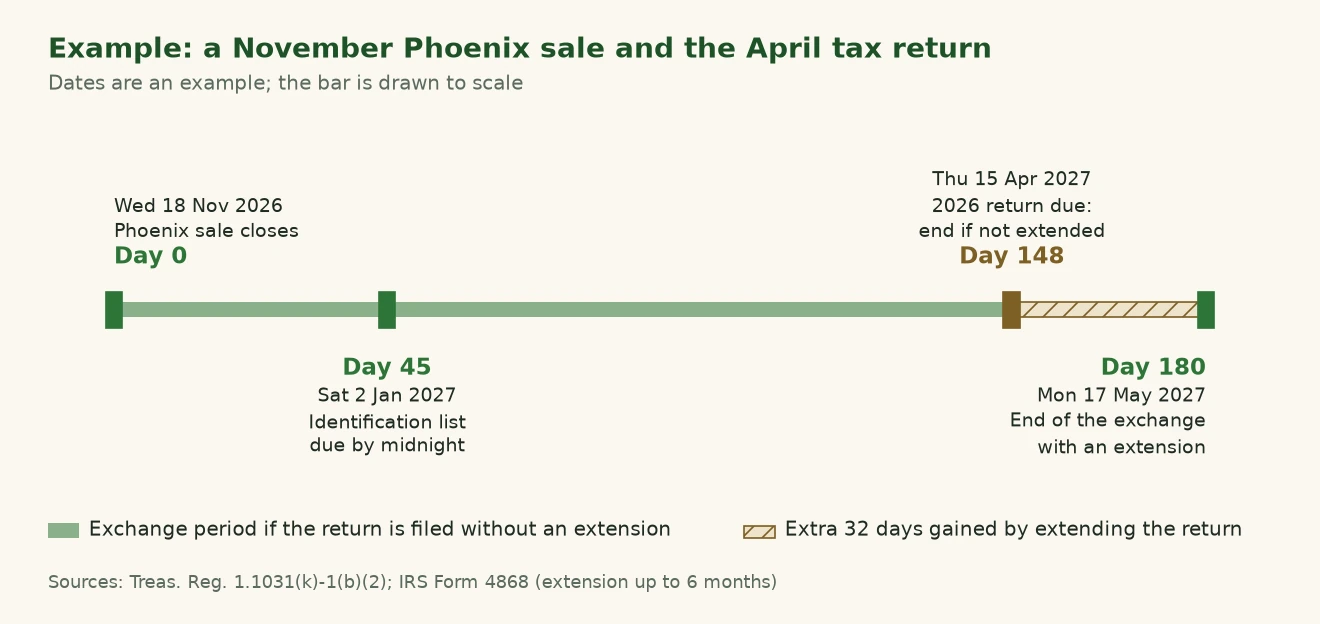
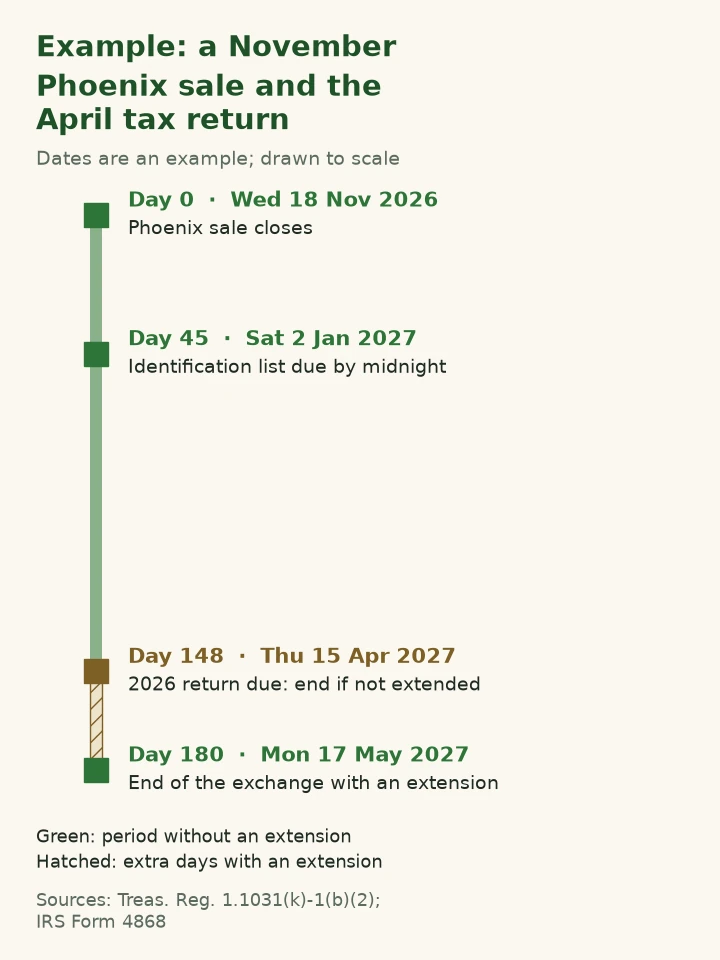
Day 180 is not always the last day: the regulation stops the exchange period early if your federal return for the sale year falls due first, extensions counted. For a Phoenix sale late in the year, the return can come first. Say your sale closes on Wednesday 18 November 2026. That sale's 45th day is Saturday 2 January 2027 and its 180th is Monday 17 May 2027. Individual returns for 2026 are due Thursday 15 April 2027, which is day 148. Without an extension, 15 April becomes your last day to close, 32 days before day 180 would have arrived. Form 4868 gives an automatic extension of up to six months (IRS, About Form 4868), and with it the full 180 days apply. If the replacement hasn't closed by early April, ask your CPA to file the extension.
If none of the listed Phoenix properties closes
After day 45, nothing that isn't on your list can finish the exchange. If one of them closes, the exchange goes ahead for what you bought. If none does, the money isn't simply released the next morning. Unless the exchange agreement provides in writing for a material and substantial contingency beyond your control, and that contingency happens, the funds stay with the qualified intermediary until the exchange period ends (Treas. Reg. 1.1031(k)-1(g)(6)(iii)), and the sale is then reported as a taxable one. Backup properties on the list are the protection against that outcome, which is why a list with a single property on it is a risk.
Whose name goes on the replacement deed
The owner who sells should be the owner who buys, and Arizona law shapes who that is. Arizona is a community property state: property either spouse acquires during the marriage is community property, apart from gifts and inheritances (A.R.S. 25-211). An Arizona deed can vest a married couple as community property with right of survivorship, but only when the deed says so in express words (A.R.S. 33-431). Give the escrow officer the vesting from your sale deed, and have your CPA confirm it before the replacement deed is drafted.
Couples who hold Phoenix rentals in an LLC owned only by the two of them have a choice to make first. For an entity owned by spouses as community property, the IRS accepts either treatment the couple picks: a disregarded entity, or a partnership that files partnership returns (Rev. Proc. 2002-69). That choice decides whether the couple or the LLC is the owner making the exchange, and a change in reporting position is treated as a conversion of the entity. Don't switch it partway through an exchange.
Transfer charges on a Phoenix deed
Arizona's constitution bars any new tax, fee or stamp on selling or transferring an interest in real property, keeping only charges that already existed on 31 December 2007 (Ariz. Const. art. IX, section 24). The recording and escrow charges that remain are listed on your settlement statement. For the affidavit of property value that Arizona requires with each deed, see our Mesa page.
The Phoenix 1031 Exchange Company Handling Your File, From Trust Account to Insurance
As your 1031 exchange company, we hold the qualified intermediary role, plus the accommodator role whenever an exchange needs a titleholder. We are not the title company, the lender, the broker or the builder. Four commitments describe how we hold Phoenix exchange money. Each one is also something you can ask any qualified intermediary to show you before you sign.
Where client money sits between the sale and the purchase
Client exchange money goes into an Exchange Trust and is never mixed with the money Universal Pacific runs the business on. Before closing, ask in writing for the account details: the name the account is opened in, the bank that holds it, and who signs the outgoing wires. The answer should be the same for every qualified intermediary you compare.
Errors and omissions insurance
Universal Pacific carries an Errors & Omissions (E&O) insurance policy on its operations. E&O insurance responds to mistakes in the work, which is a different risk from loss of the deposit itself. Ask any qualified intermediary to name each policy it carries and what each one covers, and compare the answers side by side.
Controls inside the company against fraud and theft
Universal Pacific's own procedures include internal controls meant to stop fraud or theft of client funds. The risk you can cut most on your own side is wire fraud during closing. Confirm any change to wire instructions by phone, at a number you already had, never by replying to the email that asked for the change.
A fiduciary duty that follows the money
We take our fiduciary duties seriously. In an exchange, the duty attaches to the funds: they leave the exchange account only for the purposes the exchange agreement allows, and the regulations limit when any unspent balance can come back to you (Treas. Reg. 1.1031(k)-1(g)(6)).
Documents to have ready when you call about a Phoenix sale
As qualified intermediary, we open a Phoenix file with five items: the signed purchase agreement, the escrow officer's name and file number, the vesting on your current deed, the payoff figure for any loan on the property, and whether a replacement is already in view or under contract. A replacement that is already under contract before your sale closes may point to a reverse exchange rather than a delayed one, so mention it early. If the replacement will be built or renovated, add the builder's bid and the expected completion date.
A Los Angeles office serving Phoenix closings
Arizona has no Universal Pacific office. Our office address is 1180 S. Beverly Drive, Suite 500, Los Angeles, CA 90035. Your Arizona title or escrow officer runs the closing and records the deed, and we work with that officer as your qualified intermediary by phone, email and wire. Distance changes nothing in the rules a qualified intermediary works under; the exchange agreement, the assignment and the wire are the same documents whether the qualified intermediary's desk is on Camelback Road or Beverly Drive.
Improvement and Build-to-Suit Exchanges on Arizona Property
An improvement exchange, also called a build-to-suit or construction exchange, puts sale money into building work on the replacement before you own it. It is the only way for exchange funds to pay for construction, because once the property is deeded to you, further work no longer counts as receiving replacement property. The federal rules come first below, then the Arizona law that applies while the building goes up. Our improvement exchange service page describes how we set one up.
Who owns, builds and pays during an improvement exchange
The exchange accommodation titleholder buys the lot or the building with exchange funds and any construction loan, signs the construction contract and pays the draws. No later than day 180 after it bought the site, the titleholder conveys it to you in whatever state the construction has reached (Rev. Proc. 2000-37, section 4.02(5)). You may supervise the improvements, and you may even act as the contractor, without breaking the arrangement (section 4.03(5)). That matters to Phoenix investors who own a construction company of their own.
Naming a building that doesn't exist yet on your list
Property still to be built can be identified like any other. The regulation asks for the land's legal description plus whatever construction detail can practicably be given on the identification date (Treas. Reg. 1.1031(k)-1(e)(2)(i)). For the 200-percent rule, its value is the estimated value on the date you expect to receive it, not the price of the bare lot ((e)(2)(ii)). Attach the plans or the builder's specifications and the expected completion date to the list.
Paying for the build when the exchange money isn't enough
A build often costs more than the cash sitting in the exchange. The titleholder can borrow from a construction lender, and you may lend to the titleholder, advance it money or back its loan personally without breaking the safe harbor (Rev. Proc. 2000-37, sections 4.03(2) and (3)). Money you put in this way is your own cash added to the replacement, not exchange proceeds, so keep the loan papers and the wire records for your CPA.
Appliances and furniture in a new build
A finished rental often comes with a refrigerator, a washer and dryer, window coverings and sometimes furniture. Anything not built into the house counts as personal property. Since 2018 personal property can't be exchanged, so items of that kind bought with exchange money are not like-kind property, and their value is taxable to you up to your gain (section 1031(b)). On the 45-day list, personal property that usually goes with the building and is worth no more than 15% of it is treated as part of the building rather than as a separate property (Treas. Reg. 1.1031(k)-1(c)(5)). Give the appliances and furnishings their own value in the contract so the exchange file and your tax return show the same split.
Change orders and the substantially-the-same test
What you receive has to be substantially the same property you identified. Usual or typical production changes are ignored, but substantial changes are not ((e)(3)(i)). Picking different finishes is the kind of change the rule tolerates; turning a planned duplex into a fourplex, or moving the build to another lot, is the kind that puts the identification at risk. If the plan changes that much before day 45, revoke the old identification in writing and name the new version.
Only the work finished by the deed counts
If the building isn't finished on the day it is deeded to you, what you receive counts as the land plus the completed part of the construction, and only to the extent that it is real property under Arizona law ((e)(3)(iii)). Work done after the deed is a service you paid for, not like-kind property ((e)(4)). Money still set aside for construction when the exchange ends can't be spent on the building through the exchange, and when it is paid to you it is taxable up to your gain (26 U.S.C. 1031(b)). Budget the build so the spending happens inside the window.
When the seller is the builder
On the sale side, Phoenix builders and trades owners should sort their property before listing it. A house built to be sold is inventory and falls outside section 1031(a)(2), whatever the exchange documents say. A house kept back from a project and leased to an unrelated tenant can qualify, and so can a lot held as an investment, but not lots your company is subdividing and selling. The shop building, the paved yard and the fences are real property (Treas. Reg. 1.1031(a)-3(a)(2)), while trucks and equipment have been outside section 1031 since 2018 (IR-2018-227), so give the equipment its own price in the purchase agreement.
A licensed contractor, because the house will be rented
Arizona makes it unlawful to act as a contractor without a license from the Registrar of Contractors (A.R.S. 32-1151). An exchange build can't rely on Arizona's owner-builder exemption, which covers only a structure meant for the owner's own occupancy and not for sale or rent, and renting or selling it within a year of completion counts as evidence that it was built for that purpose (A.R.S. 32-1121(A)(5)). Owners who build to sell or rent have a separate exemption, which applies only if they hire licensed contractors and print those contractors' names and license numbers in every sales document (A.R.S. 32-1121(A)(6)). Small jobs under $1,000 can go without a license only if the work is casual or minor, isn't split off from a larger project, and doesn't need a local building permit (A.R.S. 32-1121(A)(14)).
Phoenix permits and inspections in SHAPE PHX
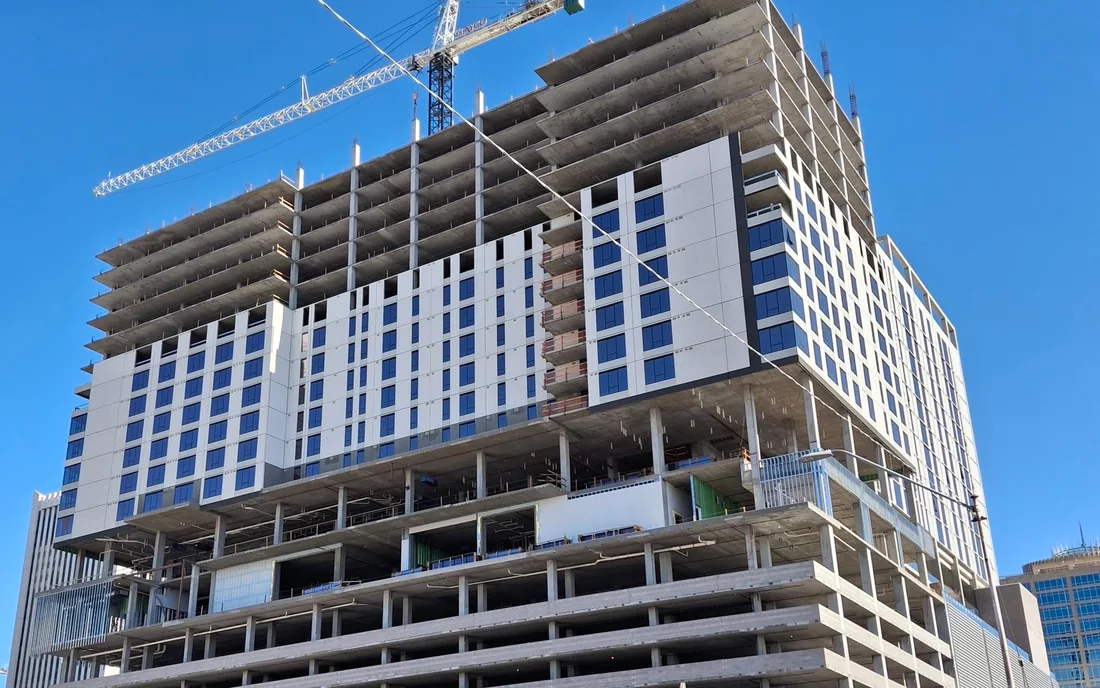
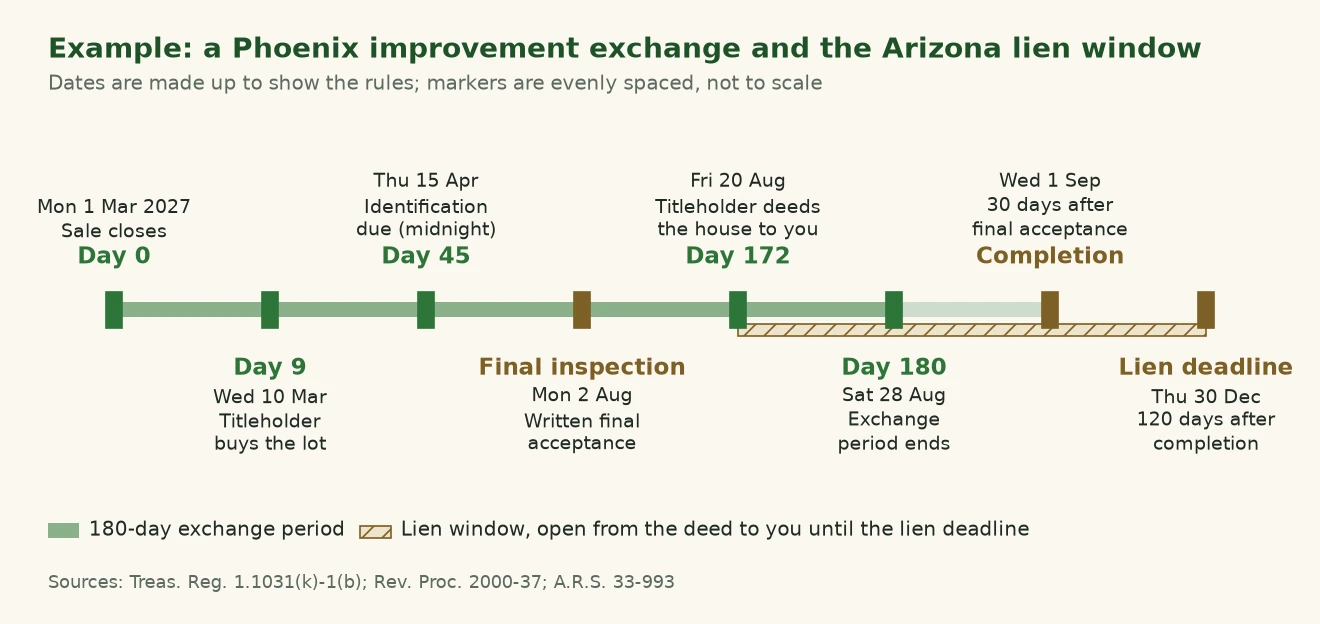
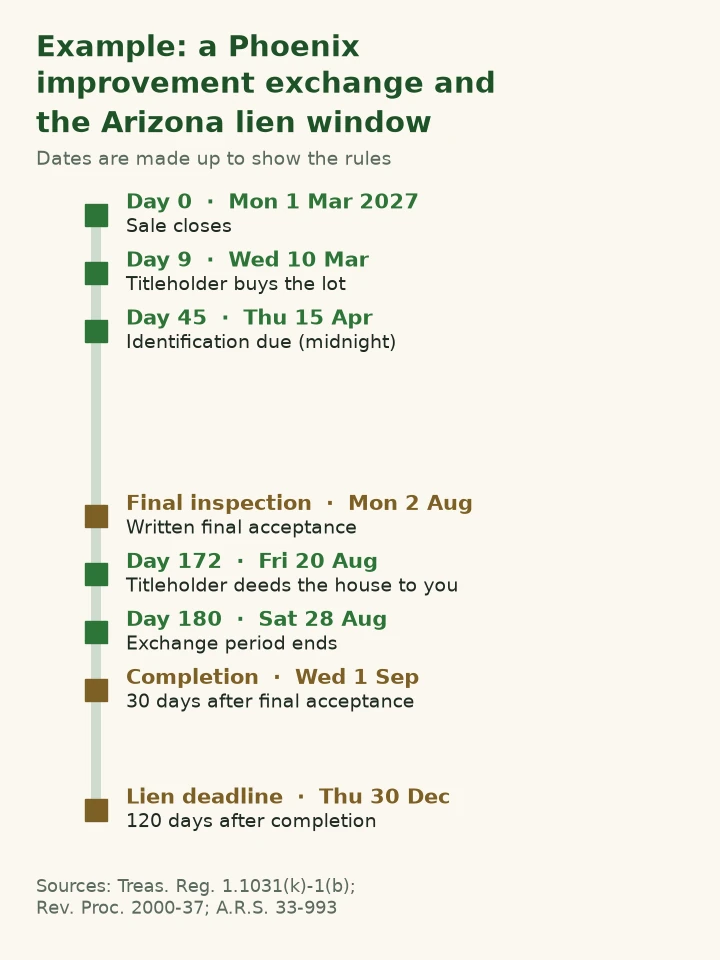
The City of Phoenix Planning and Development Department runs residential and commercial plan review, permits and inspections through its SHAPE PHX portal, and a certificate of occupancy confirms that a finished building meets the codes for occupancy. That permit file does double duty in an exchange. The city's final inspection and written final acceptance set the date from which Arizona counts 30 days to reach completion for lien purposes, as explained below, and the inspection history is the clearest record of how much of the building existed on the day the titleholder deeded it to you.
Preliminary 20-day notices go to the owner of record
Nearly everyone who supplies labor, materials or equipment to an Arizona job, other than workers paid wages, must serve a preliminary 20-day notice to keep the right to claim a lien. The notice goes to the owner or reputed owner, the original contractor, any construction lender and the person who hired the supplier, no later than 20 days after the supplier first delivers to the site (A.R.S. 33-992.01). While an improvement exchange is open, the owner on the deed is the titleholder, so the notices arrive in its name. The owner then has 10 days to correct wrong information in a notice and 10 days to send a copy of any recorded payment bond. Ask for every notice to be forwarded to you and your builder as it comes in. Taken together, they list everyone who could later claim a lien.
Lien waivers in the form Arizona prescribes
Arizona enforces a lien waiver only if it substantially follows one of four forms written into the statute: conditional or unconditional, for a progress payment or for the final payment (A.R.S. 33-1008). A conditional waiver takes effect once the payment actually clears. An unconditional one gives up the lien right on signing, which is why the statute requires a warning on it in large type. Pair each draw paid from exchange funds with conditional waivers from the builder and from every supplier who served a notice, and collect the unconditional final waivers before the titleholder deeds the property to you.
A lien can still be recorded after day 180
A claimant has 120 days after completion to record a lien, or 60 days if the owner records a notice of completion. Completion means the earlier of 30 days after the final inspection and written final acceptance, or 60 days in a row with no work on the site (A.R.S. 33-993). When a build finishes close to the end of the exchange, the lien window keeps running after the titleholder has deeded the property to you, and a lien recorded then sits on property you own. Recording a notice of completion shortens that tail to 60 days.
Arizona's prime contracting tax sits inside the builder's price
Arizona taxes new construction through the prime contracting classification of its transaction privilege tax. The tax base is 65% of the contract's gross proceeds after the price of the land is deducted, and contracts to maintain, repair, replace or alter existing property fall outside the classification unless they include new construction, grading or demolition (A.R.S. 42-5075). Ask the builder whether the bid includes that tax. If the construction budget is close to the amount sitting in the exchange, a tax line added late leaves a gap that has to be filled with your own cash or a loan.
Lot under contract and a builder's bid in hand? Start the improvement exchange before the lot closes, and send the bid and the draw schedule with your first call.
Owning a Newly Built Phoenix Rental Once the Exchange Closes
For an investor, a house or duplex bought from its builder is ordinary replacement property. What follows the closing is set by Arizona law, and two of those rules changed or tightened recently enough that they are easy to miss.
The builder's inventory can be your investment
The held-for-sale test looks at each party separately. A spec house is inventory to the builder selling it, but if you buy it to rent out, you hold it for investment and it can complete your exchange (26 U.S.C. 1031(a)(1)). How the builder treats the sale on its own return has no effect on yours.
Register the rental with the Maricopa County Assessor
Arizona requires the owner of residential rental property to keep on file with the assessor of the county where it sits the owner's name, address and phone number, the street address and parcel number, and the year the building was built, and to update that information within 10 days of a change. An entity owner also lists a responsible person, such as a corporate officer, an LLC's managing member or a trustee, and an owner living outside Arizona must appoint a statutory agent who lives in the state. A rental that is not registered may not be occupied. For a property bought after the year's notice of valuation, the city or town assesses a $1,000 penalty plus $100 for each month until the owner complies, but the court dismisses the complaint, with no penalty, if the owner complies within 10 days of receiving it (A.R.S. 33-1902(E) and (F)). The Maricopa County Assessor takes registrations online or on paper, separately from the affidavit of property value that goes with the deed.
No city tax on long-term residential rent since 2025
From 1 January 2025, Arizona cities and towns may not levy a transaction privilege tax, or any similar tax or fee, on renting real property for residential purposes (A.R.S. 42-6004(H)). The ban does not reach hotels, motels or other transient lodging, so a short-term rental still carries tax, and the ban says nothing about commercial leases, such as a shop you rent to another contractor.
Limits Arizona law puts on city short-term rental rules
Arizona limits how far cities and towns can go with vacation and short-term rentals. A city may not prohibit them, but it may require a local permit or license, emergency contact details for someone who can respond at any time of day, and compliance with health, safety, zoning and nuisance rules, and it can fine an owner up to $1,000 for every 30 days the contact details are missing (A.R.S. 9-500.39). The Scottsdale and Sedona permits described further down work within that statute. If the replacement you buy will be rented by the night, put the state tax license and the city permit in your own name before the first booking after closing.
Duplexes on a single parcel
The City of Phoenix permitted 470 two-unit buildings in 2024 (Census Building Permits Survey), so a new duplex is a realistic replacement here. A duplex is one building on one parcel, so it goes on your 45-day list as one property, and the price of both units counts toward the replacement. If you plan to live in one of the units, only the rented unit is held for investment; your CPA will split the price between the two uses.
Signed a builder's contract for a new house or duplex? Send us the builder's purchase agreement before closing, so it can be assigned into your exchange.
What Scottsdale Sellers Should Weigh When Picking Their 1031 Exchange Intermediary or Company
Scottsdale owners use the same federal exchange as Phoenix owners, and their sales close through the same Arizona title and escrow companies. The property is what differs. Second homes and short-term rentals are a bigger part of the Scottsdale market: 8.8% of the city's housing units are held for seasonal, recreational or occasional use, against 3.3% nationally (ACS 2020-2024, table B25004). Universal Pacific acts as the qualified intermediary for Scottsdale sales and purchases on the same terms as for Phoenix.
Maricopa County records and registers both cities
Scottsdale lies entirely within Maricopa County, as Phoenix does (Census place-by-county counts). A sale in one city and a purchase in the other therefore record with the same county recorder and register with the same county assessor, and nothing in the federal rules treats an exchange between the two cities differently from one inside either of them.
A Scottsdale, AZ 1031 exchange company or a Los Angeles firm
No rule says your qualified intermediary must be based where the property is. The requirements are about independence and control: the qualified intermediary can't be your agent or a related party, and its agreement has to keep the funds beyond your reach (Treas. Reg. 1.1031(k)-1(g)(4) and (k)). A Scottsdale closing runs through an Arizona title or escrow company, which wires the proceeds to the qualified intermediary and records the deed, so the work is the same whichever city the qualified intermediary's office is in.
Scottsdale licenses each rental of under 30 days
Every property offered for rent for less than 30 days needs a Scottsdale license, issued per property under Ordinance 4566, along with safety, health and neighbor-notification requirements, and Ordinance 4719 bars short-term rentals from being used as event centers (City of Scottsdale). If you buy a Scottsdale vacation rental as your replacement, look up the property's license status on the city's site and apply in your own name if the license belongs to the seller. A home you also use yourself has to fit the IRS safe harbor for second homes, which our Colorado Springs page sets out.
A Scottsdale home you lived in before renting it out
Owners who move out of a Scottsdale or Phoenix home and rent it can sometimes use two tax breaks on the same sale. If you owned the house and lived in it for at least two of the five years before the sale, and it is a rental when you exchange it, the home-sale exclusion of section 121 and the deferral of section 1031 can both apply (Rev. Proc. 2005-14). The exclusion is applied first. The revenue procedure keeps depreciation recapture out of the exclusion (anything claimed after 6 May 1997) but lets the exchange defer it, and it counts cash you receive against the exclusion first, so only cash above the excluded gain is taxed. In the revenue procedure's first example, a single owner who lived in a house for four years and then rented it for two excludes $250,000 of a $280,000 gain and defers the other $30,000, with no tax on the $10,000 of cash received.
Checks on Scottsdale 1031 exchange properties for sale that belong before any contract is signed
Your broker or the builder supplies the listing, and the qualified intermediary's part begins when there is a signed contract to assign. Before you sign, check three things: whether the property already holds a short-term rental license, whether a homeowners' association limits rentals in its recorded rules, and whether the Assessor's record lists the home as a rental. Each answer changes whether the property will be held the way an exchange requires, so get them in writing during the inspection period.
Sedona 1031 Exchange Services Where Coconino and Yavapai Counties Meet
Sedona lies outside the Valley and outside Maricopa County. The federal rules are the same, and our 1031 exchange services in Sedona, including a reverse exchange with an accommodator holding title, work as they do in Phoenix. The local details differ.
The city straddles a county line: Census counts put 1,398 of Sedona's occupied homes in Coconino County and 3,519 in Yavapai County. The deed records, and the rental registration is filed, with the county where the parcel sits, so look the parcel up with the right county's assessor before you put a Sedona address on your list. If the Sedona home is a second home that you also use yourself, the same safe harbor applies as in Scottsdale.

Short-term rentals in Sedona need a state transaction privilege tax license from the Arizona Department of Revenue before the city will issue its own permit, and since December 2024 each advertised unit needs a separate permit, so a main house with a casita needs two. Sedona's code also bars short-term rentals from hosting weddings, retreats and other special events (City of Sedona). A Sedona rental bought as a replacement should have its state license and city permits in the new owner's name before the first booking after closing.
Phoenix 1031 Exchange Properties for Sale, With the Parcel Checks Worth Doing Before You Commit
Hunting for Phoenix 1031 exchange properties for sale, whether in ZIP 85003 or across Maricopa County, is work for your broker; the qualified intermediary's work starts once you pick one. Universal Pacific has no listings to offer, and our part begins when you name a property as a replacement.
Look the parcel up at the Assessor first
The Maricopa County Assessor lets you look up a parcel by address, owner or parcel number. Confirm that the seller named in the listing is the owner shown there and copy the parcel number, because it helps describe the property without doubt on your list.
ZIP 85003, apartments and condominiums downtown
Downtown's 85003 is a renters' ZIP code built mostly of larger buildings, and 36.1% of its housing units are in buildings of 50 or more units (ACS B25024). A replacement there is most often a condominium unit or a whole building rather than a detached house. A condominium unit you rent out is real property held for investment like any other.
Limits on the number and value of listed properties
The regulation offers two ceilings: three properties regardless of value, or as many as you like so long as their combined value at day 45 stays at or below twice what you sold. Break both ceilings and the regulation treats you as having identified nothing, except for property already bought before the identification period ended and, under the 95% rule, a list you go on to buy almost entirely, at least 95% of its total value by the end of the exchange (Treas. Reg. 1.1031(k)-1(c)(4)).
Buying at least as much as you sold
The tax code treats two things as cash in hand: money you actually take, and loans the sale pays off. Paying off a Phoenix mortgage at closing counts as money received, and only new debt on the replacement or added cash of your own offsets it (Treas. Reg. 1.1031(d)-2, Example 2); either kind of cash is taxed up to your gain (section 1031(b)). A working target is a purchase price no lower than the net sale price, with every exchange dollar spent on it.
Fractional interests sold as 1031 exchange properties
Some offerings marketed as 1031 exchange properties are not whole buildings but shares of one, often an interest in a Delaware statutory trust that owns apartments, retail or industrial space. The IRS looked at such a trust in Rev. Rul. 2004-86. It classified the trust as an investment trust, because its trustee had no power to vary the investment, and held that trading real estate for a beneficial interest in it can qualify under section 1031 when the statute's other tests are met. Read the offering documents with your CPA before you put a trust interest on your list, and name it there the way you would name a building.
Arizona replacements outside Maricopa County
Arizona 1031 exchange properties for sale in Pinal, Pima, Yavapai or any other county follow the same federal rules as those in Phoenix. The deed records with that county's recorder, the rental registration goes to that county's assessor (A.R.S. 33-1902(A)), and the parcel lookup starts on that assessor's site rather than Maricopa County's. Put the county in the property description on your list along with the address.
Sending the list to the right person
Your list counts only if you sign it and it reaches the replacement's seller, or some party to the deal who is neither you nor disqualified, before the clock strikes midnight on day 45; in practice the list comes to us as your qualified intermediary (Treas. Reg. 1.1031(k)-1(c)(2)). A list emailed only to your own real estate agent does not count, because the agent who represented you in the last two years is a disqualified person. Describe each candidate so nobody can mistake it, by legal description, street address or a distinguishable name.
Our Arizona 1031 exchange page has the statewide picture. East Valley owners selling manufactured homes or park spaces will find those questions on our Mesa page, and Southern Arizona sellers on our Tucson page.
These are Census figures for the city of Phoenix from the 2020-2024 American Community Survey, next to the U.S. figure.
Source: U.S. Census Bureau, American Community Survey 2020-2024 5-year estimates. The rent-to-value figure compares median rent with median home value; it is not a property yield. See the table for all 51 cities.
Questions Phoenix and Scottsdale Owners Ask a Qualified Intermediary
We can only speak for Universal Pacific, which acts in both roles. The word accommodator is used two ways. In a delayed exchange it usually means the qualified intermediary, which holds cash and never appears on the deed. For reverse and improvement deals the word means something else: the titleholder whose name stays on the deed until the property is conveyed to you. One company can fill both roles in the same exchange: a titleholder that meets the qualified intermediary safe harbor may also serve as your qualified intermediary (Rev. Proc. 2000-37, section 4.03(1)).
Nothing in the Code or the regulations forces you to use an intermediary. What the rules forbid is having the sale money in your hands, actually or constructively, before you own the replacement (Treas. Reg. 1.1031(k)-1(f)). For the usual deal, with a buyer on one side and a different seller on the other, a qualified intermediary is the common choice. The regulation's other routes, qualified escrow accounts and qualified trusts, are covered where our Los Angeles page discusses them.
No. The qualified intermediary can't be you or a disqualified person. The list of disqualified people begins with your agents: an employee, lawyer, accountant, banker, broker or realtor who served you within two years of the first sale. Family members and businesses connected to you under sections 267(b) or 707(b) are excluded as well, and for that purpose the regulation lowers those sections' 50% ownership test to 10%, which catches far smaller stakes than the Code normally does (Treas. Reg. 1.1031(k)-1(k)). The regulation carves out exchange-only work and the routine services of banks, title insurers and escrow companies, so neither makes someone your agent. So the Arizona title company that closed your last purchase isn't disqualified for that reason, while your realtor and your own construction company are.
Three, before you sign anything: a copy of the exchange agreement, the name and bank of the account that will hold your money, and a written description of how a change to wire instructions is confirmed. A firm with a Phoenix address and one in another state work under the same regulation, so distance tells you less than those papers do, and firms that hand all three over readily are easy to compare, while our guide to vetting an intermediary adds further questions to ask.
Each exchange is priced by its structure. A plain delayed exchange, with no titleholder involved, appears on our fee page at $600 to $1,500, and the price climbs to $3,000 to $7,500 once a titleholder has to own the property for a while. In an improvement exchange the higher figure also pays for handling the construction draws and lien waivers and for the deed to you at the end. Title, escrow and recording charges at each Phoenix closing are separate and come from the title company.
It is the federal deferral in the Internal Revenue Code: you trade business or investment real estate for other real estate you will hold the same way, and the tax on the gain waits (section 1031(a)(1)). Both deadlines, 45 days and 180 days, are written into federal regulations and run the same in Arizona as anywhere else. What Arizona adds is law around the property itself, covered on this page for Phoenix, and its own income tax, covered on our Arizona 1031 exchange page.
Yes, because developed and undeveloped real estate are of like kind. The IRS's own illustration in IR-2018-227 pairs an apartment building with raw land. Each of them must serve your business or be an investment for you; a lot bought for your own future home fails that test, as does one your company is subdividing for sale.
No. The list closes at midnight on day 45, and anything added later doesn't count. Until midnight on day 45 a name can come off the list and another go on, as long as you sign a written revocation and send it to whoever received the original list (Treas. Reg. 1.1031(k)-1(c)(6)).
Yes, but whatever is paid out to you becomes taxable, capped at your gain under section 1031(b). Cash you need before the replacement closes is better taken from the sale at closing, as a line on the settlement statement. Once the money reaches the qualified intermediary, the exchange agreement keeps it there until one of the release points the regulation allows, such as day 45 passing with nothing identified or the purchase of everything you did identify (Treas. Reg. 1.1031(k)-1(g)(6)).
If the money can't be used in time, the exchange fails, but the IRS offers some relief on timing. When a qualified intermediary defaults because of bankruptcy or receivership and you meet the conditions of Rev. Proc. 2010-14, you may report the gain in the year or years you actually receive payments rather than the year of the sale (Instructions for Form 8824). That softens the tax timing; it does not bring back lost money.
Yes: the IRS wants Form 8824 with the return covering the sale year, plus two more years of filings if the other side of the trade was a related party (Instructions for Form 8824). The form records the deferred gain and the basis of the new property, which your CPA will need again when that property is sold.
No. Section 1031 asks whether both properties are real property held for business or investment, not where in Arizona they sit. To the statute, a Phoenix rental traded for a Sedona cabin, a Scottsdale office building or a house in Ohio is no different from a trade across the street. Land and buildings abroad are carved out, because they can never be like-kind to American property (section 1031(h)).
Yes, a cooperation clause. Ask your realtor to add language to the sale contract, and later to the purchase contract, in which the other party agrees to cooperate with your exchange and accepts the assignment of the contract to your qualified intermediary, at no cost or liability to them. It keeps the assignment notice from becoming a surprise at closing. Your realtor can still find the replacement and negotiate its price, while the sale proceeds sit with the qualified intermediary.

Reach a Phoenix Qualified Intermediary Before Your Escrow Officer Pays Out
The first conversation is a free consultation, and you can also start the exchange online. Have the purchase agreement, the escrow officer's contact details and the vesting on your current deed at hand.
Start an ExchangeSources for This Page
Federal law: 26 U.S.C. 1031; Treas. Reg. 1.1031(k)-1; Treas. Reg. 1.1031(a)-3; Treas. Reg. 1.1031(d)-2; Rev. Proc. 2000-37; Rev. Proc. 2004-51; Rev. Proc. 2005-14; Rev. Rul. 2004-86; Rev. Proc. 2002-69; IRS Publication 544; Instructions for Form 8824; IRS, About Form 4868; IRS IR-2018-227.
Arizona law: Ariz. Const. art. IX, section 24; A.R.S. 9-500.39; A.R.S. 6-801; A.R.S. 6-813; A.R.S. 6-834; A.R.S. 25-211; A.R.S. 33-431; A.R.S. 32-1151; A.R.S. 32-1121; A.R.S. 33-992.01; A.R.S. 33-993; A.R.S. 33-1008; A.R.S. 33-1902; A.R.S. 42-5075; A.R.S. 42-6004.
County and city: Maricopa County Assessor, residential rental registration; City of Phoenix, SHAPE PHX; City of Phoenix, residential building permits; City of Scottsdale, vacation and short-term rentals; City of Sedona, short-term rentals.
Census data: U.S. Census Bureau, American Community Survey 2020-2024 5-year estimates, tables B25004 (Scottsdale), B25003 (Sedona by county) and B25024 (ZCTA 85003), read from the table-based summary files; Census Building Permits Survey, 2024 place file. Fees: our qualified intermediary fee page.
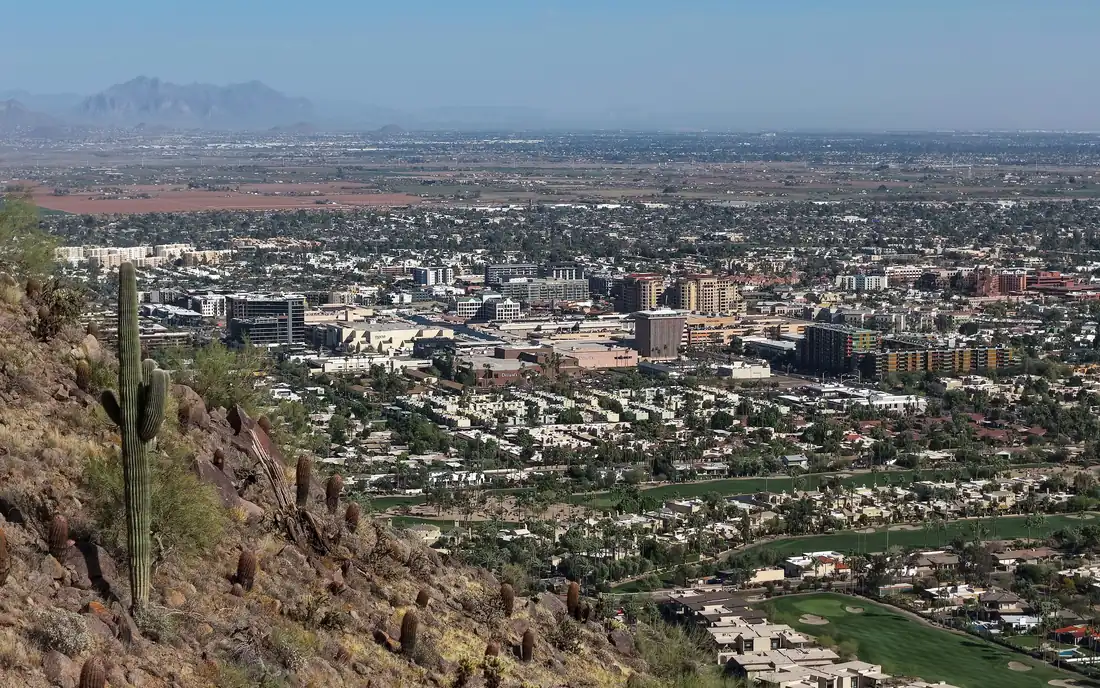
Photo at the top of the page: downtown Phoenix seen across the Sky Harbor airport runways, by Robert693, CC BY-SA 4.0, via Wikimedia Commons, cropped and resized.
1031 Exchange Blog
Set up your Phoenix 1031 exchange
Call Now For A Free Consultation · (424) 469-8111