How to File 1031 Exchange – A Comprehensive Guide
Quick answer
Filing a 1031 exchange is a process rather than a single form. You confirm the property qualifies, engage a qualified intermediary before closing, sell the relinquished property, identify replacement property in writing within 45 days, close within 180 days, and report the exchange on IRS Form 8824. California adds its own withholding and reporting requirements.
Filing a 1031 exchange in California involves more than just swapping one investment property for another. While the federal rules under Section 1031 of the Internal Revenue Code provide the foundation, California adds its own layer of requirements that can trip up even experienced investors. From real estate withholding on Form 593 to the state’s claw-back tracking on FTB Form 3840, there are California-specific steps you need to follow to protect your tax deferral.
If you fail to follow California’s additional requirements, the Franchise Tax Board (FTB) can issue a Notice of Proposed Assessment, accelerating your deferred gains into taxable income for the year you missed the filing. That’s why working with a qualified intermediary who understands California’s rules is not optional — it’s essential.
With 35+ years of hands-on experience, our experienced qualified intermediaries at Universal Pacific 1031 Exchange have facilitated thousands of successful exchanges for California investors. We’ll guide you through every step — from structuring the exchange to meeting all federal and state filing requirements. Schedule a free consultation today to get started.
This guide walks you through the complete process of filing a 1031 exchange in California, including the steps to initiate and complete the exchange, California-specific compliance requirements, deadlines, common mistakes, and expert tips to keep your tax deferral intact.

What Makes Filing a 1031 Exchange in California Different?
A 1031 exchange allows real estate investors to sell an investment property and reinvest the proceeds into a like-kind replacement property while deferring capital gains taxes. The federal rules are the same regardless of which state you’re in. But California has additional requirements that go beyond what the IRS mandates.
Here’s what makes California different:
- Real estate withholding (Form 593): California requires withholding on the sale of real property unless you certify an exemption. If your sale is part of a 1031 exchange, you must submit Form 593 to claim the withholding exemption — otherwise the buyer’s escrow company will withhold 3.33% of the sale price and send it to the FTB.
- Claw-back provision (FTB Form 3840): If you exchange California property for out-of-state property, California requires you to file FTB Form 3840 annually until the deferred gain is recognized. This is the state’s way of tracking deferred gains so it can collect its share when you eventually sell.
- Higher state capital gains rate: California taxes capital gains as ordinary income, with rates up to 13.3%. This makes the tax deferral benefit of a 1031 exchange even more significant for California investors than in most other states.
- No separate state 1031 exchange form for in-state swaps: If both the relinquished and replacement properties are in California, you follow the standard federal reporting process. California’s additional filing requirements only kick in when you’re moving capital out of state.
Step-by-Step: How to File a 1031 Exchange in California
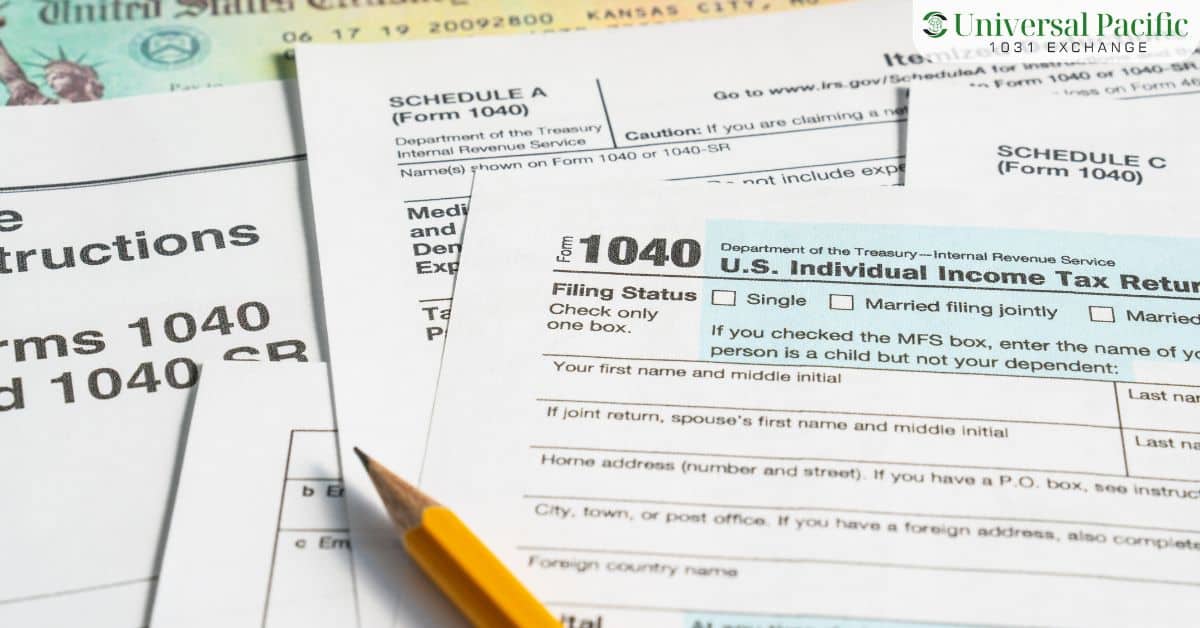
Filing a 1031 exchange is not a single event — it’s a process that begins before you sell your property and continues through the purchase of your replacement property. Each step has strict deadlines and requirements. Here’s how to execute it correctly as a California investor.
Step 1: Confirm Your Property Qualifies
Before you initiate a 1031 exchange, you need to verify that your property is eligible. The IRS requires that both the property you’re selling (the relinquished property) and the property you’re buying (the replacement property) meet specific criteria.
Both properties must be held for investment or business use. Your primary residence does not qualify. Vacation homes may qualify if they meet the IRS’s rental use requirements — generally, you cannot use the property for personal purposes for more than the greater of 14 days or 10% of the total days it’s rented out during the year.
Both properties must be “like-kind.” For real estate, this definition is broad. You can exchange an apartment building for a retail center, a single-family rental for vacant land, or commercial property for a multi-family complex. The key requirement is that both are real property held for investment or productive use in a trade or business.
Properties held for flipping do not qualify. If you purchased a property with the primary intent of reselling it for profit rather than holding it as an investment, the IRS will likely classify you as a dealer, which disqualifies the property from 1031 exchange treatment. While there is no formal minimum holding period, the IRS generally expects a holding period of at least 12 to 24 months to demonstrate investment intent.
The exchange must involve U.S. property only. You cannot exchange a California property for a property located outside the United States. However, you can exchange California property for property in any other U.S. state.
Step 2: Hire a Qualified Intermediary Before You Close

This is the most important step, and the one most often mishandled. A Qualified Intermediary (QI) is a neutral third party who holds the sale proceeds and facilitates the exchange to ensure you comply with IRS rules. The IRS prohibits you from touching the exchange funds at any point. If the sale proceeds pass through your hands — even briefly — the entire exchange is disqualified and the full capital gain becomes immediately taxable.
You must engage the QI before the closing of your relinquished property. The QI will prepare an Exchange Agreement and assign themselves into your sale contract so the proceeds go directly from the closing escrow to the QI’s segregated account. If you close without a QI in place, you cannot retroactively structure the transaction as a 1031 exchange.
When choosing a QI, look for one who has direct experience with California exchanges and understands the state’s withholding and reporting requirements. Your QI should also carry fidelity bond coverage and hold exchange funds in segregated, FDIC-insured accounts to protect your money.
Step 3: Sell the Relinquished Property
The sale of your existing investment property triggers the start of the 1031 exchange timeline. The sale process itself works like any standard real estate transaction, with one critical difference: the net proceeds are wired directly from the closing escrow to your Qualified Intermediary, not to you.
California withholding — Form 593: At closing, the escrow company will require you to complete Form 593 (Real Estate Withholding Statement). If you’re doing a 1031 exchange, you’ll certify the withholding exemption on Part III of this form. Without this certification, the escrow company is legally required to withhold 3.33% of the total sale price and remit it to the California Franchise Tax Board. This can create significant cash flow issues for your exchange, as the withheld amount reduces the funds available to reinvest in your replacement property.
Make sure your QI, escrow officer, and real estate agent are all aware that this is a 1031 exchange transaction. The exchange intent should be documented in the purchase agreement, and the QI’s assignment language must be included in the closing documents.
Step 4: Identify Replacement Properties Within 45 Days
Once your relinquished property closes, the clock starts. You have exactly 45 calendar days from the closing date to identify potential replacement properties in writing. This identification must be submitted to your Qualified Intermediary (or another person involved in the exchange, such as the seller of the replacement property). The identification must be signed and dated.
The IRS gives you three options for identifying replacement properties:
- Three-Property Rule: You can identify up to three properties regardless of their combined value. This is the most commonly used rule.
- 200% Rule: You can identify more than three properties, but their combined fair market value cannot exceed 200% of the value of the relinquished property you sold.
- 95% Rule: You can identify any number of properties without value restrictions, but you must acquire at least 95% of the total value of all identified properties. This rule is rarely used because of its stringent acquisition requirement.
The 45-day deadline is absolute. There are no extensions, and missing this deadline by even one day disqualifies the exchange. Many experienced investors begin researching replacement properties well before they close on the relinquished property to avoid being caught off guard.
Step 5: Close on the Replacement Property Within 180 Days
After selling your relinquished property, you have 180 calendar days to complete the purchase of one or more of the properties you identified during the 45-day identification period. This is the total window — the 45-day identification period is included within the 180-day exchange period, so you effectively have 135 days after identification to close.
When closing on the replacement property, your QI will wire the exchange funds directly to the purchase escrow. The replacement property’s purchase agreement must be assigned to the QI, and the seller must acknowledge the assignment. This ensures the transaction is treated as part of the exchange rather than a separate purchase.
Important: To fully defer all capital gains taxes, the replacement property must be of equal or greater value than the relinquished property. You must also reinvest all net proceeds and take on equal or greater debt. If the replacement property is worth less, or if you pocket any cash from the exchange, the difference is treated as “boot” and is taxable.
Step 6: Handle California-Specific Compliance Requirements

Once your exchange is complete, there are California-specific compliance steps that go beyond the standard federal filing. These are the requirements that many investors overlook, and they can have serious consequences.
FTB Form 3840 — California Like-Kind Exchanges (Out-of-State Replacement Property)
If you exchanged California property for replacement property located outside of California, you are required to file FTB Form 3840 with the California Franchise Tax Board. This form must be filed for the taxable year the exchange occurred and every subsequent year until the deferred gain is fully recognized (i.e., until you sell the out-of-state replacement property in a taxable transaction).
This is California’s claw-back mechanism. The state wants to ensure it collects its share of the capital gains tax on gains that accrued while the property was in California, even if you’ve moved the investment to another state. If you fail to file Form 3840, the FTB can issue a Notice of Proposed Assessment and accelerate the deferred gain into taxable income for the year you missed the filing.
You are not required to file Form 3840 if both the relinquished and replacement properties are located in California.
Federal Reporting — IRS Form 8824

Regardless of whether your exchange stays in California or crosses state lines, you must report the exchange on your federal tax return using IRS Form 8824. For a detailed walkthrough of the federal reporting process, including how to complete each section of Form 8824 and handle recognized gains on Schedule D, see our guide on how to report a 1031 exchange on your tax return.
California’s Claw-Back Provision: What Every Investor Needs to Know
The California claw-back provision is one of the most misunderstood aspects of doing a 1031 exchange in the state. It catches investors off guard because it applies even after you’ve left California, and even years after the original exchange.
Here’s how it works:
When you sell a California investment property and exchange it for property in another state, the capital gains that accrued while the property was in California are considered California-sourced income. Even though the 1031 exchange defers the federal tax, California retains the right to tax those gains when the deferral ends — meaning when you eventually sell the out-of-state replacement property without doing another exchange.
Example: You sell a rental property in Los Angeles with $300,000 in deferred gains and exchange it for a rental property in Nevada. Five years later, you sell the Nevada property without doing another 1031 exchange. California will tax the $300,000 in gains that originated from the LA property, even though you haven’t owned California real estate in five years.
This is why FTB Form 3840 must be filed every year. It’s the state’s tracking mechanism. If you stop filing, the FTB can treat the deferred gains as immediately recognizable income and assess taxes, penalties, and interest.
The claw-back obligation only ends when one of the following occurs:
- The deferred gain is fully recognized through a taxable sale
- The out-of-state replacement property is exchanged back into California property (in which case you file a final Form 3840)
- The property is transferred through inheritance
- The replacement property is donated to a qualified nonprofit organization
Critical Deadlines for a California 1031 Exchange
Missing any of the deadlines below will disqualify your exchange and make the full capital gain immediately taxable. There are no exceptions, and the IRS does not grant extensions to these timelines.
| Deadline | Timeframe | What Happens If You Miss It |
|---|---|---|
| 45-Day Identification | 45 calendar days from the sale of the relinquished property | Exchange is disqualified. Full capital gains tax is due. |
| 180-Day Completion | 180 calendar days from the sale OR the tax return due date (whichever comes first) | Exchange is disqualified. All proceeds become taxable. |
| Tax Return Due Date | Typically April 15 (file an extension to October 15 if needed) | If your tax return is due before day 180, the exchange period ends early unless you file an extension. |
| FTB 3840 (California) | Filed annually with your California return until deferred gain is recognized | FTB can accelerate deferred gains into current-year taxable income with penalties and interest. |
Pro Tip: If you sell your relinquished property in Q4 (on or after October 18), your 180-day exchange period may extend past the April 15 tax filing deadline. In this case, you must file a tax extension to preserve the full 180 days. If you file your return before completing the exchange, the IRS treats the sale as a taxable transaction, and you cannot amend the return to include the exchange later.
Common Mistakes California Investors Make When Filing a 1031 Exchange
Even experienced investors make costly errors during the exchange process. Here are the mistakes we see most frequently among California investors:
1. Taking Possession of Sale Proceeds
If the funds from the sale of your relinquished property are deposited into your personal account — even for one day — the exchange is disqualified. The QI must receive the funds directly from the closing escrow. This is the single most common reason exchanges fail, and it’s entirely preventable by engaging a QI before closing.
2. Missing the Form 593 Withholding Exemption
California’s mandatory real estate withholding catches many exchange investors off guard. If you don’t file Form 593 to certify the withholding exemption at closing, the escrow company will withhold 3.33% of the sale price and send it to the FTB. That withheld amount reduces your exchange proceeds, potentially creating boot (taxable cash not reinvested) and jeopardizing the full tax deferral.
3. Ignoring the FTB 3840 Annual Filing Requirement
Many investors file Form 3840 in the year of the exchange and then forget about it. The form must be filed every year until the deferred gain is recognized. If you skip a year, the FTB can assess taxes on the full deferred gain for that year, plus penalties and interest.
4. Not Filing a Tax Extension for Q4 Exchanges
Exchanges that begin late in the year can run into a deadline collision. The 180-day exchange period may extend past your tax return due date (typically April 15). If you file your return without the exchange, the IRS treats the sale as a standard taxable transaction. You must file for an extension to preserve the full 180 days.
5. Underestimating the Debt Replacement Requirement
To fully defer taxes, you must replace the debt from the relinquished property. If your replacement property carries less debt than the property you sold, the difference is considered “debt boot” and is taxable. Many investors focus solely on the property value and overlook the debt matching requirement, resulting in unexpected tax bills.
6. Attempting a DIY Exchange Without Professional Guidance
A 1031 exchange involves complex IRS rules, strict deadlines, and — in California — additional state compliance requirements. Attempting to handle this without an experienced Qualified Intermediary, tax advisor, and real estate attorney significantly increases the risk of disqualification. The cost of professional guidance is a fraction of the tax liability you’re deferring.
Types of 1031 Exchanges Available in California
Not all 1031 exchanges follow the same structure. Depending on your investment strategy and timing, you may use one of several exchange types:
Delayed (Forward) Exchange: The most common type. You sell the relinquished property first, then identify and purchase the replacement property within the 45/180-day deadlines. This is the standard exchange structure described in this guide.
Simultaneous Exchange: Both the sale and purchase close on the same day. While simpler in concept, these are logistically challenging and relatively rare.
Reverse Exchange: You acquire the replacement property before selling the relinquished property. This requires an Exchange Accommodation Titleholder (EAT) to hold the new property until you sell the old one. Reverse exchanges are more complex and expensive but provide certainty that you’ll secure the replacement property. Learn more about reverse 1031 exchange rules.
Build-to-Suit (Improvement) Exchange: You use the exchange funds to make improvements on the replacement property before taking title. The improvements must be completed within the 180-day exchange period, and the property’s value (including improvements) must meet the equal-or-greater-value requirement.
Need a Qualified Intermediary?
Your 1031 exchange may be disqualified if you don’t file it the right way on your tax return. As mentioned in this guide, you must learn the required forms to fill, the various details to fill in different parts of the forms, and the right time to file the forms. Beyond the tax filing, you must also make sure that your exchange transactions generally comply with the rules of a 1031 exchange, including the strict timelines and the replacement property identification rules.
All these might sound intimidating to figure out, especially for beginners. But you don’t have to worry; that’s why we’re here to help. As the best qualified intermediary in Los Angeles, Universal Pacific 1031 Exchange has all the experience you need for a successful and compliant exchange. Book a free consultation with us today so we can discuss your needs, help you start an exchange, and guide you through the process.
This page was reviewed by Michael Bergman, CPA, California CPA #56113. Verify license.
Disclaimer: This article is for informational purposes only and is not legal, tax, or financial advice. Tax laws change and every situation is different. Please consult a qualified attorney, CPA, or tax advisor before making decisions about your property, sale, or 1031 exchange.
Editorial Policy
All articles are reviewed for accuracy by licensed tax professionals and sourced from official government publications. Read our Editorial Policy →
About The Author
 Michael Bergman is a California licensed CPA and Real Estate Broker with over 35+ years of CPA-supervised 1031 exchange experience in commercial real estate. Specializing in 1031 tax-deferred exchanges and financial oversight, his expertise covers complex real estate transactions. Michael’s unique blend of financial acumen and real estate knowledge positions him as a trusted advisor in the industry, offering sound advice and strategic insights for successful property management and investment.