How Often Are 1031 Exchanges Audited?
Quick answer
Many real estate investors worry that using a 1031 exchange to defer capital gains taxes might increase their chances of an IRS audit. But in reality, the audit rate for 1031 exchanges is less than 1%, which is generally the same for other types of real estate transactions.
However, the IRS may decide to review your exchange if there are mistakes such as missed deadlines, improper documentation, or other red flags discussed in this article. Therefore, you need to know the common audit triggers in 1031 exchanges so you can protect your tax deferral and avoid unnecessary problems.
At Universal Pacific 1031 Exchange, our experienced qualified intermediaries have 35+ years of experience guiding investors through smooth and IRS-compliant exchanges. We help make sure your transactions are documented thoroughly, aligned with applicable IRS requirements, and structured to support available tax-deferral benefits. Schedule a free consultation with us today and let us guide you throughout the process.
In this guide, we’ll explain how often 1031 exchanges are audited, what can trigger IRS scrutiny, and how to protect your exchange from costly mistakes.
How Often Are 1031 Exchanges Audited By the IRS?

According to the U.S. Government Accountability Office, the average audit rate for individual taxpayers is less than 1%. Generally, 1031 exchanges are not more likely to be audited than other types of real estate transactions. However, if a tax return includes a 1031 exchange, the IRS may flag it for review if something looks unusual or improperly documented.
The risk of audits is generally higher for high-dollar 1031 exchange transactions, as the IRS tends to scrutinize larger transactions with more potential tax impact. In addition, low-income taxpayers claiming the Earned Income Tax Credit face a higher chance of audit compared to the general population.
Broadly speaking, tax-deferred exchanges are more likely to be audited if there are errors in the transactions. Such errors include missed deadlines, use of proceeds for personal benefit, use of wrong property types (such as personal residence), or boot in a 1031 exchange. Other factors that can increase the possibility of audits include large or complex transactions, inconsistent reporting, or failure to use a qualified intermediary (QI). We’ll discuss these factors in detail later on in this article.
Impact of New Tax Law on 1031 Exchange Audits
Contrary to what many investors expected, the most recent One Big Beautiful Bill Act (OBBBA) did not make any significant changes to how 1031 exchanges work. But when any ruling reinforces a tax benefit, the IRS seems to monitor taxpayers more closely. The goal is to prevent abuse of tax benefits and to make sure taxpayers act in accordance with the rules.
Therefore, real estate investors need to be more careful with the requirements of a 1031 exchange to avoid triggering audits. This is especially important for the documentation and filing of 1031 exchanges.
Common Triggers for IRS Audits in 1031 Exchanges

If you’re looking to minimize audit risk, you must know the factors that can draw IRS attention to your exchanges. Understanding these red flags can help you structure your exchange properly, maintain accurate records, and reduce the risk of having your transaction disqualified during an audit.
- Missing or Incorrect Form 8824 – Form 8824 is where you report the details of your like-kind exchange. This form must clearly list the relinquished and replacement properties, their fair market values, dates of sale and purchase, and whether any “boot” was received.Errors or omissions here are one of the fastest ways to get noticed by the IRS. For example, forgetting to fill in the timeline or leaving out a property description can make your return look incomplete and invite further review.
- Failure to Meet the 45-Day and 180-Day Deadlines – The IRS imposes a strict timeline for 1031 exchanges. You must identify potential replacement properties within 45 days of selling your relinquished property and close on one or more of them within 180 days. For instance, if you sell on January 1, you must submit your identification list by February 15 and complete the purchase by June 30. Missing either deadline can disqualify the exchange and attract IRS scrutiny.
- Personal Use of the Replacement Property – 1031 exchanges are only for investment or business property, not personal use. If you start using the new property as a vacation home or primary residence right after the exchange, the IRS may see this as proof that you never intended it as an investment. For example, if you buy a beach house through a 1031 exchange and immediately move in, it could disqualify the tax deferral. It’s safer to rent out the property or hold it strictly as an investment for a period (commonly two years) before any personal use.
- Transactions Involving Related Parties – Buying from or selling to related parties, such as family members or entities you control, often attracts extra investigation. The IRS wants to make sure you’re not just shifting properties within your circle to avoid taxes. If you sell to your brother and buy from your sister within the same exchange, they’ll examine whether it’s a legitimate market transaction. To avoid issues, document the fair market value and arm’s-length nature of the deal or avoid related-party exchanges altogether.
- Receiving or Keeping “Boot” – Boot refers to any non-like-kind property or cash you receive as part of the exchange. Although receiving boot doesn’t automatically affect the exchange, it can trigger taxable gain and attract attention if not reported correctly. For instance, if you sell a property for $200,000 and only reinvest $180,000 while pocketing $20,000 in cash, you must report and pay tax on that $20,000. Failing to do so can trigger an audit.
- Large Differences in Value or Debt Between Properties – The IRS requires that the replacement property must have equal or greater value than the relinquished property. If the replacement property is much lower in value than the relinquished property, or if there’s a big change in the mortgage amount, the IRS may audit to question whether you fully reinvested the proceeds.For example, selling a $1 million property and buying a $600,000 one without paying taxes on the $400,000 difference will raise red flags. Always aim to buy property of equal or greater value and debt to avoid taxable gains.
- Flipping or Dealer Activity – Properties meant for quick resale (flips) don’t qualify for the tax-deferral benefits of a 1031 exchange. If you have a pattern of buying, fixing, and selling properties quickly, the IRS might classify you as a dealer rather than an investor, which may trigger audits. The IRS requires investors to prove that they intend to use the property for business or investment purposes. That’s why we recommend a 1031 exchange holding period of at least one to two years and generating rental income to show investment intent.
- Poor Documentation and Recordkeeping – Inadequate records are one of the most common audit triggers. If your documentation doesn’t cover your timeline, property values, or identification process, the IRS may suspect your transactions. Keep copies of your identification letters, closing statements, lease agreements, and correspondence with your qualified intermediary.
- High-Dollar Exchanges in a Short Period – Very large 1031 exchanges completed within a short timeframe can raise questions about whether you are using the exchange primarily to avoid capital gains tax. The IRS may want to verify that the deals are legitimate investments rather than an aggressive tax strategy. If you’re handling high-value deals, it’s important to have thorough appraisals, independent valuations, and well-organized documentation to prove their validity.
Understanding the IRS Audit Process for 1031 Exchanges

If your 1031 exchange tax return is selected for an audit, the IRS will carefully scrutinize whether you followed the IRS rules guiding the exchange. You need to understand the audit process so you can prepare and respond appropriately.
The audit begins when the IRS sends you a formal notice, usually by mail, to inform you that your tax return is up for audit. The notice will specify which year(s) are under review and the items they plan to examine. For 1031 exchanges, they’ll specify the 1031 exchange transaction reported on Form 8824. The notice also specifies whether the review will be done by mail (correspondence audit), at an IRS office (office audit), or at your place of business (field audit).
Once notified, the IRS will send an Information Document Request (IDR) listing the documents they want to review. For a 1031 exchange, this usually includes the closing statements for both properties, the exchange agreement, and escrow documents from your QI. They may also review your proof for meeting the deadlines and any appraisals, property listings, or leases showing the property was held for investment.
After reviewing your documents, the IRS may ask follow-up questions or schedule an interview. This is usually more common during office or field audits. They might ask about your intent for holding the property, how long you owned it, how you used it after acquiring it, etc.
At the end of the review, the IRS agent will outline any issues they found. If they believe part or all of your 1031 exchange does not qualify, they will propose adjustments. This usually means reclassifying some or all of your deferred gain as taxable income. You will get a written report from the IRS explaining their reasoning and the amount of additional tax, interest, or penalties they think you owe.
If you disagree with the proposed adjustments, you can submit additional documentation or explanations to resolve the issue. If that doesn’t work, you can formally appeal the decision to the IRS Office of Appeals. The Office of Appeals is an independent part of the IRS that reviews disputes and often resolves them without going to court.
If you accept the findings, you will sign an agreement and pay any taxes due. If you appeal and the IRS Appeals Office agrees with you, they can reduce or cancel the proposed changes. If no agreement is reached, you still have the right to take your case to U.S. Tax Court to contest the IRS’s decision. But before you go ahead, it’s important to work with a tax attorney for proper legal guidance and representation.
Key Documents Needed for a 1031 Exchange Audit
Proper documentation is your strongest defense during an IRS audit of a 1031 exchange. Having clear, organized records can significantly reduce audit risk and help prove that your exchange qualifies for tax deferral. It also allows your tax advisor or attorney to respond quickly to any audit requests. That way, you get to resolve questions before they escalate into formal disputes. On the other hand, missing or incomplete documents are one of the most common triggers for audits. That’s why you must maintain complete documentation throughout the process.
The essential documents to keep for a 1031 exchange audit include:
- Sale agreements and closing statements for the relinquished asset
- Identification of replacement property (45-Day Notice)
- Purchase agreements, escrow documents, and closing statements for replacement property
- Qualified Intermediary (QI) agreement and transaction reports
- Evidence of property use and investment intent, such as lease agreements, rental listings, income statements, property management contracts, etc.
- Appraisals and valuation records
- Title and ownership records, such as title deeds, title reports, entity formation documents, etc.
- Correspondence with the IRS, QI, tax advisors, and other parties.
- Form 8824 and related tax filings
How to Stay Compliant and Reduce Audit Risk

Due to the strictness of 1031 exchange requirements, even small mistakes can trigger IRS scrutiny or nullify the tax deferral. Therefore, you should stay compliant from the start to avoid costly errors and have a strong defense in case of an audit. Let’s briefly discuss some crucial steps you can take to reduce audit risk.
- Work with a Qualified Intermediary (QI): A QI helps ensure the exchange is structured properly and that you never take direct control of the exchange funds from your sale. They also provide transaction reports and escrow records that the IRS expects to see in an audit. Always choose a QI with solid experience, bonding, and insurance.
- Match Ownership Names Exactly: The taxpayer who sells the relinquished property must be the same one who buys the replacement property. Any mismatch in names, such as selling in your personal name and buying in your LLC, can raise red flags. If you need to use an entity, work with your tax advisor to set it up correctly and document the ownership structure.
- Maintain Clear Investment Intent: To prove your intent, avoid moving into the property or using it personally right after the exchange. Instead, rent it out or hold it as an income-generating investment for at least two years. Keep leases, income statements, and marketing records as proof.
- Reinvest the Full Proceeds to Avoid Boot – Remember that boot is taxable. To defer the entire gain, purchase replacement property of equal or greater value, and use all the sale proceeds. If you receive boot, report it accurately on your tax return.
- Keep Thorough, Organized Records – Maintain copies of all contracts, closing statements, QI agreements, identification notices, and financial records related to the exchange. Keep them for at least 7 years and store them in a central location (physical or digital) so they’re easy to access if audited.
- Work With Professional Advisors – Work closely with a CPA or tax attorney experienced in 1031 exchanges. They can review your structure, handle the Form 8824 reporting, and catch mistakes before you file your return. Professional oversight shows the IRS that you took compliance seriously, which can help reduce the likelihood of an audit.
Need Help With a 1031 Exchange?
1031 exchanges are not automatically more likely to be audited than other real estate transactions. However, errors, missed deadlines, or unusual reporting can draw unwanted attention from the IRS. The key to reducing audit risk lies in proper planning, accurate documentation, accurately reporting exchanges on tax returns, and working with professionals who understand the strict rules for successful 1031 exchanges.
If you’re planning to start a 1031 exchange or already running one, don’t leave compliance to chance. At Universal Pacific 1031 Exchange, our licensed CPA professionals can help you structure your exchange correctly, maintain all necessary records, and navigate IRS requirements with confidence. Contact us today or visit our 1031 exchange office in Los Angeles for a free consultation.
Frequently Asked Questions
With 35+ years of experience as trusted 1031 exchange accommodators, our licensed CPA professionals have provided comprehensive answers to common questions most investors have about IRS audits in 1031 exchanges.
What Are the Odds of Getting Audited?
The overall audit rate for individual taxpayers is less than 1%, according to the U.S. Government Accountability Office. A 1031 exchange itself does not automatically increase your chances of audit, but errors or unusual entries can draw attention.
Can the IRS Audit a 1031 Exchange Years Later?
Yes, the IRS can audit a 1031 exchange years later, as long as the statute of limitations is still open. Typically, the IRS has three years from the date a tax return is filed, but this can extend to six years in cases of substantial underreporting.
How Long Should I Keep 1031 Exchange Records?
It is recommended to keep all 1031 exchange records for at least seven years. This includes contracts, identification notices, settlement statements, and correspondence with your qualified intermediary.
Does the Size of the Exchange Impact Audit Probability?
Larger transactions may draw closer scrutiny because of the higher tax amounts at stake. While small exchanges are less likely to be reviewed, high-value deals can increase the odds of an IRS audit.
Are Wealthy Taxpayers More Likely to Be Audited?
Yes, wealthy taxpayers are more likely to face IRS audits than the general population. The IRS devotes more resources to high-income individuals because their returns are complex and often involve larger sums of money, which increases potential tax compliance risks.
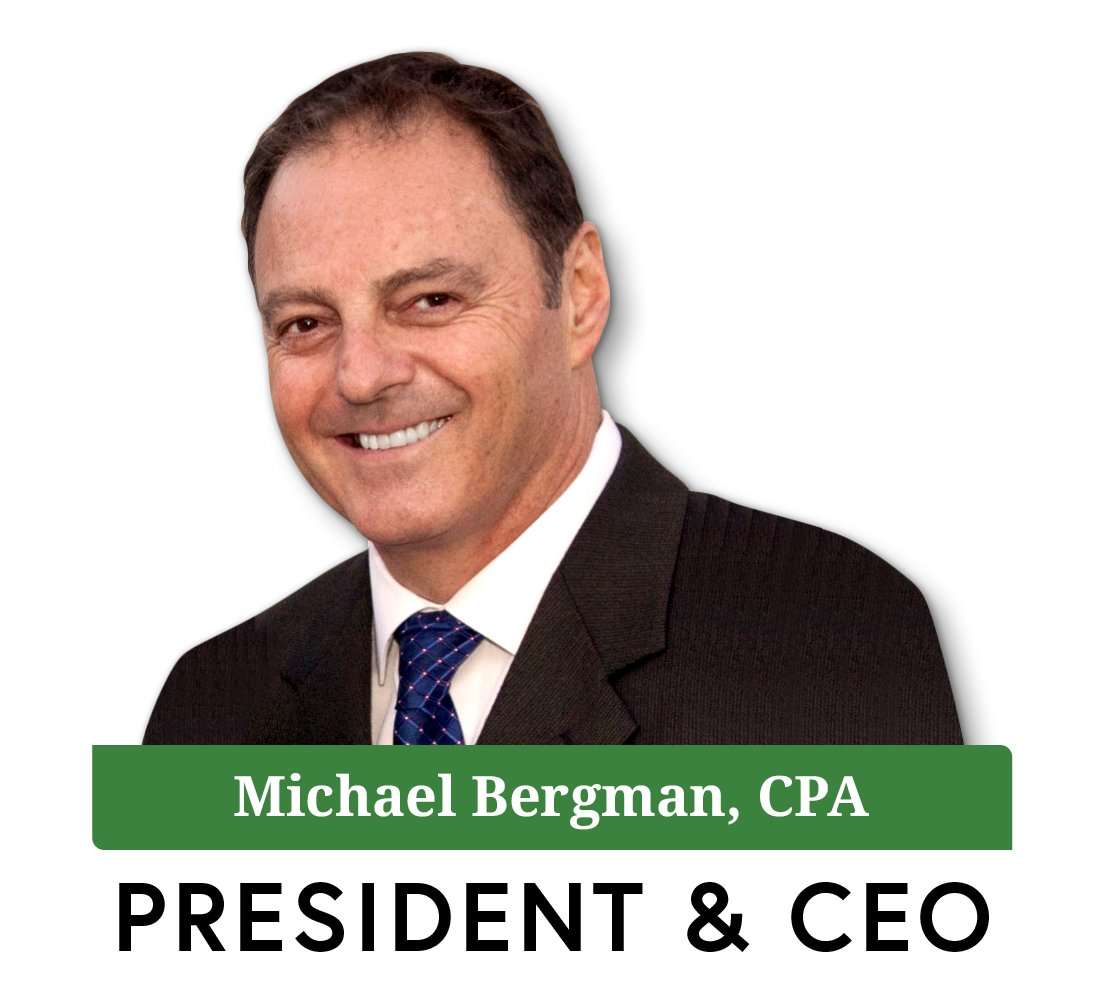
This page was reviewed by Michael Bergman, CPA, California CPA #56113. Verify license.
Disclaimer: This article is for informational purposes only and is not legal, tax, or financial advice. Tax laws change and every situation is different. Please consult a qualified attorney, CPA, or tax advisor before making decisions about your property, sale, or 1031 exchange.
Editorial Policy
All articles are reviewed for accuracy by licensed tax professionals and sourced from official government publications. Read our Editorial Policy →
About The Author
 Michael Bergman is a California licensed CPA and Real Estate Broker with over 35+ years of CPA-supervised 1031 exchange experience in commercial real estate. Specializing in 1031 tax-deferred exchanges and financial oversight, his expertise covers complex real estate transactions. Michael’s unique blend of financial acumen and real estate knowledge positions him as a trusted advisor in the industry, offering sound advice and strategic insights for successful property management and investment.