1031 Exchange Related Party Transaction Rules
Yes, you can complete a 1031 exchange with a related party, but two extra rules apply on top of the usual ones. Section 267(b) decides who counts as related, and the list is narrower than most people assume. Section 1031(f) then requires both sides to hold their properties for two years after the exchange, or the deferral is undone. 1031 exchanges between related parties come with these special rules from the Internal Revenue Code because the IRS wants to prevent tax deferral abuse while still allowing legitimate, tax-efficient property swaps.
Universal Pacific 1031 Exchange has served investors in all 50 states as a Qualified Intermediary since 2015, working on delayed, simultaneous, reverse, and improvement exchanges. Our team brings 35+ years of experience in the analysis, acquisition, management, brokerage, and disposition of more than $100 million in commercial real estate. To have a related party structure reviewed before anything goes into escrow, schedule a free consultation with us today.
In this guide, we’ll explore everything you need to know about 1031 exchanges with related parties, the IRS rules guiding them, common mistakes to avoid, and more.
A Brief Overview of 1031 Exchanges With Related Parties

When related parties are involved in a tax-deferred exchange, there’s a higher risk that the exchange might be structured to manipulate the tax code for personal gain. For example, a taxpayer may agree to sell an investment property to a related party in a 1031 exchange at inflated values to minimize their taxable gains, even if the properties are not actually worth the stated values. When the related party acquires replacement property in such a transaction, they may not be able to prove investment intent to the IRS.
Related parties may also engage in tax basis swapping – a strategy where investors swap properties with significantly different fair market values and adjusted bases. The IRS closely monitors these related party 1031 exchange transactions because of their potential to be used to “swap” the basis of low-value properties with high-value ones, thereby attempting to evade due taxes.
To prevent possible tax abuse, the IRS has implemented additional regulations to ensure that 1031 exchanges involving related persons are conducted in a manner consistent with the intended purpose of the tax code. Hence, taxpayers considering a related party exchange may need to consult with tax professionals or 1031 exchange experts to ensure they comply with IRS regulations and avoid potential pitfalls.
Who Qualifies as a Related Party?

To ensure compliance and avoid tax consequences, you need to understand who “related parties” are as defined by the IRS. According to Section 267(b) of the Internal Revenue Code, related parties in a 1031 exchange include people who are connected to the taxpayer in the following ways:
On the family side, the statute is narrower than most people expect. Section 267(c)(4) states that the family of an individual includes only brothers and sisters, whether by whole or half blood, a spouse, ancestors, and lineal descendants. Ancestors cover parents and grandparents, and lineal descendants cover children and grandchildren. Spouses of those individuals, like your brother’s wife or your son’s wife, do not count as related in this context. Neither do aunts, uncles, cousins, nieces, or nephews.
On the business side, the rule reaches a person and a corporation where the taxpayer directly or indirectly owns more than 50% in value of the outstanding stock.
The table below sets out where the line falls.
| Relationship | Related under Section 267(b)? | Note |
|---|---|---|
| Brother or sister, including half-blood | Yes | Named directly in section 267(c)(4) |
| Spouse | Yes | Only the spouse, not the spouse’s relatives |
| Parent, grandparent | Yes | Covered as ancestors |
| Child, grandchild | Yes | Covered as lineal descendants |
| Brother-in-law, daughter-in-law, son-in-law | No | In-laws fall outside the family definition |
| Aunt, uncle, cousin, niece, nephew | No | Not ancestors or lineal descendants |
| Corporation you own more than 50% of | Yes | Direct or indirect ownership both count |
| Partnership you hold more than 50% of | Yes | Measured by capital or profits interest, under section 707(b)(1) rather than 267(b) |
Being outside the list does not make a transaction safe by itself. The IRS still tests whether the exchange had a genuine investment purpose, and an arrangement that moves basis around between people who are close but technically unrelated will attract the same scrutiny.
The 50% Ownership Rule
Digging a bit deeper into business relationships, the Internal Revenue Service stipulates that anyone with more than 50% ownership, directly or indirectly, in a corporation or partnership is considered related. The indirect ownership part can be a bit tricky. It means if you own a business that, in turn, owns another business, your ownership in the second business also counts when adding up to the 50%.
Two details decide most cases. First, the test is more than 50%, not 50% or more, so an exact half is outside the rule. Second, the measure for a corporation is the value of the outstanding stock rather than the number of shares, which matters where different classes carry different values.
Attribution is what catches people. Ownership held by your family under the section 267 family definition is treated as yours when the percentage is calculated. Ownership held through a partnership, estate, or trust is attributed proportionately as well. So a stake you would describe as a minority position can cross the threshold once your parent’s or child’s holding is added to it.
Work an example. You own 30% of a company directly. Your daughter owns another 25%. Individually, neither of you controls it, but her holding is attributed to you, which puts you at 55% and makes the company a related party for exchange purposes. An exchange structured on the assumption that it was unrelated would be built on a false premise.
Because the calculation runs through entities and family at the same time, map the ownership before you plan the exchange rather than after.
1031 Exchange Rules California – What Are the 1031 Exchange Rules for Related Parties?

To ensure a compliant tax-deferred exchange, the Internal Revenue Code (IRC) Section 1031 stipulates the fundamental rules for all types of like-kind exchanges. Following the specified 1031 exchange rules, related parties are expected to ensure that their tax-deferred exchanges serve their original purpose of investment continuity rather than a strategy for evading tax. However, the rules become more complex when the exchange involves related parties rather than an unrelated party. Hence, investors need to pay extra attention to the related party rules to stay compliant.
Subsection 1031(f)
This subsection emphasizes the two-year holding rule regarding related party exchanges. The two-year holding rule requires both the taxpayer and the related party to hold the properties they receive for at least two years after the exchange. This prevents related parties from quickly selling properties to avoid paying taxes, making sure the tax benefit is used correctly. If either party disposes of the property within the two-year window, the deferred tax benefits are reversed. The initial seller in the exchange, even if they adhered to all rules, becomes liable for income tax if the related party fails to adhere to the two-year holding period.
Section 267
While Section 1031 primarily focuses on related parties within the context of like-kind exchanges, Section 267 has a broader application, encompassing various types of transactions and related party relationships. It’s recommended to carefully consider Section 267 to ensure compliance with 1031 exchange related party rules, as non-compliance can have tax implications beyond the immediate exchange.
Can a Qualified Intermediary Solve the Problem?
Not on its own, and this is where related party exchanges most often fail. Investors sometimes assume that routing the transaction through a qualified intermediary converts a related party deal into an ordinary one. The IRS addressed that directly in Revenue Ruling 2002-83.
The ruling considers a taxpayer who transfers relinquished property to a qualified intermediary and receives replacement property that a related party formerly owned. Where the related party walks away with cash rather than like-kind property, the IRS concluded that nonrecognition under section 1031(a) is not available. The intermediary changes the paperwork, not the substance, and the substance is that the related party cashed out.
A qualified intermediary remains necessary for the mechanics of any delayed exchange. What it cannot do is cure a structure that section 1031(f) was written to stop.
Other Relevant Laws and Regulations

There are several other laws and regulations that can affect related-party transactions in 1031 exchanges apart from the Internal Revenue Code. Some of them include:
1. The Economic Substance Doctrine
According to the Economic Substance Doctrine, the Internal Revenue Service requires that a transaction has a substantial business purpose beyond just deferring tax or savings to qualify for tax benefits. So, it’s important to make sure that related-party exchanges have legitimate business purposes to avoid scrutiny from the IRS.
2. State Laws
Different states in the US may have internal regulations regarding related parties, different from federal laws. So, it’s important to study your local laws to ensure compliance in case of these differences.
3. 1031 Exchange Timeline
Remember that all types of 1031 exchanges must be completed within the timeline for a 1031 exchange, which is 180 days from the date of the relinquished property sale. The timeline includes the 45-day identification period, which is the first 45 days after the sale, during which the investor is expected to formally identify potential replacement properties. Then, the investor must acquire the replacement property and conclude the exchange within the remaining 135 days. The 180 days is also capped by the due date of that year’s tax return, including extensions, whichever comes first, so an exchange that begins late in the year runs short unless an extension is filed. If you fail to adhere to this timeline, your exchange will not qualify for tax deferral, and you’ll have to pay capital gains tax immediately.
4. IRS Guidelines
The IRS also provides guidance on related-party transactions in its publications and notices. You should be sure to be caught up with IRS updates, and if you have questions regarding any related party rules, you can book a free consultation with our 1031 exchange professionals at Universal Pacific 1031 Exchange for experienced guidance.
Benefits of 1031 Exchanges for Related Parties
The 1031 exchange for related parties offers several benefits that help investors maximize their investment capital and improve their portfolio. As with other kinds of 1031 exchanges, the primary benefit is deferring capital gains taxes. By postponing tax, you have more capital to invest, and when related parties are involved, it can strengthen their financial position by keeping more money within their network.
Another major benefit is asset diversification. For related parties, 1031 exchanges provide an opportunity to diversify into various assets and explore different markets or regions. As long as they adhere to the relevant rules of the exchange, related parties can combine their effort to venture into more profitable or more diverse kinds of properties. Additionally, by deferring tax and reinvesting into properties that align more with their business strategies, related parties can combine efforts to optimize their investments for business growth while staying compliant.
Pitfalls, Risks, and Issues for Related Parties in a 1031 Exchange

Despite the appealing 1031 exchange benefits, a 1031 exchange for related parties involves certain risks every investor should be wary of. First, you may lose your tax benefits if you default on any of the rules guiding related parties’ property exchange. Secondly, the tight deadlines stipulated for a valid exchange can create pressure and stress. If you can’t identify or secure a suitable replacement property within the 1031 exchange timeline, the exchange could fall through.
Moreover, the IRS closely monitors 1031 exchanges between related parties because these transactions have a higher risk of tax avoidance. If the IRS determines that the exchange was structured primarily for tax avoidance, the transaction could be disqualified, leading to immediate capital gains taxes, penalties, and interest.
In addition, both properties must be held by the related parties for at least two years after the exchange. Selling either property before this period can trigger a taxable event and nullify the tax deferral. Note also that the two-year holding rule reduces the flexibility related parties might have if they need to sell or transfer the properties sooner, potentially impacting investment or financial strategies.
When dealing with family members or commonly controlled entities, ownership structures can become complex, and improper structuring may inadvertently violate IRS rules, leading to complications in the exchange. Additionally, exchanges between related parties can lead to disagreements or conflicts over property values, transaction terms, or future management, which could complicate the exchange process.
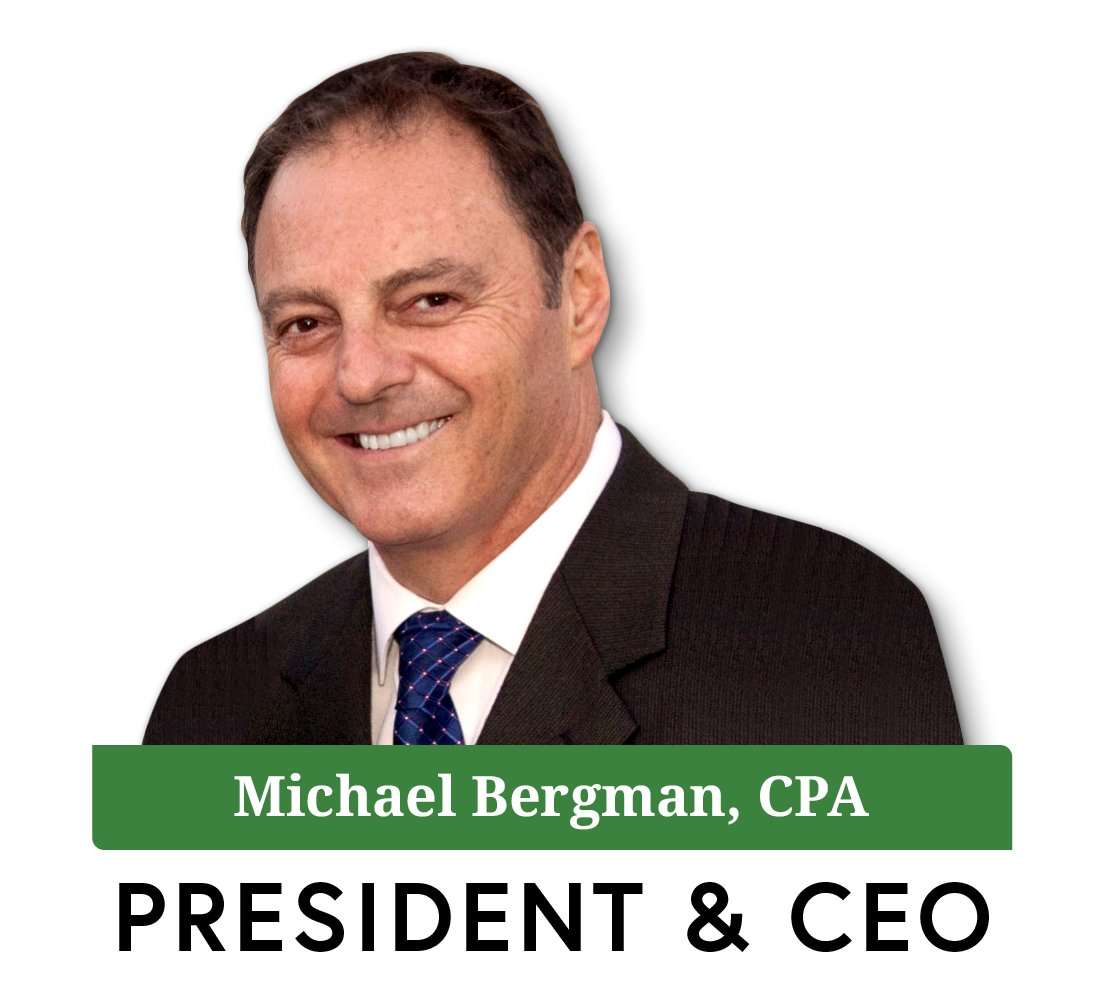
Michael Bergman, President and CEO of Universal Pacific 1031 Exchange and a California CPA licensed since 1990, sees where these deals unravel. “The two-year rule is not really a rule about you. It is a rule about what the other side does after closing, and you carry the tax if they sell early. Put it in the contract, because goodwill between relatives is not a compliance strategy.”
Transaction Guidelines for Related Parties in a 1031 Exchange
Executing a 1031 exchange involves a series of important steps to ensure a smooth and successful transaction. These steps are listed below.
1. Initiation
The first step is to find a Qualified Intermediary (QI). A QI helps navigate through the rules and ensures all steps in the 1031 exchange are completed correctly and on time. Choose a Qualified Intermediary who is experienced and has a track record of success in 1031 exchanges for related parties.
Moreover, from the 180-day timeline to the 200% rule and other rules for identifying replacement properties, ensure that you adhere to the IRS regulations governing valid replacement property identification. Our experts at Universal Pacific 1031 Exchange can help guide you through this process.
2. Execution
Every document, like the purchase agreement and assignment, must be in place and correctly filled out to proceed with the exchange. The IRS prohibits the taxpayer from being in custody of the proceeds from the sale of the relinquished property. Instead, the Qualified Intermediary secures the funds in an escrow account and releases them when it’s time to facilitate the purchase of the replacement property.
3. Closing
It’s important to double-check all documents for accuracy and completeness to avoid any post-closure issues. Ensure that all forms, agreements, and legal documents are correct and duly signed. Lastly, the 1031 exchange must be reported to the IRS using Form 8824 in the year the exchange took place, ensuring that all details of the transaction are transparent and in compliance with tax laws.
1031 Exchange for Related Parties: International Aspects
Related party rules for a 1031 exchange can become more complex when you’re acquiring a property from a related party in a different country. Regarding foreign property qualification, the properties involved in the exchange must meet the IRS’s definition of like-kind property both in the United States and in the foreign country. Hence, the parties need to understand and adhere to the property qualification criteria in both jurisdictions.
Related party exchanges may also be subject to local regulations in the foreign country. For instance, in the United States, the Foreign Investment in Real Property Tax Act (FIRPTA) governs the taxation of foreign investors in U.S. real estate. Other countries may have similar rules for foreign investors, and understanding the foreign tax laws and how they interact with U.S. tax rules is essential to avoid double taxation.
The United States also has tax treaties with many countries that can impact the tax treatment of international transactions in issues such as withholding taxes and the recognition of federal income tax. Additionally, fluctuations in currency exchange rates can impact the value of the exchange and the eventual tax liability.
Considering the complexities involved in international exchanges for related parties, it’s essential to involve an experienced Qualified Intermediary for proper guidance and compliance. Our experts at Universal Pacific 1031 Exchange have the required expertise and experience to help you facilitate a smooth and compliant exchange.
Types of 1031 Exchanges

1031 exchanges for related exchanges may take the shape of the different types of 1031 exchanges. The traditional like-kind exchange is also known as a Delayed Exchange. It involves exchanging a relinquished property for a replacement property of a similar “kind” while postponing capital gains taxes. In this context, like-kind does not apply only to identical properties but extends to properties with a similar nature or character, even if they vary in grade or quality.
For example, you can exchange vacant land for a rental apartment as long as both properties are held for investment or business purposes. Although it seems straightforward, you must adhere to the rigid timelines stipulated by the IRS to maintain the tax-deferred status. You’ll have to identify a replacement property within 45 days and secure the property within 180 days.
Another type of tax-deferred exchange is called a reverse exchange. Here, instead of selling the relinquished property first, you can acquire the replacement property before selling the old one. So, basically, a reverse exchange, also known as a parking exchange, reverses the order of the transaction. This method offers the advantage of acquiring a promising investment property without immediate selling pressure, but you must also abide by the reverse exchange rules to make it successful.
Another type is the improvement or construction exchange. Here, investors can use their equity from the relinquished property to improve or construct on the replacement property. However, it requires that the investor finalize any construction or improvement and transfer the property within the 180-day deadline. Also, they must spend the full value of the exchange on improvements or as part of the property’s purchase price.
Moreover, you can conduct a Simultaneous Exchange, where the sale of the relinquished property and the acquisition of the replacement property take place at the same time. Whichever type of exchange you decide to take, bear in mind that you must adhere to all the exchange rules and make sure that the transactions are completed within the 1031 exchange timeline set by the IRS.
Common Mistakes to Avoid
Since a 1031 exchange for related parties can be complex sometimes, neither the exchange nor the post-exchange closing formalities should be taken lightly. Hence, you should be aware of the common mistakes to avoid to maintain tax deferral. One of the most common mistakes is incomplete documentation. A successful 1031 exchange requires proper paperwork. Make sure you submit essential documents regarding the relinquished property and the replacement property acquired, such as the Exchange Agreement, Assignment, Notice, and Accommodation Agreement, accurately and on time.
Another common mistake is using properties not held for investment or business use. The IRS mandates that a property must be held in business or investment use to qualify for a tax-deferred transaction. Additionally, if the related party disposes of the relinquished property acquired within two years, unless under particular circumstances like death or compulsory conversion, it invalidates the exchange and makes the transaction liable to tax. This is because when the related person disposes of the property too early, it may signify to the IRS that they conducted the exchange just to evade tax.
Looking for a Qualified Intermediary?
Executing a successful 1031 exchange is all about understanding and complying with the necessary rules and requirements. For exchanges involving related parties, you need to be sure the transactions comply with the additional requirements stipulated by the IRS. These rules may seem complicated, but our experts at Universal Pacific 1031 Exchange have got you covered. Call us and let us facilitate your exchange.
Frequently Asked Questions
Below are answers to common questions about a 1031 exchange for related parties.
What Are the 1031 Exchange Rules for Related Parties?
Two layers apply. The ordinary rules still hold, meaning like-kind investment property, a qualified intermediary holding the proceeds, identification within 45 days, and closing within 180. On top of that, section 1031(f) requires both parties to hold for two years afterward, and the exchange must have a purpose beyond avoiding tax. Both sides also keep reporting on Form 8824 during the holding period.
Can You Do a 1031 Exchange With a Related Party?
Yes, provided the structure holds up. Direct swaps between related parties where both keep their new property for two years are the cleanest version. Problems arise when one side cashes out, or when the deal only makes sense as a way of shifting basis. The transaction needs to look like two investors continuing to invest.
Who Does the IRS Consider a Related Party in a 1031 Exchange?
Section 267(b) governs. On the family side it reaches siblings including half-siblings, spouses, ancestors such as parents and grandparents, and lineal descendants such as children and grandchildren. In-laws, aunts, uncles, cousins, nieces, and nephews are outside it. On the business side, a corporation or partnership in which you hold more than 50%, directly or indirectly, is related to you.
What Is the Two-Year Holding Rule for Related-Party 1031 Exchanges?
After a related-party exchange, both properties must stay in the hands of the parties who received them for two years. The clock runs from the date of the last transfer in the exchange. If either party disposes of their property inside that window, the gain that was deferred becomes recognizable, and the reporting obligation on Form 8824 continues through both intervening years.
What Happens if a Related Party Sells the Property Before Two Years?
The deferral fails, and the sting is that it usually fails for both of you. The taxpayer who did everything correctly still recognizes the gain that was deferred, because the statute keys the consequence to the disposition rather than to who caused it. That is why the two-year commitment belongs in the written agreement, with a remedy attached if the other party breaks it.
Can I Buy Replacement Property From a Family Member in a 1031 Exchange?
You can, but this is the highest-risk version of a related party exchange. If your relative sells you the property and takes cash, the IRS treats the arrangement as basis shifting rather than a genuine exchange. Revenue Ruling 2002-83 addresses this pattern directly. The safer structure is a genuine two-way swap where your relative also acquires like-kind replacement property and holds it.
Can Related Parties Use a Qualified Intermediary for a 1031 Exchange?
Yes, and for a delayed exchange, you must. What a qualified intermediary cannot do is convert a related party transaction into an unrelated one. Revenue Ruling 2002-83 makes clear that routing a purchase of a related party’s property through an intermediary does not preserve nonrecognition where the related party ends up with cash. Use a QI for the mechanics, and fix the structure separately.
Does the 45-Day Identification Rule Apply to Related-Party Exchanges?
Yes, without modification. You have 45 calendar days from the transfer of the relinquished property to identify replacement property in writing to your intermediary. The three-property rule, the 200% rule, and the 95% rule all apply as usual. Being related to the other party neither extends the window nor relaxes the identification requirements.
Does the 180-Day Deadline Apply to a Related-Party 1031 Exchange?
Yes. The exchange must close within 180 days of the transfer of the relinquished property, or by the due date of your tax return for that year, including extensions, whichever comes first. The 45-day and 180-day periods run concurrently rather than one after the other, so identification day 45 leaves 135 days to close.
Are There Exceptions to the Two-Year Holding Requirement for Related Parties?
There are, and they are narrow. A disposition after the death of either party does not trigger the rule, nor does a compulsory or involuntary conversion, such as a condemnation, where the threat of it arose after the original exchange. There is also a residual exception where you can establish that neither the exchange nor the later disposition had tax avoidance as a principal purpose. That last one is fact-dependent and is not something to rely on by default.
This page was reviewed by Michael Bergman, CPA, California CPA #56113. Verify license.
Disclaimer: This article explains the general rules for related-party 1031 exchanges and is not tax or legal advice. Whether a particular exchange qualifies turns on your own facts, your entity structure and the timing of your closings, and the related-party rules are among the least forgiving in section 1031. Consult your CPA or tax attorney, and engage a qualified intermediary, before the relinquished property closes.
Editorial Policy
All articles are reviewed for accuracy by licensed tax professionals and sourced from official government publications. Read our Editorial Policy →
About The Author
 Michael Bergman is a California licensed CPA and Real Estate Broker with over 35+ years of CPA-supervised 1031 exchange experience in commercial real estate. Specializing in 1031 tax-deferred exchanges and financial oversight, his expertise covers complex real estate transactions. Michael’s unique blend of financial acumen and real estate knowledge positions him as a trusted advisor in the industry, offering sound advice and strategic insights for successful property management and investment.