How Many Properties Can You Identify in a 1031 Exchange?
Identifying suitable replacement properties is one of the most important stages of a 1031 exchange. If you violate any of the identification rules, your exchange may be disqualified from tax deferral, resulting in immediate tax liabilities. That’s why you must understand all the rules and requirements set by the IRS for identifying replacement properties, including how many properties you can identify in a 1031 exchange.
You can identify more than three potential replacement properties as long as you adhere to the applicable rules. These rules include the three-property rule, the 200% rule, and the 95% rule. Each rule specifies the number of properties you can identify based on the aggregate fair market value of the properties involved, and other stipulated conditions. To be on the safe side, it’s advisable that you consult with an experienced qualified intermediary to guide you through the process.
With 35+ years of practical experience, Universal Pacific 1031 Exchange has the expertise and experience to help you understand and comply with the identification rules of the 1031 exchange. Our experienced qualified intermediaries are always available to make sure you maximize the tax benefits of your 1031 exchange. Our goal is to help you defer capital gains taxes through a successful 1031 exchange and also guide you through the process. Schedule a free consultation with us now to discuss your exchange needs and get started.
This comprehensive blog covers the rules that determine how many properties you can identify in a 1031 exchange, factors that you need to consider before identifying replacement properties, and common mistakes to avoid.
What Is a 1031 Exchange?

As stipulated by Section 1031 of the Internal Revenue Code, a 1031 exchange lets you defer capital gains taxes when you swap one investment property for another like-kind replacement property. Investors primarily use this strategy to preserve capital and grow their portfolios without the immediate tax burden that would typically come from selling a property.
The primary benefit for investors is that it allows you to defer capital gains tax indefinitely. That way, you can reinvest the full amount of your property sales into successive properties. The deferred tax significantly boosts your purchasing power over time to enable you to go for larger investments or multiple properties. Additionally, by deferring taxes, you can get a higher rate of return on the reinvested capital than you might if you pay taxes immediately.
Basic Requirements and Rules of a 1031 Exchange
The rules and requirements you have to follow for a successful 1031 exchange are stipulated by the IRS. To qualify for tax deferral, both the relinquished and replacement properties must be held for trade, business, or investment purposes. That means personal use properties generally do not qualify. Note that both investment properties must be like-kind. Investment properties are of like-kind if they’re of the same nature or character, even if they differ in grade or quality. For example, you can exchange raw land for an apartment building or a strip mall for an office complex.
Moreover, you must involve a Qualified Intermediary (QI) to hold the proceeds from the sale of the relinquished property and then use the money to buy the replacement property. This is important because directly receiving the proceeds disqualifies the transaction from 1031 benefits. Additionally, you must reinvest all the proceeds from the sale of the relinquished property into the replacement property to avoid a boot in a 1031 exchange.
Another very important requirement is the timeline for a 1031 exchange. The IRS requires that you identify potential replacement properties within 45 days of selling the old property. Then, you have the remaining 135 days to purchase the replacement property and complete the exchange. That means you have a total of 180 days to complete an exchange.
How Many Properties Can You Identify in a 1031 Exchange?

In a 1031 exchange, you can identify multiple replacement properties as long as you adhere to the applicable identification rules set by the IRS. The rules include the three-property rule, the 200% rule, and the 95% rule. You need to understand these rules and how they apply so you can maintain compliance while identifying replacement properties. Let’s consider each rule in more detail.
1. The Three-Property Rule
The Three-Property Rule allows you to identify up to three properties as potential replacements, irrespective of their total market value. You’re not mandated to acquire all three properties. You can choose to purchase one, two, or three properties, but you must buy at least one of them within the 180-day purchase period. This is the most straightforward and commonly used identification rule in 1031 exchanges, especially for investors focusing on a few high-quality properties. For example, after selling an office complex, you can identify three replacement properties: a warehouse, raw land, and another office complex.
2. The 200% Rule
The 200% Rule in a 1031 exchange allows you to identify more than three properties. However, the condition is that the aggregate fair market value of the properties identified must not exceed 200% of the total fair market value of the relinquished property. This rule is most favorable if you’re looking to diversify your investment portfolio through multiple properties.
One major advantage of the 200% rule is that you can identify as many properties as you want. However, the significant disadvantage is that the limit on the aggregate fair market value can affect high-value reinvestment opportunities.
3. The 95% Rule
The 95% Rule allows you to identify any number of properties, no matter their total fair market value, on the condition that you must purchase at least 95% of the aggregate value of all identified properties. For example, if you identify 7 potential replacement properties worth $10 million, you must purchase at least $9.5 million to qualify. You may find this rule useful when you’re considering a large pool of investment properties, and you have what it takes to acquire almost all of them. However, it is less commonly used due to its high purchase requirement.
What Kind of Properties Can You Choose as a Replacement Property?

Apart from the like-kind requirement and being held for business or investment use, you should also understand other factors that determine if a property is a valid replacement property for your exchange. Here are some insights into what types of properties benefit from a 1031 exchange.
Old properties generally qualify as long as they fulfill the general criteria. Identifying an old property is also easier because you can easily calculate its fair market value. You can also run a 1031 exchange for a new construction property as long as it is completed and received by the investor before the end of the 180-day exchange period. What’s important here is that the new construction must have been substantially completed by the time the exchange period ends.
Moreover, primary residences do not qualify as replacement properties in a 1031 exchange because of the “use” requirement. However, you can use a primary residence in 1031 exchange if you use part of the residence for business (like a home office) or as a rental. In such cases, you have to clearly demonstrate the business or investment use of that portion. Additionally, note that foreign properties do not qualify as like-kind with investment properties in the United States. Hence, the property must be in the United States to qualify.
How to Identify Replacement Properties in a 1031 Exchange
As soon as you sell your relinquished property, the 45-day property identification period begins. Mark the deadline on your calendar and start searching for potential replacement properties immediately. The deadline is strict, and extensions are not allowed.
Step 1: Identify Properties in Writing – Prepare a written identification document. This document should clearly list the properties you intend to purchase. Be sure to include relevant details, such as property addresses or legal descriptions, to uniquely identify each property.
Step 2: Choose an Identification Rule – When identifying multiple properties, you must follow either the 200% rule, the three-property rule, or the 95% rule. As already covered in earlier sections, each rule has guidelines on how many properties you can identify and under what conditions. Decide which rule best fits your needs based on your budget and investment strategy.
Step 3: Evaluate and Select Properties – Focus on realistic options that you’re confident in pursuing. Inspect the properties, evaluate their potential, and confirm that they meet your investment goals. Include backup options in case of potential complications like deal failures or financing issues.
Step 4: Provide the List to Your QI – Once you’ve finalized your list, deliver it to your Qualified Intermediary (QI) within the 45-day timeframe. The QI will see to it that your identification meets IRS requirements and will retain the list as part of the 1031 exchange documentation.
Step 5: Review and Confirm Compliance – Double-check that the replacement property identified is accurately described, meets with the selected rule, and is submitted on time. Consult your QI or tax advisor if there’s any uncertainty to avoid errors that could disqualify your exchange.
Step 6: Proceed to Close on a Property – After identifying replacement properties, you have an additional 135 days (for a total of 180 days) to close the purchase. Coordinate with your QI, lender, and real estate agent to ensure the transaction is completed on time.
Can you buy multiple properties? Yes, you can. However, while the IRS does not mandate you to buy all identified replacement properties, you MUST BUY AT LEAST ONE, and as many as are allowed under the identification rule you choose.
Factors to Consider When Identifying Replacement Properties in a 1031 Exchange
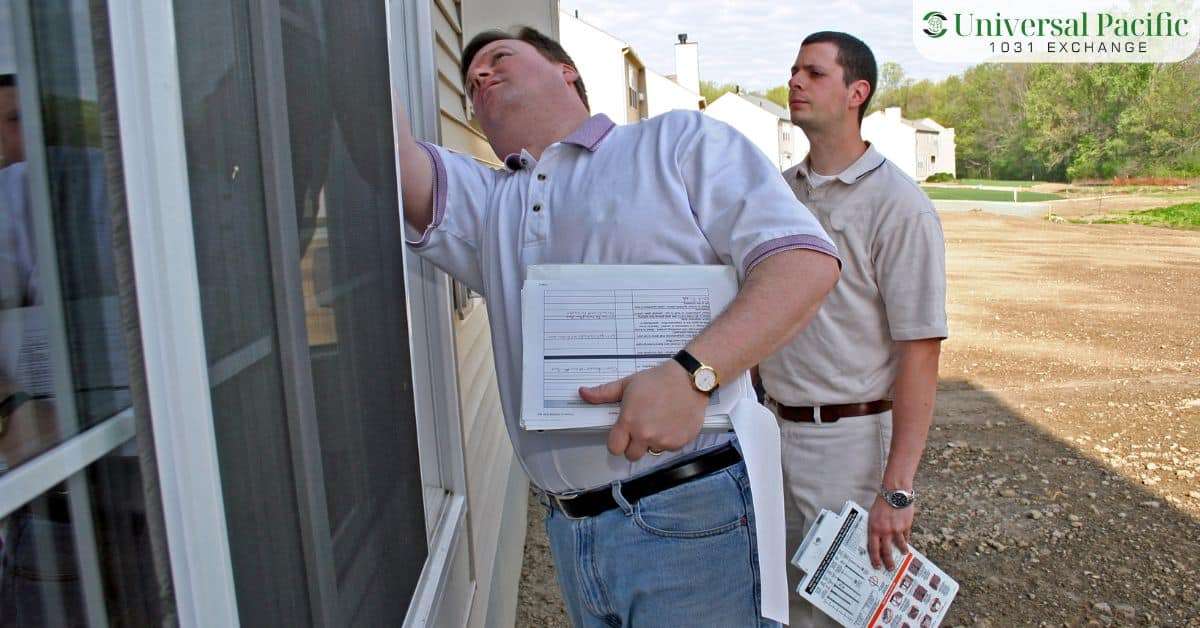
It’s necessary to know the various important factors to consider before choosing replacement properties in a 1031 exchange. That way, you can plan effectively and understand what to look out for. Here are some pro tips to help you make the right choice.
- Consider your investment goals. Are you looking to diversify your portfolio, buy into a new market, try a different kind of property, or grow your portfolio worth? If you can define your goals, it’ll be easier to identify a suitable replacement property for your relinquished property.
- Check the market condition. Find out the local real estate trends, including supply and demand, economic indicators, and future development plans. Choose areas with stable or growing economies to make sure your property does not reduce in value.
- Examine the property condition. You can involve a real property expert to carry out inspections to understand the condition of the property and the extent of any potential maintenance issues. Before you start negotiating, consider the costs and time required for any necessary renovations or upgrades.
- Consider the location of the property. Properties that are close to schools, shopping centers, and other facilities tend to be more profitable because of higher demand. Also, check how accessible the property is, depending on what you want to use it for.
- Before you identify any property, check the fair market value. Remember that the fair market value of the replacement property must be equal to or greater than that of the relinquished property. If you’re considering identifying or purchasing multiple properties, figure out the identification rule you want to apply – the 200% rule, 3-property rule, or 95% rule – and be sure that the identified properties’ value aligns with the applicable valuation rule.
- Consider the potential return on investment (ROI). Depending on your investment goals, confirm that the replacement property can yield the ROI you’re expecting.
- Consider the volatility of the market and how it may affect property values and rental income. You may need to watch out for risks that may impact the property value, such as flood zones, earthquake-prone areas, and other environmental factors.
- Evaluate the resale potential. Consider the ease of selling the property in the future, including market demand and potential buyer interest. Make sure the property fits into your long-term investment strategy and goals.
- Consider the costs associated with owning and managing the property. If you plan to use a property management service, confirm that qualified managers are available and affordable in the area. Additionally, understand the tax implications of the new property, including property taxes and any potential state or local taxes.
Common Mistakes in Identifying Replacement Properties and How to Avoid Them

Just one wrong step in a 1031 exchange can disqualify the entire process. Hence, you have to be able to identify potential challenges and mistakes and learn how to prevent or manage them.
One of the most common mistakes is missing the strict 180-day deadline. To avoid this, maintain a well-organized schedule and start searching for replacement properties well before initiating the sale of your relinquished property. Engage a Qualified Intermediary early in the process to ensure all timelines are met.
Another popular mistake is over-identifying properties. If you identify more properties than necessary, you might have a hard time adhering to the 200% rule, the 3-property rule, or the 95% rule. The solution is to be strategic about the properties you identify. If you need to identify more properties, be sure you consider the fair market value of both the relinquished property and the identified property.
Moreover, some investors fail to properly document the identification of replacement properties in a way that satisfies IRS requirements. To avoid this, use clear details to describe the replacement properties in your written identification. Include the street address, city, state, and possibly even the legal description.
How Can a Qualified Intermediary Help You Identify Replacement Properties?
Although a QI does not typically select specific properties for you, they can provide experienced guidance to make sure you fulfill all legal and procedural requirements. They can help you understand the legal rules of proper identification and highlight the consequences of wrong identification. QIs can also help you keep track of the exchange timeline to ascertain that you do not exceed the 180-day timeline. Moreover, by holding and protecting the exchange funds, the QI ensures that the investor does not directly receive the sale proceeds, thus maintaining the tax-deferred status of the transaction. Thus, it’s recommended that you learn how to find a qualified intermediary for a successful 1031 exchange.
Need Help With a 1031 Exchange?
A successful 1031 exchange must adhere to all the rules and requirements of the exchange, including how many properties you can identify. Before you officially identify a replacement property, make sure you understand the fair market value of the properties and the factors that can influence them. In addition, learn how the 200% rule, the 95% rule, and the three-property rule work so that you can identify the most suitable for you.
We understand that sometimes, the 1031 exchange and its rules can be overwhelming, especially for new investors. Hence, it’s best to consult an experienced QI like Universal Pacific 1031 Exchange for experienced guidance throughout the process. Book a free consultation with us now to start an exchange.
This page was reviewed by Michael Bergman, CPA, California CPA #56113. Verify license.
Disclaimer: This article is for informational purposes only and is not legal, tax, or financial advice. Tax laws change and every situation is different. Please consult a qualified attorney, CPA, or tax advisor before making decisions about your property, sale, or 1031 exchange.
Editorial Policy
All articles are reviewed for accuracy by licensed tax professionals and sourced from official government publications. Read our Editorial Policy →
About The Author
 Michael Bergman is a California licensed CPA and Real Estate Broker with over 35+ years of CPA-supervised 1031 exchange experience in commercial real estate. Specializing in 1031 tax-deferred exchanges and financial oversight, his expertise covers complex real estate transactions. Michael’s unique blend of financial acumen and real estate knowledge positions him as a trusted advisor in the industry, offering sound advice and strategic insights for successful property management and investment.