1031 Exchange with Multiple Owners: Partnerships, Joint Title & Co-Investor Rules
When two or more people are on title to an investment property, a 1031 exchange is still possible — but the rules around co-owners, partnerships, LLCs, and joint tenants add a layer of complexity. Each owner has to agree to the swap, the IRS’s same-taxpayer rule must be satisfied, and the structure on title determines who can cash out and who can reinvest.
New to exchanges? Start with the fundamentals of a 1031 like-kind exchange, then come back for the multi-owner specifics.
This guide covers joint tenancy, tenants-in-common (TIC), LLC, and partnership ownership in a 1031 context, the same-taxpayer requirement, when a drop-and-swap is needed to handle a co-owner who wants cash instead of a swap, and the legal agreements that have to be in place before the relinquished property is sold.
Quick answer
A 1031 exchange still works when two or more people are on title. What changes is the structure: joint tenancy, tenants-in-common, an LLC, and a partnership each get handled differently. Every owner has to agree to the swap, the same-taxpayer rule has to be met, and the way title is held sets who can reinvest and who can take cash. If one co-owner wants cash instead of a replacement property, that usually means a drop-and-swap, set up before the relinquished property sells.
Universal Pacific 1031 Exchange has an impressive track record as the best Qualified Intermediary (QI) in Los Angeles that helps multi-owner groups navigate the complexities of 1031 exchange. We have seasoned Certified Public Accountants that can handle your paperwork, basis calculations, FMV appraisals, and conduct due diligence to ensure your 1031 exchange is IRS-compliant. You can contact us for a free consultation now to learn more about how we can assist you in conducting a hassle-free multiple owner 1031 tax-deferred exchange.
This article offers a detailed breakdown on how a multi-owner exchange works, the best ownership structures, and key strategies to ensure smooth and compliant transactions.
How Multi-Owner 1031 Exchanges Work

A multi-owner 1031 exchange is a like-kind transaction where the investment property in question is owned by two or more persons. Depending on the ownership structure, the stakeholders may either have equal or unequal claim to the asset.
Either way, the ownership distribution does not affect the 1031 exchange process as long as all involved parties consent to the sale. However, depending on the type of multi-ownership involved, the transaction may be disqualified if any of the parties opt for cash, as opposed to buying a replacement property.
Another mistake that could lead to disqualification is adding a new member just before or after the transaction. Doing this in any ownership structure other than LLC, where exchanges are done by the company as a single entity, will alter the property title. This breaks the rule of ensuring the exact taxpayer holds the property for at least 12 – 24 months before and after the transaction.
Hence, if a new member must be added to the property ownership, it should happen outside of this period. Tiny details like this make it relevant to seek legal guidance when conducting a 1031 transaction. Ensure you hire a tax advisor or QI to go through the agreements properly to ascertain that there are no tax provisions in the contract.
One thing is for sure: 1031 exchange benefits in multi-owner contexts far outweigh the downsides. For a start, through a like-kind exchange, you can buy any replacement property of your choice that has a similar fair market value to the one you disposed of without having to pay cash.
You also get to defer capital gains tax for as long as you want without looking over your shoulders for the IRS. During this period, the new property you purchased could significantly increase in value, giving you better returns on your initial investment.
Ownership Structures for Multi-Owner 1031 Exchanges
There are different ownership structures in real estate suitable for properties with two or more co-owners. Each structure has its uniqueness, which may determine whether it’s eligible for a 1031 swap. These structures include the following:
Joint Tenancy in a 1031 Exchange
Joint tenancy is a type of multiple ownership agreement where each member has an equal stake in the estate. One notable feature of this type of arrangement is the survivorship rights. It entails that once a co-owner dies, their share of the estate must be immediately divided among the surviving partners without a need for probate.
This means the deceased member’s individual interests won’t go to their heirs or trust. The uniqueness of this model makes it a top choice among closely related parties like married couples, family, and humanitarian activists who don’t want any good cause to be truncated by probate proceedings. It is possible to run a 1031 transaction under joint tenancy if all the joint owners consent to the transaction and it aligns with the IRS’s “same taxpayer” rule.
According to the tax code, the taxpayer selling the relinquished property must be the same as the taxpayer buying the replacement property. So when the estate’s co-owners consent to the sale, the jointly owned property title will bear all their names together with the phrase “as joint tenants with right of survivorship.”
In a case where one or more of the joint owners do not want to proceed with a 1031 exchange, you can either stop the deal or modify the partnership into a tenants-in-common structure. The latter is known as the “drop and swap” strategy. Since each partner has an undivided fractional interest in the jointly owned property, you must drop the current structure of the partnership and change it to tenants in common.
This will allow uninterested parties to sell their stakes in the venture while others can move ahead with their “swap” deal.
Tenants in Common (TIC) in a 1031 Exchange
Tenancy in common is a type of ownership structure that allows concerned parties to hold equal or unequal fractional interests in a real estate investment property. Each member’s stake is referred to as shares and they have the right to sell or transfer their ownership interests without approval of the other partners.
Unlike joint tenancy, TIC structures do not have survivorship rights. That means when a co-owner dies, their shares are transferred to their heirs per their will. This is one of the most favorable multiple-owner models for running 1031 exchange and satisfies the exact taxpayer requirement.
During a 1031 exchange, shareholders who prefer cash from the sale of the property have two options. They can either sell their shares to other shareholders before the exchange or partake in the transaction and take their fair share of cash profit (boot) once it’s completed. Taking profit means they have to pay immediate capital gains tax.
The other investors can proceed to running the transaction using the remaining sum. In tenancy in common, the property title structure consists of the individual names of each shareholder with the phrase, “as tenants in common.” Generally, it’s a great strategy for 1031 exchanges involving multiple co-owners due to the flexibility it affords. You can leverage it to invest in various real estate projects and enjoy tax benefits like depreciation deductions and tax deferral.
Limited Liability Company (LLC) in a 1031 Exchange

A limited liability company is a common structure in real estate used for several purposes, such as holding and managing real property, construction, and 1031 exchanges. The company can either be structured as a single-member LLC or multi-member LLC.
Both structures offer the owners asset protection, such that liabilities incurred on the LLC will not affect their personal properties. One of the major advantages of LLCs and why they are great for 1031 exchange is that taxes pass through to individual owners.
Essentially, the company is absolved of paying income taxes incurred from revenue like rents, while the co-owners bear and report the tax liabilities individually using Form 1065. It’s better this way as it prevents double taxation.
In a multi-member LLC, ownership stakes are divided into membership interests depending on the capital invested by each member. However, in some scenarios, stakes are divided equally among members irrespective of their financial contributions. This division structure, voting rights, and other essentials are captured in the LLC operating agreement.
For a 1031 exchange to proceed in an LLC context, the real property title must be in the name of the LLC as a single entity and not the individual owners. The deal can go through once the members vote in favor of it. However, to be qualified as a 1031 transaction, the LLC must have held the relinquished commercial properties for at least 12 – 24 months before the sale and must hold the replacement property for the same period after its purchase.
In fact, this rule is not peculiar to LLCs. It applies to all 1031 exchanges, whether as an individual or an ownership group. Only property held for investment purposes qualifies for this exchange. Hence, the rule disqualifies assets purchased for quick resale.
Partnerships in a 1031 Exchange
Partnership is a venture involving two or more people in line with the provisions of the Uniform Partnership Act (UPA), 1914, or the Revised Uniform Partnership Act (RUPA) of 1997. It consists of two types of partners—general partners (GP) and limited partners (LP).
The GPs are involved full-time and handle the business’s day-to-day operations. They will also incur maximum liability if things go wrong. LPs are passive partners who often contribute financial capital and rely on the GPs to manage the business. Typically, GPs are real estate investment firms, while LPs are the investors.
Each partner has partial ownership of the business and can vote to decide on the commercial property the business should invest in. A partnership can conduct a 1031 swap as long as the sale is done by the partnership itself as an entity and not by the individual members.
If some partners are not in support and would prefer cash profit instead, the deal can’t go through the 1031 like-kind exchange route. To achieve the goal, you will have to use the drop-and-swap strategy to modify the company’s structure, give uninterested partners their profit, and execute the transaction.
Tax Implications in Multi-Owner 1031 Exchanges
The number one impact of executing a 1031 exchange for a property held by multiple owners is that taxes on the capital gains will be deferred. So it’s a great strategy to reinvest profit and build wealth while enjoying tax reliefs.
Taxes in this kind of structure are always passed through to individual members, but filed differently depending on the type of structure. This means that each investor is to report and pay their taxes based on their percentage stake in the business’s profit and losses.
What Is the Best Ownership Structure for a 1031 Exchange?
The best ownership structure for a 1031 exchange with various co-owners depends on your goals and the uniqueness of the parties involved. As such, you need to consider factors like taxes, ownership, control, and inheritance before deciding.
In terms of ownership flexibility, TIC, LLC, and partnership allow equal and unequal membership interest distribution. So you don’t have to get as many ownership interests as other members to join. However, unequal membership interests mean unequal voting rights. Joint tenancy is quite different from the others, ensuring that all co-owners have an equal stake.
Joint tenancy is also the only option on this list that offers survivorship rights, making it easy for the other stakeholders, who in most cases, double as their next of kin, to claim a deceased member’s stake. Hence, it’s great for married couples and close family members.
If you need a multiple-owner structure for your 1031 exchange that allows your designated heir to inherit your membership interest, use TIC, LLC, or partnerships. One thing they all have in common is taxation. Irrespective of the filing method, every member of these four different setups individually pays taxes on their share of profit made from the business.
Finally, in terms of control, none of these structures gives you as much decision-making power and control as tenants in common. With tenancy in common, you can sell or transfer your stake whenever you want. This is a luxury other structures cannot afford. The main reason this is possible is because TIC is the only structure on the list that allows individual members to conduct 1031 exchanges.
Given these comparisons, the TIC structure appears to be the one with the most perks. However, the decision of which one is the best still depends on your priorities and what you seek to achieve from the structure. If your goal is fractional ownership in institutional-grade replacement property rather than a co-owner restructure, the DST and TIC fractional-ownership route is a separate path worth considering.
How to Successfully Execute a Multi-Owner 1031 Exchange

The process for multiple members exchange largely revolves around clear agreements, the right ownership structure, and careful implementation with a Qualified Intermediary. Here is a step-by-step guide on how to successfully execute a 1031 exchange:
1. Choose the Right Ownership Structure
Not all ownership structures can facilitate a 1031 exchange, especially when some members are unwilling to proceed with the transaction. The right structure must satisfy the salient IRS regulations guiding 1031 exchanges. So, review the peculiarity of your partners and opt for a model that will best serve you in terms of taxes, liabilities, inheritance, control, and management.
2. Establish Clear Ownership Agreements
Before commencing an exchange, it is important to ensure that all owners are in alignment regarding key factors such as the conditions, targets, and desired outcomes of the transaction. Typically, every multiple-owner real estate enterprise has a legal operating agreement that governs ownership interests, responsibilities, conflict resolutions, property sale procedures, and profit sharing.
The structure of this agreement differs among the four multi-owner systems we’ve discussed in this article. However, having it in place will spell out the in-house nitty-gritty of running a successful 1031 exchange. It will also help to initiate a smooth execution and minimize disputes that may arise in the future.
3. Coordinate with a Qualified Intermediary
Selecting and working with a QI is non-negotiable in ensuring a successful 1031 exchange. Their role includes ensuring alignment with applicable IRS standards, keeping the proceeds of a sale in a neutral account, offering assistance in paperwork, timelines and structuring the transaction properly. The QI will ensure that all owners are duly updated throughout the exchange process.
4. Sell the Current Property
The QI is to find a suitable buyer and sell the old property according to its fair market value (FMV). Although the title document is in the name of the outright owners, the transaction will be conducted between the QI and the buyer. Working with the fair market value helps to ensure that the owners get the best possible deal in the market.
5. Identify Potential Replacement Properties
Identifying and selecting a replacement property that aligns with the IRS identification rules is key in a multi-owner 1031 exchange. The replacement property has to satisfy all parties in all aspects—size, type, and location.
As such, the QI must interface with the owners to ensure their expectations are met. Per the IRC rules, the replacement property must be identified within 45 days of the sale of the old asset. Exceeding this identification period may cause the IRS to disqualify the transaction. Additionally, you may hire a real estate broker to assist in finding the right property for you. But only a QI must close the deal.
6. Purchase the Replacement Property
Using the proceeds from the sale of the first property, the QI will buy the replacement asset. To ensure there’s enough capital for the transaction, the QI must ascertain that the replacement property has the same or similar FMV as the old one.
If the new investment property costs more than the relinquished asset, the owners must add extra cash to the funds realized from the sale. This extra fund will improve the carryover basis of the property and will be considered in tax filings. In several instances, the reverse is the case—the sale proceeds are more than the cost of the new asset.
After the purchase, you can take the remaining profit (cash boot) from the QI and pay immediate capital gains tax on it. Alternatively, you can use the balance to run repairs and capital improvements on the new asset and retain its tax deferral status. Notwithstanding, the deal must be finalized within a time frame of 180 days from the sale of the relinquished asset.
7. Manage Post-Exchange Ownership and Responsibilities
It is necessary to define management responsibilities for the replacement property acquired, such as leasing and maintenance. In the same vein, you need to spell out expense and profit distribution and how the investment property should be sold in the future.
Normally, the owners are saddled with the responsibility of the smooth running of the commercial property. However, it’s not out of place to hire a holding company to manage the asset and lease it to tenants appropriately.
3 Strategies for Multiple Owners in a 1031 Exchange

Irrespective of the type of ownership structure involved, you can only run a 1031 exchange in a multiple-owner context through any of these three strategies:
Strategy 1: Selling and Exchanging as a Group
This is a very simple strategy where every group member unanimously agrees to sell the relinquished property and reinvest in a new property collectively. Although it is very simple to execute and maintain the original ownership structure, it hinders individual flexibility and sometimes could lead to conflicts among property owners.
Strategy 2: Drop and Swap Strategy
This strategy is useful when there are conflicting opinions among owners. For instance, some may want to swap the property while others may desire to take instant cash profit. In the drop and swap strategy, ownership is restructured into TIC before the property is sold.
Strategy 3: Split Exchange Strategy
In this strategy, group members sell the property together, and while some may decide to take cash and pay capital gains tax, the others may choose to reinvest using a 1031 exchange. A QI is, therefore, of utmost importance in seeing to it that there are no hassles on the way and that transactions are swift and stress-free.
Need Help with your 1031 Exchange for Multiple Owners?
So far, we have seen that a 1031 exchange is not exclusively reserved for sole or single owners. A business comprising of multiple members and clearly defined individual interests can also conduct a 1031 exchange and enjoy the ensuing benefits.
As long as all members of the ownership group consent to the deal and it aligns with the IRS rules, you can sell an existing property, buy a replacement, and defer taxes. However, for the transaction to be recognized as a 1031 exchange, it must go through a QI. Beyond facilitating the transaction, QIs help to ensure you don’t make mistakes that would land you an IRS penalty or even a criminal charge.
They also conduct due diligence, handle paperwork, and offer professional tax and financial advice to ensure you get the best deal. While anyone who meets the basic IRS requirements can serve as a QI, it’s advisable to choose experts with professional track records.
Universal Pacific 1031 Exchange is the best in the game with over three decades of active and remarkable experience. During this period, we’ve helped an unprecedented number of homeowners acquire new properties and defer taxes. We also have top-tier CPA professionals who will ensure nothing goes wrong in your transaction. You can book a free consultation or visit any of our 1031 exchange offices in Los Angeles to start a 1031 exchange.
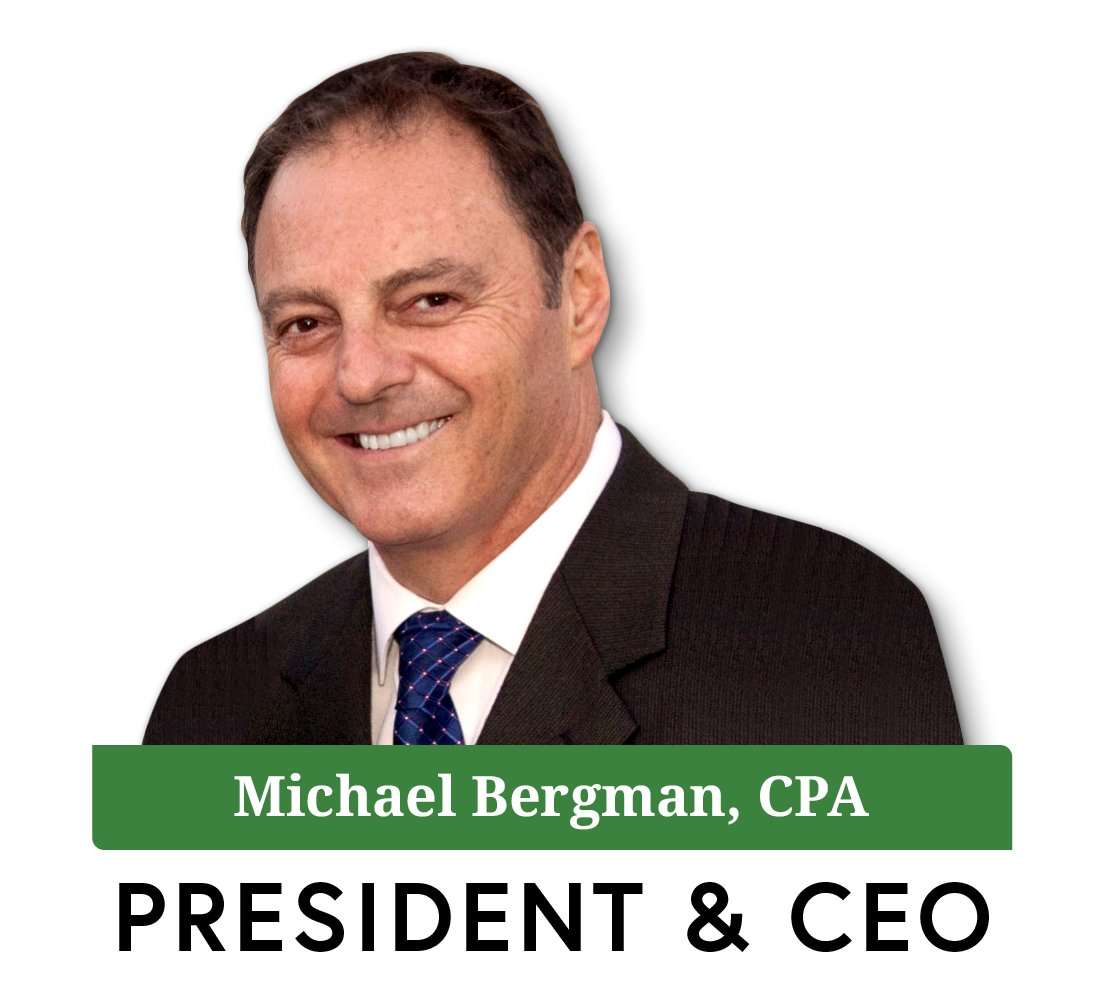
This page was reviewed by Michael Bergman, CPA, California CPA #56113. Verify license.
Disclaimer: This article is for informational purposes only and is not legal, tax, or financial advice. Tax laws change and every situation is different. Please consult a qualified attorney, CPA, or tax advisor before making decisions about your property, sale, or 1031 exchange.
Editorial Policy
All articles are reviewed for accuracy by licensed tax professionals and sourced from official government publications. Read our Editorial Policy →
About The Author
 Michael Bergman is a California licensed CPA and Real Estate Broker with over 35+ years of CPA-supervised 1031 exchange experience in commercial real estate. Specializing in 1031 tax-deferred exchanges and financial oversight, his expertise covers complex real estate transactions. Michael’s unique blend of financial acumen and real estate knowledge positions him as a trusted advisor in the industry, offering sound advice and strategic insights for successful property management and investment.