Example of a 1031 Exchange: How It Works for Investors
Warren Buffett’s number one rule for every serious-minded investor is “never lose money, even to the government.” Knowing this, why lose 10 – 37% of your profit to the IRS each time you sell a property, when you can reinvest it all without looking over your shoulders? Yes, it’s completely legal. In fact, you can do this several times, and no one will fault you for breaking the law. That’s as long as you do it through a 1031 exchange.
Universal Pacific 1031 Exchange is a reputable firm that helps investors accumulate wealth and grow their real estate portfolio through 1031 exchanges. Apart from having renowned CPA professionals to offer you bankable advice, we provide the best Qualified Intermediary services to facilitate these transactions. Book a free consultation today to start a 1031 exchange.
Whether you’re an investor or not, you should stick around to see how the process works with real-life examples. This guide will break down the process and help you develop a powerful tax-deferral investment strategy that is smart, legal, and reliable. Let’s get started.
What Is a 1031 Exchange?

A 1031 exchange is a strategy that allows real estate investors to sell their investment property and reinvest the sale proceeds while deferring capital gains tax. Instead of losing a significant portion of your taxable income to the IRS through capital gains and depreciation recapture taxes, you can preserve your equity and reinvest it into a new opportunity for investment or business purposes.
1031 exchange offers more purchasing power, greater portfolio growth, and a stronger propensity for long-term wealth. To take full advantage of these 1031 exchange benefits, it is important that you work with an experienced Qualified Intermediary (QI) when carrying out a 1031 exchange.
IRS Guidelines & Eligibility Criteria
The Internal Revenue Service provides specific rules and criteria that must be followed for a 1031 exchange to qualify for tax deferral. They include the following:
1. IRS Timeline and Deadlines
The IRS has strict deadline rules of a 45-day identification period and a 180-day closing time frame. Being ignorant of the 1031 exchange timeline does not pacify or nullify the consequences that follow as a result of defaulting the IRS rules.
If you miss any of these deadlines, the exchange is automatically disqualified, and the full amount of your capital gains becomes taxable. To avoid such unexpected taxation, ensure to hire an experienced and competent QI and start identifying potential replacement properties early.
2. The Role of a Qualified Intermediary
A Qualified Intermediary plays a vital role in a 1031 tax-free exchange. One of the basic requirements of the IRS pertaining to this exchange is that an investor must not have access to the proceeds made from the sale of a relinquished property.
So the QI holds the sale proceeds in escrow and facilitates the proper transfer of funds for a replacement property at the appropriate time. The QI also prepares the necessary documentation and ensures full compliance with IRS rules. Without a QI, your transaction does not qualify as a valid 1031 exchange.
3. Exclusions and Restrictions
While the 1031 exchange is a powerful tax-deferral tool for real estate investors, the IRS has laid out certain exclusions and restrictions on its use. A property owned and held for flipping or quick resale is not considered an investment property and does not qualify for a 1031 like-kind exchange.
For instance, you can’t buy an apartment building and sell it via a 1031 exchange unless you’ve held it for at least 12 – 24 months. Likewise, personal properties, such as a vacation home or a primary residence, are not eligible for such an exchange.
However, you can convert your vacation home and primary residence to investment properties by intentionally renting them out every month for a period of about 12 months. Once the properties satisfy the Safe Harbour Rule and other IRS requirements, they will become eligible for 1031 exchanges.
Another interesting fact you should know as an investor is that US-based real estate properties cannot be exchanged for foreign real estate assets and vice versa. This means that both the relinquished and replacement properties must be located within the United States to qualify for tax deferral under IRC Section 1031.
Understanding these exclusions will help you stay compliant with Internal Revenue Service rules and avoid potential tax liabilities. If you’re unsure about a property’s eligibility, it’s best to consult with a Qualified Intermediary or tax advisor before initiating the exchange.
Traditional 1031 Exchange Example: How It Works
What we’ve discussed so far in this article is a traditional 1031 exchange, also known as a delayed exchange. Here’s a step-by-step outline of how it works in practice to take full advantage of the tax benefits:
Step 1: Confirm Your Property’s Eligibility
Knowing that only properties held for investment purposes are eligible for a 1031 exchange, it’s important to first ascertain whether your property meets this requirement before engaging in a 1031 exchange. If you’re not sure, contact a Qualified Intermediary to advise you accordingly.
Step 2: Hire a Qualified Intermediary
Once you’re sure you’ve decided to go ahead with a 1031 exchange and your preferred property meets the requirements, the next step is to hire a QI. As we’ve discussed earlier in the article, you cannot run a 1031 exchange without a QI. In fact, you must have secured the services of the QI before selling your potentially relinquished property.
Step 3: Sell Your Investment Property

To sell the property, you may need to get a broker or real estate agent to help you find willing buyers. Then your QI will create an escrow account and draft the necessary documents to facilitate the transaction. Two of such documents are the Escrow Agreement and the Escrow Instructions.
The escrow instructions contain closing directives to the escrow and title company, if any. On the other hand, the escrow agreement captures the terms guiding the QI’s administration of the funds and the conditions for disbursement. Once satisfied, the buyer will send the funds to the designated escrow account.
Step 4: Identifying a Replacement Property (45-Day Rule)
The 45-day identification timeline will start ticking immediately after the relinquished property is sold. An investor is expected to identify potential replacement properties within this span. To further simplify this process, the Internal Revenue Service provided three different rules to guide the replacement property identification process. You’re expected to choose any of the three rules that suit you the most.
- The 3-Property Rule permits an investor to identify three different replacement properties irrespective of their fair market values.
- The 200% Rule allows you to identify more than three properties provided that their combined value doesn’t exceed 200% of the sales price of your relinquished property.
- The 95% Rule allows for the identification of more than three properties regardless of their total value. However, you must acquire at least 95% of the total value of all the properties identified. For instance, suppose you identified five rental properties with a total combined fair market value of $2,000,000. To satisfy the 95% Rule: You must purchase properties worth at least $1,900,000 (which is 95% of $2,000,000). If you only acquire $1,500,000 worth of properties, your exchange will be disqualified, and you’ll owe taxes on the sale of your relinquished property.
Step 5: Closing on the Replacement Property (180-Day Rule)
The final step in a traditional 1031 exchange is purchasing your replacement property. The IRS gives a 180-day timeline from the close sale of the relinquished property to complete this purchase. This 180-day rule is absolute, and missing it can disqualify your entire exchange.
During this stage, you would need to secure extra financing if the purchase price of the re property is higher than the sales proceeds from the relinquished asset. Once the negotiation between you and the seller is concluded, and the paperwork prepared by the QI is confirmed to be intact, the QI will transfer the funds from the escrow to the seller.
The next thing is to pay all closing costs and ensure the documents are duly signed, marking the end of the exchange.
An Example of a 1031 Exchange
Jill owns a rental single-family home in Los Angeles, inherited from her dad three years ago. She has been making some decent rental income off the property since then, but wants to sell off the building and buy another in San Francisco.
After conducting an appraisal of the property, she discovered its fair market value is $1.1 million. But the thought of losing some of this amount through capital gains tax and depreciation deductions discouraged her from going through with her plan. That was before her real estate broker told her about 1031 exchanges.
Now, she can sell the property, buy a new one in San Francisco, and defer all taxes incurred from the sale.
Jill’s first step was to consult a Qualified Intermediary on how to proceed. After a clear understanding of the process, she hired them to kick-start the procedure.
The QI further guided her on the actionable steps to avoid mistakes that could lead to tax liabilities. When her broker finally got her a buyer, the QI prepared every necessary documentation for the transaction and created an escrow account where the sale proceeds would be kept to remain IRS-compliant.
The buyer transferred the agreed sum, signed the papers, marking the close of the deal. At the advice of the QI, Jill’s agent had already started searching for a replacement property of the same market value as the one she sold. A couple of weeks later, the agent sent her a list of three suitable properties, each with an FMV within her target range.
She sent the list to the QI to officially document it. Since the list came less than 45 days from the sale of the relinquished property, the operation remained IRS-compliant. The QI did his findings and discovered that one of the properties didn’t meet the 1031 exchange criteria. He struck it out from the list, leaving two behind.
Jill finally made her choice from the remaining two properties since each has the same worth as her relinquished building. When the terms were agreed, the QI prepared the paperwork and transferred all the funds in the escrow account to the seller.
Jill and the buyer signed all the documents the QI prepared to seal the deal. She also paid all the minor expenses incurred in the transaction, including the QI, escrow, legal, and notary fees. Even if she had paid these from the sale proceeds, the deal would have remained IRS-compliant since they are all exchange-related expenses.
All these were done within 180 days of the sale of the old property. Now, she has a new rental property in San Francisco through a stress-free transaction without worrying about paying any immediate tax.
Examples of Alternative 1031 Exchange Structures
Different alternative 1031 exchange structures examples, each with its own peculiar rules for tax-deferred transactions. Examples include the following:
1. Exchanging Multiple Properties for One Larger Property
This exchange type allows real estate investors to combine the sale proceeds of multiple properties into purchasing one equal or higher value property while deferring capital gains taxes on the multiple relinquished properties. For instance, you can sell two or more apartment buildings and commercial properties to buy one bigger investment property.
Likewise, you can sell one investment property and use the exchange proceeds to buy multiple properties, provided that the total fair market value of the multiple properties is equal to or greater than the relinquished property.
2. Reverse 1031 Exchange (Buying First, Selling Later)
A reverse 1031 exchange allows investors to acquire the replacement property before selling the old property. This is a flexible option for investors who find an ideal investment opportunity before completing the sale of their relinquished real estate property.
Unfortunately, reverse exchanges are more complex than the traditional exchange, and they often come with higher costs. However, they can be invaluable when the market moves quickly or when finding a buyer for your original property may take time.
3. Improvement/Construction 1031 Exchange
The improvement or construction exchange is ideal for investors looking to increase the value of a replacement property through construction or significant upgrades. After identifying a real estate property (such as raw land, an underdeveloped site, or a dilapidated apartment building), you can use the sale proceeds from your old property to fund improvements.
These enhancements must be completed and the title transferred within the 180-day window. This structure allows investors to tailor the new real property to their specific needs and increase its future income potential, all while continuing to defer taxes.
What Is Not Allowed in a 1031 Exchange?

All it takes to nullify your transaction’s tax-deferred status is one minor mistake. As such, you must take great care when executing 1031 like-kind exchanges. Some of the things not allowed in 1031 exchanges are:
1. Personal Property and Primary Residences
The inclusion of valuable personal property is one of the most common mistakes when it comes to this type of exchange. The IRS strictly limits 1031 exchanges to real property held for business or investment purposes only.
That means your primary residence, second home, or vacation property used for personal enjoyment is ineligible. Even if a vacation home is rented part-time, it may not qualify unless it meets specific use and rental criteria. Generally, you cannot live in a 1031 exchange property, even temporarily.
2. Cash Boot
A taxable boot in a 1031 exchange is any non-like-kind property or cash you received as part of your exchange. If it’s cash, it’s referred to as cash boot. For example, if you exchange a property worth $800,000, and receive a new property valued at $750,000 plus $50,000 in profit, that $50,000 is the taxable boot and will be taxed immediately. To fully defer taxes, you must reinvest all exchange proceeds into like-kind property of equal or greater value.
3. Property Outside the United States
Under IRS guidelines, only properties located within the United States are eligible for a 1031 exchange. Even if the foreign property is held for investment, it cannot be part of a tax-deferred exchange. What this means is that you cannot sell a rental property in California and use the proceeds to purchase a condo in Mexico for rental purposes. You can only use the sale proceeds for a property in the U.S.
4. Investment Securities and Non-Real Estate Assets
1031 exchanges are strictly for real estate investment property. You cannot exchange stocks, bonds, mutual funds, or other investment securities, even if they are held in a real estate investment trust. This is because these properties are not like kind; they don’t have the same nature as the one you sold.
5. Non-Like-Kind Property
To qualify for a 1031 exchange, both the relinquished property and the replacement property must be of the same kind. This doesn’t necessarily mean they must be identical, but both must be real estate properties held for business or investment purposes.
6. Delays in Timelines
Timing is everything in a 1031 exchange. You must identify potential replacement properties within 45 days of selling your original property and complete the purchase of the new property within 180 days. Missing either deadline, even by one day, can make you incur tax liabilities.
7. Seller Financing
While offering seller financing isn’t outright prohibited, it can introduce some tax complications. This is because the installment payments you receive may be considered cash boot or taxable income. It’s best to consult a tax advisor before using this strategy.
How Many Times Can I Do a 1031 Exchange?

One of the most interesting things about this tax deferral strategy is that there’s no limit to how many times you can do a 1031 exchange. The IRS allows real estate investors to perform multiple exchanges over time, provided each transaction strictly adheres to the rules in the Internal Revenue Code.
This means you can continue rolling over the sale proceeds from one investment property into another like-kind property, deferring capital gain taxes each time. This strategy, known as continuous deferral, allows investors to gradually build a more diversified portfolio, increase returns, and preserve their wealth for decades.
For investors committed to long-term real estate investing, a series of properly executed 1031 exchanges can delay taxes indefinitely, until a final sale or inheritance event occurs. In some cases, when the investor passes away, the stepped-up basis rule can potentially eliminate the deferred taxes, making this not only a tax-saving tool but also a generational wealth strategy.
Need a Qualified Intermediary for Your 1031 Exchange?
Executing a successful tax-free exchange requires more than just good timing, you need expert assistance, precise paperwork, and full IRS compliance. From deferring taxes on your investment property to acquiring a replacement property, a reliable Qualified Intermediary is key to protecting your assets and maximizing your returns.
At Universal Pacific 1031 Exchange, we specialize in seamless, secure 1031 exchanges, backed by experienced professionals and exceptional service. Ready to make a smart, tax-efficient move and start your 1031 exchange? Contact us for a free consultation or visit our Los Angeles office today.
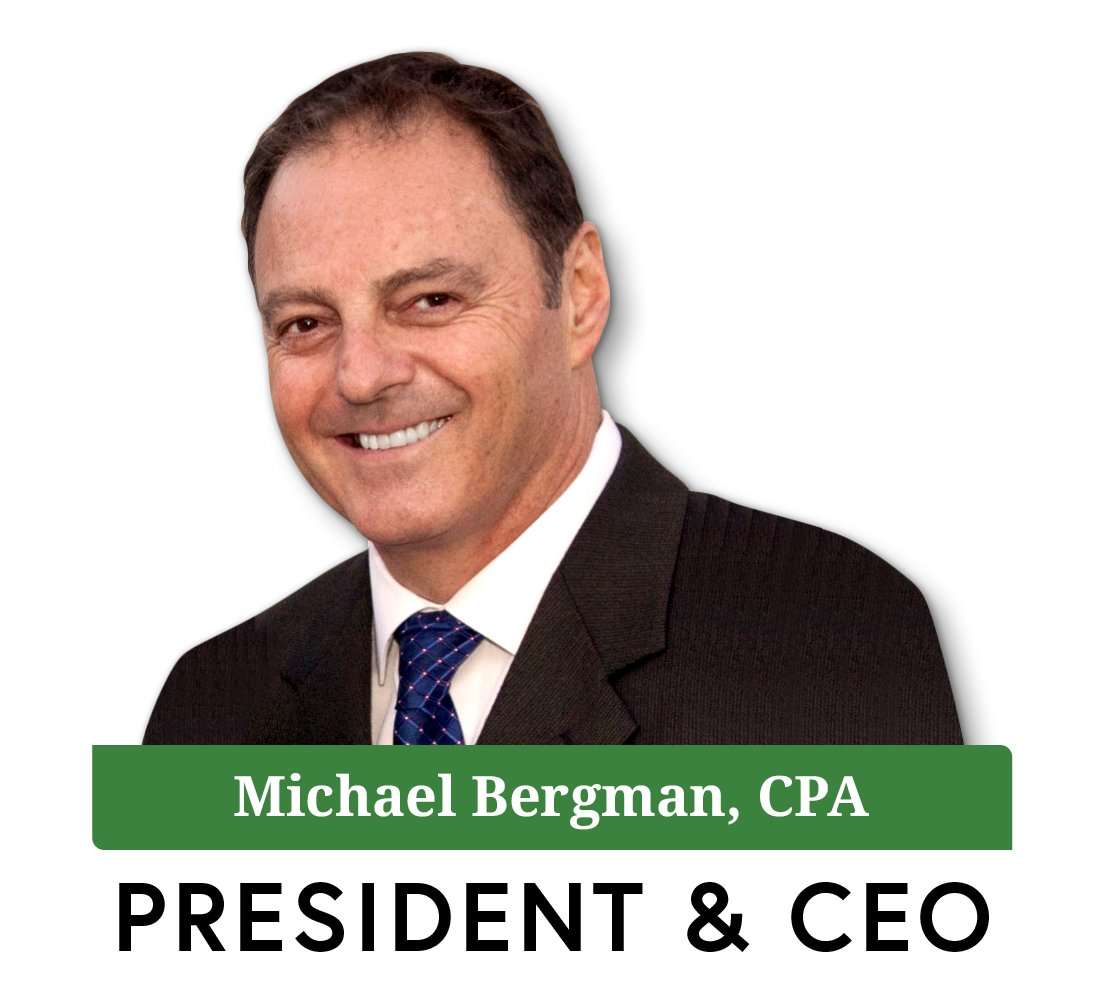
This page was reviewed by Michael Bergman, CPA, California CPA #56113. Verify license.
Disclaimer: This article is for informational purposes only and is not legal, tax, or financial advice. Tax laws change and every situation is different. Please consult a qualified attorney, CPA, or tax advisor before making decisions about your property, sale, or 1031 exchange.
Editorial Policy
All articles are reviewed for accuracy by licensed tax professionals and sourced from official government publications. Read our Editorial Policy →
About The Author
 Michael Bergman is a California licensed CPA and Real Estate Broker with over 35+ years of CPA-supervised 1031 exchange experience in commercial real estate. Specializing in 1031 tax-deferred exchanges and financial oversight, his expertise covers complex real estate transactions. Michael’s unique blend of financial acumen and real estate knowledge positions him as a trusted advisor in the industry, offering sound advice and strategic insights for successful property management and investment.