Can New Construction Qualify Under a 1031 Exchange New Construction Strategy?
Quick answer
A traditional 1031 exchange involves exchanging your investment property for another while deferring capital gains taxes. Hence, yes, a 1031 exchange absolutely can be used for new construction through a special structure called a “Build-to-Suit” or “Construction Exchange”. This allows you to use sale proceeds to build or improve a replacement property. Still, strict IRS rules, especially the 45-day identification and 180-day completion deadlines, must be followed precisely, along with the use of a Qualified Intermediary (QI) or Exchange Accommodation Titleholder (EAT) to hold funds or title.
At Universal Pacific 1031 Exchange, we are dedicated to guiding investors through every step of the exchange process with expertise and precision. Whether you’re navigating a traditional or reverse 1031 exchange, our Qualified Intermediaries ensure compliance with IRS rules, helping you preserve your tax-deferral benefits. Feel free to reach out for a free consultation on how to get started.
In this article, you’ll learn how a 1031 exchange for new construction works, the potential risks and challenges involved, and pro tips for choosing a suitable qualified intermediary for a successful tax-deferred exchange.
Can You Use a 1031 Exchange for New Construction?
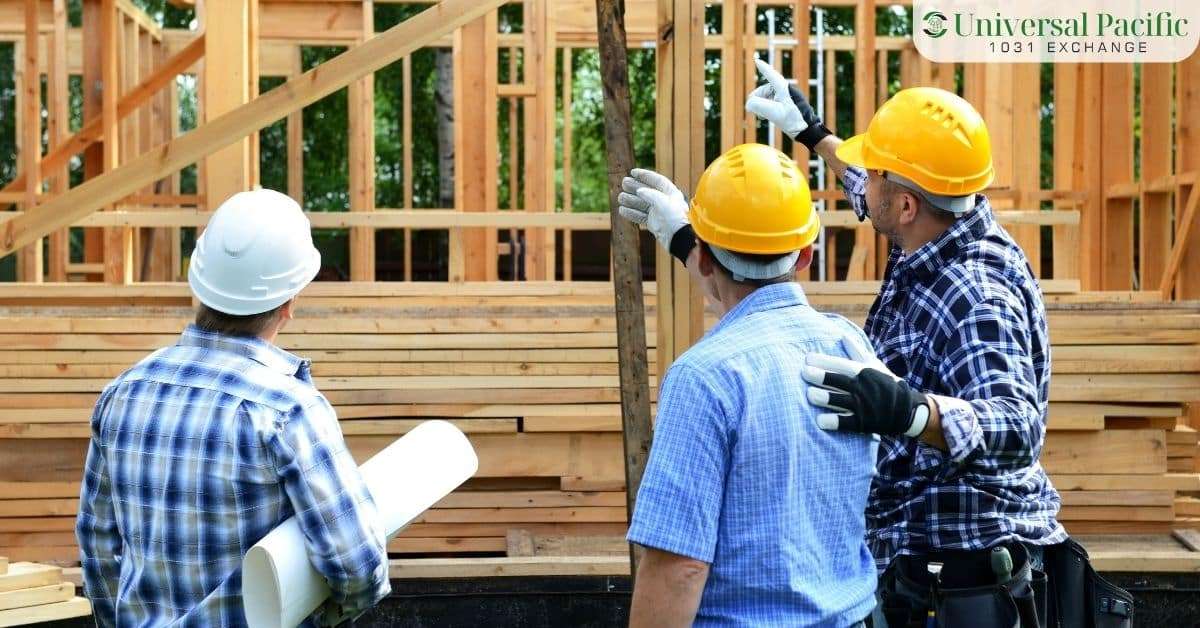
Yes, a 1031 exchange can be used for new construction through an improvement exchange or a build-to-suit exchange. These structures allow an investor to use exchange proceeds to construct or improve a replacement property, provided all IRS rules, timelines, and ownership requirements are followed.
One of the primary benefits of a new construction 1031 exchange is full customization. Investors can design and build a property that aligns with current market demand or the specific needs of a tenant, rather than compromising with an existing structure. New construction also creates increased depreciation opportunities. Because the improvements are newly built, depreciation schedules can restart, allowing investors to maximize depreciation deductions and improve cash flow over time.
Another advantage is the potential for higher long-term return on investment. New construction properties often command higher rents, experience lower maintenance costs, and require fewer capital expenditures in the early years of ownership. Finally, a new construction exchange eliminates the limitations of existing inventory. In competitive or supply-constrained markets, this strategy allows investors to deploy capital efficiently without being restricted to the availability or condition of existing replacement properties.
Build-to-Suit vs. Improvement Exchange vs. Traditional 1031 Exchange
| Exchange Type | Eligible Properties | Timeline Complexity | Common Challenges | Typical Use Cases |
| Build-to-Suit Exchange (Construction Exchange) | Vacant land or existing property where new construction or major improvements will be completed as part of the exchange | High – Must meet 45-day identification and 180-day completion deadlines; only completed improvements count. | Construction delays, cost overruns, incomplete improvements by day 180, strict IRS compliance, reliance on EAT/QI | Investors need fully customized properties, developers rolling gains into new projects, and tight inventory markets. |
| Improvement Exchange | Existing replacement property that will be renovated or improved using exchange funds | Moderate to High – Improvements must be completed within 180 days to count toward exchange value. | Misunderstanding that planned (but unfinished) improvements qualify, coordination with contractors, and timeline pressure | Investors are upgrading underperforming properties, repositioning assets, and adding value through renovations. |
| Traditional 1031 Exchange | Existing like-kind investment or business-use real estate | Low to Moderate – Straightforward purchase within IRS timelines | Finding suitable replacement property, market competition, and financing coordination | Investors seeking a simpler exchange, stabilized assets, and passive income properties |
Who Should Consider a New Construction 1031 Exchange?
Real estate developers and investors seeking to roll capital gains into new projects are prime candidates for a 1031 exchange for new construction. This strategy allows developers to reinvest proceeds from the sale of a relinquished property into a new construction project while deferring taxes under Internal Revenue Service (IRS) guidelines. Investors operating in high-demand rental markets also benefit, as acquiring a replacement investment through new construction enables them to create modern, market-ready assets that generate consistent revenue while complying with IRS rules on property transfer and timing.
Property owners needing customized assets tailored to tenant or industry specifications can also take advantage of a construction or improvement exchange. A new construction 1031 exchange allows the replacement property to be designed with specific layouts, zoning, or operational requirements, providing flexibility unavailable with existing properties and reducing vacancy risk. Passive investors focused on long-term appreciation may also benefit by reinvesting into a newly built asset within a limited liability company, deferring taxes, minimizing early maintenance costs, and positioning themselves for steady growth.
Requirements for a 1031 Exchange for New Construction

A successful 1031 exchange for new construction requires the new replacement property to be of equal or greater value than the original property, including all tax-deferred improvements completed within the exchange period and in accordance with IRS guidelines. The replacement asset must qualify as like-kind property and be used for new construction or qualifying improvements, with value measured by precisely what is completed by the actual closing, not by projected work shown in building blueprints. To preserve investment potential and avoid depreciation recapture or an unexpected tax obligation, all deferred capital must be reinvested, including any required down payment. During construction, the investor cannot be the legal owner; instead, an appointed representative, such as an Exchange Accommodation Titleholder or Qualified Intermediary, must hold title and manage funds, ensuring compliance with IRS regulations and proper use of qualified personnel.
Strict timing and reporting rules apply regardless of whether the transaction is structured as a forward or reverse exchange. The replacement property must be identified within 45 days of the sale of the relinquished asset, and the entire exchange, including completed construction, must be finalized within 180 days to provide tax deferral. In a reverse exchange, the replacement property may be acquired first, but the original property must still be sold within the same deadline. Many investors rely on the safe harbor provisions of Revenue Procedure 2000-37, which require thorough planning, proper title holding by the appointed representative, and accurate reporting of the transaction on IRS Form 8824.
How 1031 Exchange Capital Gains Taxes Are Deferred with New Construction
A 1031 exchange allows real estate investors to defer capital gains taxes by reinvesting proceeds from the sale of an investment property into a like-kind replacement property, rather than recognizing the gain immediately. Capital gains tax is typically triggered when a property sells for more than its adjusted basis, but under IRS rules, those taxes can be deferred if all sale proceeds are reinvested into qualifying real estate within strict timelines. To fully defer capital gains taxes, all of the exchange equity must be invested in products and services on the new property because any unused funds are taxable.
With build-to-suit or new construction exchanges, only improvements completed before the exchange deadline count toward the replacement value, making timing and documentation critical. Common pitfalls include receiving taxable boot from unused funds, incomplete construction, or violating identification and value rules, all of which can trigger partial or full capital gains recognition.
Investors must carefully follow tax reporting and documentation requirements, such as using a qualified intermediary, maintaining accurate records of construction costs and improvements, and filing IRS Form 8824. When executed properly, a 1031 exchange involving new construction allows investors to defer taxes while creating long-term value through development. It is important to note that to achieve full tax deferral, the investor cannot receive cash proceeds; any leftover cash may incur taxes.
How Does a 1031 Exchange for New Construction Work?
A 1031 exchange for new construction follows the same tax-deferral principle as a traditional exchange, but adds layers of complexity because the replacement property is being built or improved rather than purchased in finished form. Below is a step-by-step explanation of how the process works, followed by a separate section that clearly outlines the rules and requirements, as requested.
Step 1: Sell the Relinquished Property
The process begins with the sale of the relinquished property. This sale date officially starts the exchange timeline, triggering both the 45-day identification period and the 180-day exchange completion window. From this point forward, timing becomes critical, especially because construction must occur within the same fixed deadline.
Step 2: Exchange Funds Are Transferred to the Qualified Intermediary (QI)
After the sale, the proceeds do not go directly to the investor. Instead, the funds are transferred to a Qualified Intermediary, who holds them in a secure escrow account. The QI’s role is essential for maintaining tax-deferred status, as direct or indirect receipt of funds by the investor would immediately invalidate the exchange.
Step 3: Identification of the Replacement Property
Within 45 days of the sale, the investor must formally identify the replacement property in writing. For a new construction exchange, this identification may include vacant land or an existing structure along with a description of the intended improvements. This step locks in what property will ultimately be acquired and improved as part of the exchange.
Step 4: The “Parked Property” Strategy During Construction
Because the investor cannot hold title to the replacement property while construction is ongoing, an Exchange Accommodation Titleholder (EAT) is used. The EAT temporarily takes legal ownership of the property while improvements are being made. This “parking” arrangement prevents the investor from taking possession too early, which would otherwise trigger a taxable event and disqualify the exchange.
Step 5: Construction or Improvements Begin
Construction begins using exchange funds released by the QI as work progresses. Only improvements that are actually completed, not merely planned or contracted, by the end of the 180-day exchange period are eligible to count toward the value of the replacement property. The 180-day period includes the 45 days to identify the replacement property and an additional 135 days to finalize the purchase. A common misconception is that future or unfinished work qualifies, but the IRS only recognizes completed improvements as of the exchange deadline.
Step 6: Final Acquisition and Property Transfer
Once qualifying construction is complete and the exchange period ends, the investor takes title to the improved replacement property. This final property transfer completes the exchange. At this point, the investor owns the asset directly, and the tax deferral is preserved as long as all rules have been followed.
1031 Exchange for New Construction: Real Case Scenario
George, a Los Angeles–based real estate investor, sells his original investment property, a commercial asset valued at $500,000, and initiates a 1031 construction exchange under Internal Revenue Service (IRS) guidelines to defer capital gains taxes by reinvesting in an ideal replacement property suitable for extensive new construction.
He acquires an undeveloped parcel of land for $800,000 as his replacement investment, but under IRS rules, land alone does not suffice when the property’s worth is less than the current relinquished property at exchange completion. To fully defer taxes, George must invest at least $300,000 in qualifying permanent improvements before the deadline, as planned or future construction does not count. Throughout the process, he must retain ownership continuity, often via an exchange accommodation titleholder, until the completed property is transferred back through representative deeds.
Working with a qualified professional, such as a 1031 intermediary or tax advisor, ensures compliance and avoids tax liability. This approach is commonly used in real estate syndications and development projects, allowing investors to create value through construction rather than acquisition alone. When executed correctly, a 1031 exchange for new construction enables tax deferral, asset repositioning, and long-term portfolio growth.
Forward vs. Reverse 1031 Exchange for New Construction
A forward construction 1031 exchange occurs when an investor sells their relinquished asset first and then uses the sale proceeds to acquire land and complete improvements on a new construction project. This structure works well when the investor has time to identify the right property and complete enough construction within the exchange timeline to meet IRS value requirements. In a typical construction 1031 exchange, only improvements completed before the exchange deadline count toward the replacement value, making careful planning essential for any 1031 exchange, new construction, and new property strategy.
In contrast, reverse construction 1031 exchanges allow an investor to acquire and begin improving a new property before selling the relinquished asset. This approach requires a proper parking structure, where an exchange accommodation titleholder temporarily holds title to either the old or new property while construction is underway. Reverse exchanges are often used when the right property becomes available unexpectedly or when timing risks could jeopardize a forward exchange, but they are more complex and require experienced professionals to remain compliant.
What Are The Costs Related to a 1031 Exchange for New Construction?
The costs associated with a 1031 exchange for new construction depend largely on whether the transaction is structured as a forward exchange or a reverse exchange. Qualified Intermediary (QI) fees typically range from $750 to $2,000 for forward exchanges, while more complex reverse exchanges can reach $5,000 or more. Most construction 1031 exchanges also require an Exchange Accommodation Titleholder (EAT), with fees commonly starting between $3,000 and $5,000. In addition, investors should account for legal and administrative costs, which often range from $1,000 to $5,000 or more, especially when dealing with complex timelines, ownership structures, or compliance requirements.
When a 1031 exchange involves new construction or active development, additional costs arise from managing the new construction project itself. These may include architectural, engineering, permitting, inspection, and appraisal fees, which typically range from $500 to $2,500 for inspections and appraisals, while design and permitting costs can run from a few thousand dollars to tens of thousands, depending on scope. For reverse exchanges or projects requiring financing, loan origination fees, interest, and financing charges may apply.
Potential Risks Associated With 1031 Exchange for New Construction
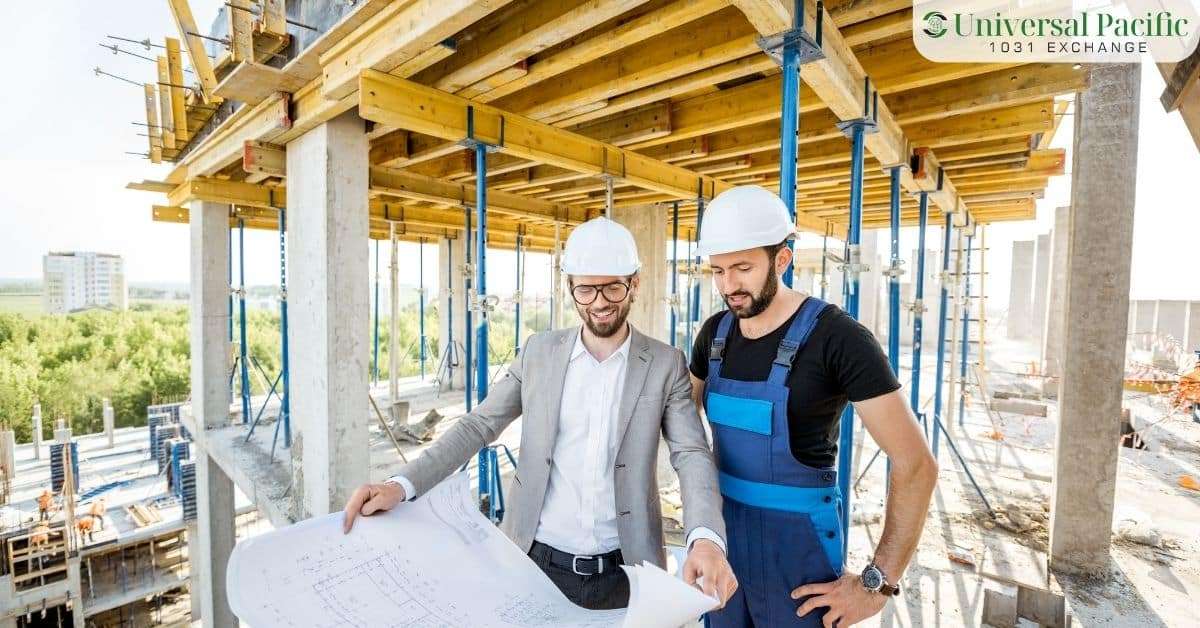
A 1031 exchange for new construction involves more complexity and uncertainty than purchasing an existing property because the replacement asset is still being developed. One of the most common risks is construction delays, which may result from permitting issues, weather conditions, labor shortages, financing problems, or other unforeseen circumstances. These delays are critical because the IRS requires that qualifying improvements be completed within the exchange’s safe harbor period. In addition, strict IRS rules and requirements, including like-kind standards, property value tests such as the 200% rule, and rigid timelines, must be followed precisely. Any misstep can disqualify the exchange and trigger immediate capital gains taxes.
Financing and cost management also present significant risks in a construction-based exchange. If the sale proceeds from the relinquished property exceed the amount reinvested, the investor may receive taxable boot and incur unexpected tax liability. At the same time, insufficient funds can stall construction and jeopardize exchange completion. Managing construction costs is particularly challenging, as investors must budget not only for land acquisition but also for labor, materials, permits, professional fees, and unforeseen overruns throughout the build-out process.
Another major risk involves replacement property identification and changing plans. Identifying a suitable replacement property for a 1031 exchange can be complicated when the property does not yet exist and must instead be described through architectural plans, permits, and contracts that may evolve during construction. Changes to design or scope can create discrepancies between the originally identified replacement property and the final completed asset, threatening compliance. Additionally, market volatility can impact property values, construction costs, and financing terms, introducing further uncertainty that may affect the viability and timing of a new construction exchange.
Common Challenges and Solutions in 1031 Exchange Tear-Down Property and Improvement Exchange

A teardown property in a 1031 exchange typically refers to a replacement property that is acquired with the intent to demolish an existing structure and redevelop the site through a construction or improvement exchange. While this strategy can unlock significant value, it introduces challenges related to timing, valuation, and strict IRS compliance. Investors must complete qualifying improvements within the exchange period and ensure that the total value of the replacement property, including completed construction, meets or exceeds the value of the relinquished property. Accurately valuing partially completed improvements, coordinating demolition schedules, and meeting identification requirements can be difficult, particularly when project timelines shift or construction phases overlap with exchange deadlines.
Practical solutions begin with early planning and guidance from a qualified intermediary, tax advisor, and construction team experienced in improvement exchanges. Clear contingency planning, such as phased construction schedules, conservative budgeting, and pre-approved permits, helps reduce the risk of delays or cost overruns. Successful teardown exchanges often involve investors who acquire the property, complete demolition and foundational improvements within the exchange window, and document all qualifying work before title transfer.
Need a Qualified Intermediary?
A 1031 exchange for new construction involves some complexities that may pose serious challenges if you do not pay attention to them. To maximize the benefits of tax-deferred exchange with new construction, it’s crucial to have a proper understanding of these factors and develop a suitable strategy to address them.
At Universal Pacific 1031 Exchange, our team of experts boasts 35+ years of experience to facilitate and guide you through a successful exchange process. Book a free consultation with us today to start an exchange.
FAQs
Here are answers to questions people frequently ask about the 1031 exchange for new construction.
Can I Use a 1031 Exchange for New Construction on Commercial Real Estate?
Yes, a 1031 exchange for new construction can be used on commercial real estate through an improvement exchange or build-to-suit exchange, allowing investors to reinvest sales proceeds from a relinquished property into constructing or improving a replacement property. All IRS rules, timelines, and ownership requirements must be followed to ensure the transaction remains tax-free.
What Are the Timelines for a 1031 Exchange Involving New Construction?
Investors must identify potential replacement properties within 45 days of selling the first property and complete the acquisition or construction within 180 days to comply with IRS rules. Failing to meet these deadlines can disqualify the exchange and make the entire gain immediately taxable.
How Does a Build-To-Suit 1031 Exchange Differ From a Traditional Exchange?
A build-to-suit exchange allows investors to use exchange proceeds to construct or customize a replacement property, whereas a traditional exchange typically involves acquiring an existing property of equal or greater value. Ownership of the replacement property is often held by a Qualified Intermediary (QI) or Exchange Accommodation Titleholder (EAT) during construction to maintain compliance.
What Are the Risks of Missing the 45-Day Identification Deadline?
Missing the 45-day window to identify potential replacement properties disqualifies the exchange, and the entire gain from the sale of the first property becomes immediately taxable. It may also lead to IRS penalties, lost tax deferral benefits, and complications in accounting for deferred gain.
This page was reviewed by Michael Bergman, CPA, California CPA #56113. Verify license.
Disclaimer: This article is for informational purposes only and is not legal, tax, or financial advice. Tax laws change and every situation is different. Please consult a qualified attorney, CPA, or tax advisor before making decisions about your property, sale, or 1031 exchange.
Editorial Policy
All articles are reviewed for accuracy by licensed tax professionals and sourced from official government publications. Read our Editorial Policy →
About The Author
 Michael Bergman is a California licensed CPA and Real Estate Broker with over 35+ years of CPA-supervised 1031 exchange experience in commercial real estate. Specializing in 1031 tax-deferred exchanges and financial oversight, his expertise covers complex real estate transactions. Michael’s unique blend of financial acumen and real estate knowledge positions him as a trusted advisor in the industry, offering sound advice and strategic insights for successful property management and investment.