
Can You Gift a 1031 Exchange Property?
Quick answer
You can gift a 1031 exchange property without losing the tax benefits of the exchange. However, this is only possible if you adhere to strict IRS conditions. For instance, the IRS requires that both the relinquished property and replacement property involved in a like-kind exchange be held for business or investment.
So, gifting too soon after an exchange may imply that the exchange was a ploy to cheat the system and evade tax, even though your property wasn’t primarily purchased for investment purposes. The endpoint of this is that your exchange will be disqualified, opening you up to immediate tax liabilities. This is why you need to understand the rules around holding periods, gift tax exclusions, capital gains implications, and property tax reassessment before gifting a property.
With 35+ years of hands-on experience, our experienced qualified intermediaries at Universal Pacific 1031 Exchange have the expertise and experience to facilitate 1031 exchanges without violating any IRS requirement. We’re committed to guiding you through every step of the exchange process and helping you gifting your 1031 exchange property in an IRS-compliant manner. Schedule a free consultation with us today to get started.
This blog explains how gifting a 1031 exchange property works, the potential tax consequences, who you can gift the property to, and other important factors you should consider.
How Does the Gifting Process Actually Work?

Gifting a 1031 exchange property refers to the act of transferring ownership of the property to another person, such as a family member, without receiving payment. It is a strategic way to transfer wealth, reduce taxes, and support loved ones. Legally, it is considered a gift by the IRS if the value of the gifted property does not exceed the annual gift tax exclusion ($19,000 per recipient for 2025 and 2026).
In terms of tax, the recipient of the gifted property inherits the original cost basis of the property under IRC Section 1015, meaning they may owe capital gains tax if they sell it later. If the gift exceeds the lifetime gift and estate tax exemption ($15 million per individual for 2026, up from $13.99 million in 2025 under the One Big Beautiful Bill Act), it may trigger gift taxes for the giver.
If the property is gifted too soon after a 1031 exchange, the IRS may argue that the exchange was not for investment purposes, which could disqualify the tax benefits. Many people gifting real estate do so as part of their estate plan to reduce estate taxes, support heirs with inherited property strategies, transfer wealth efficiently, avoid probate, provide financial security, or donate to charity.
Can You Gift a 1031 Exchange Property?
Yes, you can gift a 1031 exchange property to a related party, but you must follow certain requirements. The Internal Revenue Service (IRS) requires that every like-kind property involved in a 1031 exchange must be held for investment or business purposes.
Particularly, you would have to own the property for a holding period of at least two years to prove your investment intent. Gifting the property too soon after the exchange violates these rules. Consequently, the IRS will disqualify the tax-deferred status, leading to immediate tax liability.
What Is the Holding Period Requirement Before Gifting a 1031 Exchange Property?
1031 exchange experts recommend a holding period of at least two years before gifting any real estate property you acquired through like-kind exchanges. While two years is a common safe-harbor period, longer holding times, such as three to five years, may provide even stronger evidence of investment intent, especially for high-value properties.
However, note that the IRS does not specify an exact minimum holding period before gifting a 1031 exchange property. The recommended two-year holding period is based on various key factors:
- IRS Scrutiny on Intent – If the IRS determines that you exchanged the business property with the intent to gift it rather than hold it for investment, they may revoke the 1031 exchange benefits. That’s why holding the property for at least two years is often recommended to establish a clear investment intent.
- Revenue Procedure 2008-16 – This IRS guideline refers primarily to vacation homes and the conditions for them to qualify for 1031 exchange benefits. Nonetheless, it suggests that holding an investment or rental property for two full years, with rental activity and proper documentation, one can help prove it was acquired for investment purposes.
- Tax Court Cases – In past cases, the IRS has successfully challenged 1031 exchanges where the property was sold or gifted less than two years after acquisition. As such, tax professionals consider the two-year holding period safe and significantly reduce the risk of audit and tax consequences.
How to Demonstrate the “Intent to Hold for Investment” Before Gifting
The IRS requires that the exchanged property be used for business, rental income, or long-term appreciation before any significant changes in ownership. If the IRS determines that the property was never truly intended for investment, it may invalidate the exchange and impose back taxes on the deferred capital gains.
Therefore, if you intend to gift the property, it is generally best to wait at least two years after the 1031 exchange before you transfer ownership. Avoid immediate gifting, selling, or personal use that could signify a lack of investment intent.
During the holding period, you should also use the property as a rental, business asset, or investment to generate income. As proof of these actions, document rental activity or business use through lease agreements, financial records, and tax filings.
Who Can You Gift a Property To?

You can gift property to almost anyone, but there are legal and tax considerations to keep in mind. Below are the most common recipients of gifted properties and the rules surrounding them.
1. Family Members
Many people choose to gift property to their children, grandchildren, or other relatives as a way to pass down wealth. It can help keep assets within the family while also providing financial stability for heirs. Some parents gift homes to their children so they can have a place to live without the burden of purchasing a house themselves.
However, gifting real estate to family members may have tax implications. If the value of the property exceeds the annual gift tax exclusion, which is $19,000 per recipient for 2026, the giver must file a gift tax return through IRS Form 709.
On the other hand, gifts that are below the annual gift exclusion for the calendar year are not taxable; the recipient will inherit the original cost basis of the property. We recommend that you look up our blog on 1031 exchange for related parties to understand how to handle like-kind exchanges involving family members.
2. Charities
Donating real estate to a charity is an effective way to support a cause while also receiving significant tax benefits. It is a meaningful option for individuals who do not have heirs or want to leave a lasting legacy.
By gifting properties to a qualified person or organization under IRC Section 501(c)(3), you can take a charitable deduction on your income taxes based on the property’s fair market value. That way, you can significantly lower taxable income, thereby reducing your overall tax burden. Additionally, charitable giving can help reduce the size of an estate, potentially lowering estate taxes.
3. Trusts
A trust is a legal entity that holds assets for the benefit of specific beneficiaries. When a property is placed in a trust, the trustee manages it according to the rules set by the grantor (the person who creates the trust). One of the main benefits of gifting property to a trust is that it allows for structured gifting.
Structured gifting is especially helpful if the recipient is a minor or financially irresponsible. It can also come in handy if the giver wants to make sure the property is used for a specific purpose, such as funding education or providing long-term housing. A trust can also help avoid probate, the legal process of distributing assets after death, which can be costly and time-consuming.
4. Business Entities (LLCs or Corporations)
Instead of transferring the real estate directly, you can choose to transfer the property into a Limited Liability Company (LLC) or a family-owned corporation and then gift shares of that entity. This strategy allows you to gradually transfer ownership, reducing gift tax liability while still maintaining control of the property.
Gifting property through an LLC allows for liability protection, meaning the recipient is shielded from personal liability if legal issues arise concerning the property. Additionally, the giver can spread the gift over several years to stay within the annual gift tax exclusion limit, avoiding immediate tax consequences.
5. Friends or Non-Relatives
Some people choose to gift property to close friends as a way to express gratitude or support someone in need. However, gifting property to non-relatives may require extra legal documentation to ensure the transfer is properly recorded and does not create future disputes.
There are no legal restrictions on gifting property to friends, business partners, or non-relatives, but the same tax laws apply. If the value of the gift exceeds the annual exclusion amount, a gift tax return must be filed. Unlike inherited property, which receives a stepped-up basis under IRC Section 1014 regardless of the heir’s relationship to the decedent, gifted property carries over the donor’s original cost basis. This means non-relatives who receive a gift (not an inheritance) could owe significant capital gains taxes if they sell the property later.
Are There Any Special Gifting Rules for California?

California has specific rules that impact property gifts, especially when it comes to property tax reassessment. Under Proposition 13, property taxes in California are based on the property’s purchase price and can only increase by a limited percentage each year. However, when the property is gifted, it is typically reassessed at its current market value, which can lead to significantly higher property taxes for the recipient.
There are exemptions for parent-to-child and grandparent-to-grandchild transfers under Proposition 19 (effective 2021), but only if the recipient uses the property as their primary residence. If the recipient intends to keep it as an investment property or rental, the reassessment applies, leading to a potentially much higher tax bill.
Additionally, California is a community property state, meaning that assets acquired during marriage are considered jointly owned. Gifting property between spouses is generally tax-free under federal law, but the community property rules should be considered when structuring the transfer.
What Are the Consequences of Gifting a 1031 Exchange Property?
Gifting a 1031 exchange property can have significant tax and financial consequences, especially if the gift is made too soon after the exchange. Let’s quickly look at the possible consequences below:
- The IRS may disqualify the original exchange if you gift the replacement property too soon. Generally, gifts exceeding the tax exemption threshold attract IRS audits. Once your exchange is disqualified, you’ll be forced to pay any previously deferred capital gains taxes.That’s why we advise that you observe a reasonable holding period to demonstrate a proper intent of investment before gifting. Additionally, endeavor to work with an experienced 1031 exchange-qualified intermediary to ensure the exchange complies with IRS rules before gifting.
- When you gift a property, the IRS treats it as a taxable gift if its FMV exce
- eds the annual gift tax exclusion, which is $19,000 per recipient for 2026. Consequently, it reduces the total tax-free amount a person may give out in their lifetime, which is $15 million for 2026, as adjusted under the One Big Beautiful Bill Act. Hence, large gifts can reduce the amount of the estate that can pass tax-free to heirs upon death. Gifting the property through an LLC, family partnership, or trust can help reduce the gift tax dollars by allowing the donor to take advantage of the annual exclusion over multiple years.
- The recipient may owe significant capital gains taxes on the property’s appreciation if they sell it later. This is because when you gift real property, the recipient inherits the original tax basis of the property. For this reason, many individuals choose to hold onto the property until death rather than gift it during their lifetime. This second approach will save the recipient from paying the deferred capital gains taxes because they will inherit the property’s stepped-up basis and not its cost basis.
- In states like California, gifting a property can trigger a property tax reassessment, potentially increasing the recipient’s annual tax bill. However, some exceptions apply, such as parent-to-child or grandparent-to-grandchild transfers, which may avoid reassessment under Proposition 19 if the recipient uses the property as their primary home. Before gifting a 1031 exchange property, check local tax laws to determine if a reassessment could cause an unexpected financial burden for the recipient.
- On the other hand, if a property is transferred at death (through inheritance, not a gift), the recipient receives a stepped-up basis under IRC Section 1014 equal to the fair market value at the time of death, potentially erasing previously deferred capital gains taxes. If you’re concerned about long-term care planning, it may be wiser to transfer the property into a Medicaid asset protection trust rather than gifting it outright.
How to Determine Fair Market Value for Gifting
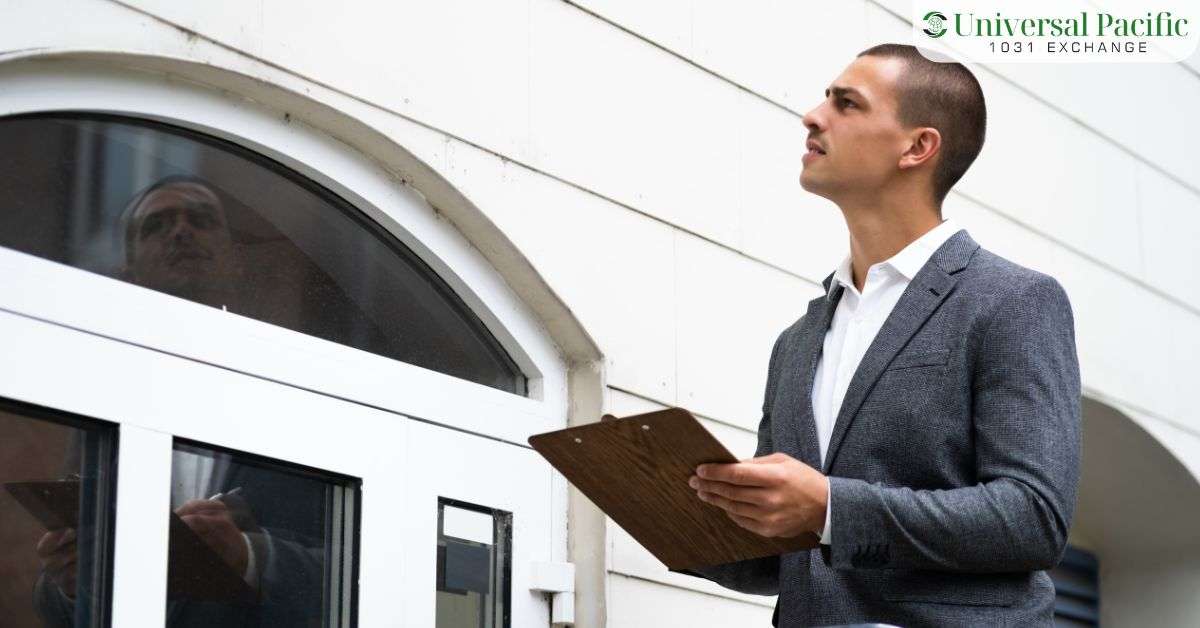
When gifting a 1031 exchange property, it is important to determine its fair market value (FMV) accurately. The FMV represents the price a willing buyer would pay to a willing seller in an open market, without any pressure to buy or sell. This value is used for gift tax reporting, property tax reassessment, and future capital gains tax calculations.
The most accurate and widely accepted method to determine the FMV of a property is by hiring a licensed real estate appraiser. An appraiser provides an official appraisal report based on market data. During the appraisal, the appraiser considers the following:
- Comparable Sales – Analyzing recent sales of similar properties in the same location.
- Income Approach – For rental properties, this method evaluates how much income the property generates compared to similar investment properties.
- Cost Approach – Estimating the cost of rebuilding the property from scratch, adjusted for depreciation.
If you don’t want to hire an appraiser, you can determine FMV by conducting a comparative market analysis (CMA). This involves researching recent sales prices of similar properties in the same neighborhood. Real estate agents often provide free CMAs for homeowners, making this an affordable way to estimate FMV. However, CMAs are less precise than formal appraisals and may not always be accepted for tax purposes.
Another way to estimate FMV is by reviewing the property’s assessed value from the local county tax assessor’s office. Many counties reassess properties annually or at the time of sale, providing a general estimate of market value. However, assessed values are often lower than actual market value, as they may not reflect recent market changes.
You can also use online valuation tools such as Zillow or Realtor.com to estimate property values based on automated valuation models (AVMs). Online estimates can provide a general idea of FMV, but they are not reliable for official tax reporting. To avoid a potential showdown with the IRS, it is recommended to confirm your FMV with an appraisal.
Need a Qualified Intermediary for Gifting 1031 Property?
Gifting a 1031 exchange property is possible, but it comes with important tax considerations. Holding the property for at least two years before gifting helps establish investment intent and avoids IRS scrutiny. Additionally, you have to understand gift tax rules, capital gains consequences, and property tax reassessment to ensure a smooth and tax-efficient transfer.
Whether you are gifting to a family member, trust, charity, or business entity, careful planning can help minimize tax burdens and maximize benefits. If you are considering gifting a 1031 exchange property, consulting with a qualified intermediary, tax advisor, or estate planner is highly recommended.
As the best Qualified Intermediary nationwide, Universal Pacific 1031 Exchange has all it takes to make your exchange and gifting stress-free and successful. Our experts are here to guide you through every step, making sure you maximize your tax deferral benefits while achieving your investment goals. Reach out to us today to start an exchange and receive professional guidance throughout the exchange period.
FAQ
1. Can You Gift a 1031 Exchange Property to a Family Member?
Yes, gifting a 1031 property to a related party is legally possible. However, you must hold the property for at least 24 months before giving it out. This serves as proof that the property was originally purchased for business and investment purposes in compliance with the provisions of the Internal Revenue Code. If the IRS has reasons to believe you’re gifting a property immediately after the exchange, they can invalidate the exchange, making you liable for immediate capital gains tax.
2. Can You Gift a 1031 Exchange Property Without Paying Tax?
Yes, gifts are not subject to capital gains tax at the time of transfer because they are considered a non-taxable transfer. However, if the fair market value (FMV) of the property excludes the annual gift tax exclusion ($19,000 per recipient for 2026), you must file a Gift Tax Return (IRS Form 709).
3. Can You Rent to a Relative in a 1031 Exchange?
Yes, you can rent a 1031 exchange property to a relative as long as it’s treated as a genuine investment property. This means that the relative must pay rent to you. If the property is used for personal benefit rather than investment, the IRS may disqualify the 1031 exchange, making the capital gains taxable.
4. What Is the Holding Period Before Gifting a 1031 Exchange Property?
tax professionals recommend holding a 1031 exchange property for a period of at least 24 months before gifting it, especially to a family member. If you gift a property too soon, the IRS may argue that the exchange was a disguise for a transfer, not investment purposes, and may disallow the tax deferral.
5. Are There Gift Tax Implications When Gifting a 1031 Exchange Property?
Yes, there are tax implications for gifting a 1031 exchange property, provided that its value exceeds $19,000. The giver must also file IRS Form 709, the Gift Tax Return, and pay the ensuing tax on the sum above the threshold.
On the part of the recipient, there is no immediate tax payment for receiving a gift. However, the recipient automatically inherits its cost basis. If the person eventually decides to sell the property, it’ll trigger capital gains taxes that will be calculated based on the original cost basis and not the current market value.
6. How Does the Recipient’s Cost Basis Work After a Gift?
After receiving a 1031 exchange property as a gift, the recipient inherits the original cost basis of the donor. This is the very first purchase price, disregarding the current market value of the property at such time.
Conversely, this carryover basis has a huge impact and would be used to calculate their capital gains taxes should they want to sell the property. On the other hand, if a property is transferred at death (through inheritance, not a gift), the recipient receives a stepped-up basis under IRC Section 1014 equal to the fair market value at the time of death, potentially erasing previously deferred capital gains taxes.
This page was reviewed by Michael Bergman, CPA, California CPA #56113. Verify license.
Disclaimer: This article is for informational purposes only and is not legal, tax, or financial advice. Tax laws change and every situation is different. Please consult a qualified attorney, CPA, or tax advisor before making decisions about your property, sale, or 1031 exchange.
Editorial Policy
All articles are reviewed for accuracy by licensed tax professionals and sourced from official government publications. Read our Editorial Policy →
About The Author
 Michael Bergman is a California licensed CPA and Real Estate Broker with over 35+ years of CPA-supervised 1031 exchange experience in commercial real estate. Specializing in 1031 tax-deferred exchanges and financial oversight, his expertise covers complex real estate transactions. Michael’s unique blend of financial acumen and real estate knowledge positions him as a trusted advisor in the industry, offering sound advice and strategic insights for successful property management and investment.