

Who Is the Exchanger in a 1031 Exchange?

In a 1031 exchange, the exchanger is you: the person or entity who sells the property given up and buys a new replacement property. Federal tax law calls this party “the taxpayer,” and the person reporting the transaction uses Form 8824. The qualified intermediary (QI) is a separate, independent third party that holds the sale proceeds, so it is not the exchanger.
Universal Pacific 1031 Exchange works on the other side of that line, as the QI that holds your exchange funds until closing. Our qualified intermediary services, overseen by Michael Bergman, who has been a CPA since 1990, cover exchanges in all 50 states, and we use separate accounts with $2 million in E&O insurance. Schedule a free consultation before listing your property, so you can sign the exchange agreement before closing your sale.
This article explains who the exchanger is, what the exchanger must do, and how that role differs from the QI, the exchange accommodation titleholder (EAT), and disqualified individuals.
Table Of Contents
- What Does “Exchanger” Mean in a 1031 Exchange?
- Who Can Be the Exchanger?
- What Are the Exchanger’s Responsibilities in a 1031 Exchange?
- How Does the Exchanger Complete a 1031 Exchange Step by Step?
- Step 1. Talk to Your Tax Advisor and Choose a Qualified Intermediary
- Step 2. Sign the Exchange Agreement and Assign the Sale Contract
- Step 3. Close the Sale and Send the Proceeds to the QI
- Step 4. Identify Potential Replacement Properties by Day 45
- Step 5. Assign the Purchase Contract So the QI Can Close
- Step 6. Take Title in the Same Taxpayer Name
- Step 7. Report the Exchange on Form 8824
- How Is the Exchanger Different From Other Parties in the Exchange?
- What Happens When the Exchanger and a Related Party Trade Property?
- How Is the Exchanger’s Money Protected?
- Ready to Start Your 1031 Exchange as the Exchanger?
- Frequently Asked Questions
What Does “Exchanger” Mean in a 1031 Exchange?
“Exchanger,” also spelled “exchangor,” is industry shorthand for the property owner doing a tax-deferred exchange. According to Section 1031 of the Internal Revenue Code, this means the owner swaps real property held for business or investment for like-kind real property. Each deal pairs a relinquished property sale with the purchase of the replacement, and the exchanger sits on both sides.
The Treasury regulations on deferred exchanges skip the label and describe an exchange in which “the taxpayer transfers” the relinquished property and “subsequently receives” the replacement property.

You are the exchanger; the QI, EAT and escrow can’t be you or a disqualified person.
The word “exchanger” appears nowhere in the statute, that regulation, IRS Publication 544, or the Form 8824 instructions. Tax law and IRS regulations say “the taxpayer,” and IRS forms say “you.” Like-kind exchange deferral dates to the Revenue Act of 1921, according to the U.S. Treasury Office of Tax Analysis.
Is the Exchanger the Same as the Qualified Intermediary?
No, and usually the confusion begins with names. Labels in the industry such as “exchange accommodators,” “exchange companies,” and “facilitators” all refer to a QI and sound like “exchanger.”
For its safe harbor rules, the regulation excludes any party used in a safe harbor from the term “taxpayer,” naming the qualified intermediary as an example. Publication 544 uses the label “exchange facilitator” for a QI, escrow holder, or trustee “that holds exchange funds for you.”
The QI holds the money while you choose the properties and sign the contracts, which answers most questions about who handles a 1031 exchange.
Why Does the IRS Call the Exchanger the Taxpayer?
Tax consequences fall to you personally; they don’t hit the QI directly. The deferral covers capital gains taxes and depreciation recapture you would owe on a regular sale. Under Section 1031(d), your tax basis carries over, so the postponed gain waits inside the property acquired.
Section 1031(b) taxes your gain up to any cash, along with the fair market value of other property that you receive. That tax liability is yours, and the Form 8824 instructions put the filing on you as well.
Who Can Be the Exchanger?

Individuals, LLCs, partnerships, corporations and trusts can all act as the exchanger in a 1031.
Section 1031 applies to “the taxpayer” without limiting the types of owners. People, LLCs (Limited Liability Companies), partnerships, S corporations, C corporations, and trusts can all be the exchanger.
Treasury’s figures show how varied exchangers are, from corporate vehicle fleets to real estate investors. In 2007, according to the Office of Tax Analysis, C corporations deferred $25.8 billion of gains, partnerships around $35.6 billion, and individuals $21.2 billion. Those years predate the 2018 real-property-only rule. Over half of the corporate deferred gain came from vehicle-related exchanges, while real estate accounted for nearly 90% of the gains partnerships deferred.
For tax year 2013, the latest year in the IRS Statistics of Income series, individuals, corporations, and partnerships filed a combined 357,207 Forms 8824. That count predates 2018, so it still includes exchanges of equipment and vehicles.
Many property owners use an LLC in a 1031 exchange, and some use an S corporation to exchange too. An irrevocable trust holding investment real estate can also be the exchanger. Foreign investors qualify as well, though Section 1031(h) says that U.S. and foreign real estate are not of like kind.
Does the Same Taxpayer Have to Sell and Buy?
Yes, the taxpayer that transfers the relinquished property has to be the taxpayer that takes title to the replacement. People refer to this as the same taxpayer rule, though no single regulation uses those exact words.
A single-member LLC fits inside that rule. Under Treasury Regulation 301.7701-2(a), a disregarded entity’s activities are treated as its owner’s. Your single-member LLC can sell and you can buy in your own name, and for tax purposes that is still one taxpayer.
Adding a spouse to the new deed, or deeding the property into a new multi-member LLC, can mean a different taxpayer is buying. Talk to your tax advisor about settling titles before the first closing date.
What If the Exchanger Is a Partnership or Multi-Member LLC?
When a partnership does a 1031 exchange, the partnership is the exchanger, not its individual partners. It works the same way for a multi-member LLC taxed as a partnership, too. Partners who want to split up often look at a drop and swap using tenancy-in-common interests, which takes careful timing.
What Are the Exchanger’s Responsibilities in a 1031 Exchange?
Your QI holds the funds and tracks the dates, but the duty to ensure compliance with four core rules stays with you.
Hold Both Properties for Business or Investment Purposes

Improved or unimproved, real property held for investment is like-kind to other real property.
Section 1031(a)(1) covers real property “held for productive use in a trade or business or for investment.” This test applies equally to both the relinquished asset and the replacement one. So you should have a purpose related to business or investment for each of them separately.
The regulation on like-kind property looks at the nature or character of property, not its grade or quality: whether it is improved or unimproved “is not material.” So, vacant land can qualify to be traded for a commercial building. A condo can be exchanged for a single-family house if both are held as rentals or investments. Under Treasury Regulation 1.1031(a)-3, interests like easements are considered real property, so they are relevant when people plan exchanges.
A primary residence doesn’t qualify, and neither does a vacation home kept for personal use. Under Section 1031(a)(2) rules, lots that are primarily held for sale by developers are specifically excluded. A rental property or any other kind of business property can also serve as an investment on both sides.
Avoid Constructive Receipt of the Sale Proceeds
Under the regulation, money is constructively received when it is “credited to the taxpayer’s account, set apart for the taxpayer, or otherwise made available.” Money that gets to your agent is money that has gotten to you. If you take the full price in cash before receiving the replacement property, the regulation says the deal “will constitute a sale and not a deferred exchange,” which makes it a taxable event.
The statute does not mention qualified intermediaries at all. A QI is the standard way to avoid constructive receipt in a delayed exchange, but qualified escrows and qualified trusts also work. IRS Fact Sheet FS-2008-18 calls a QI “one way to avoid premature receipt of cash or other proceeds.”
To use the QI safe harbor, your exchange agreement must bar you from receiving, pledging, or borrowing against the money until the exchange ends, with narrow exceptions, such as when no property is identified by day 45. Proceeds from the exchange can also cover commissions, taxes that are prorated, recording or transfer taxes, and title fees. Paying other costs from that fund, such as loan fees or repairs, can result in taxable boot.
Identify Replacement Properties Within 45 Days

You must identify replacement properties in writing by midnight on day 45 after the transfer.
The deadline for identification is midnight on the 45th day after you’ve transferred the property that you’re giving away. You identify replacement properties in a signed written document delivered to a party to the exchange other than yourself or a disqualified person, usually your QI.
The identification rules cap that list. The three-property rule: you can name up to three properties, regardless of their fair market value. The 200% rule allows more names if their combined value stays within twice what you sold. A 95% exception covers a longer list when you acquire identified properties worth at least 95 percent of the total value of everything you identified.
Close Within 180 Days and Reinvest Enough to Avoid Boot
The exchange period ends on day 180 after you transfer the relinquished property or on your tax return due date, including any extension you actually get, whichever comes first. A late-fall sale can hit the April filing date before day 180, so check your 1031 exchange timeline against the return. A deadline calculator maps both dates from your closing date.
To defer all gain, reinvest all net proceeds in property of equal or higher value. Replace any settled debts with new ones or with additional money because the cash or debt relief that you keep is boot in a 1031 exchange. The real test is exchange value, meaning your net sale price against the purchase price of what you buy.
Partial exchanges still allow you to delay paying taxes on reinvested amounts. You pay taxes now on the boot alone, a smaller tax burden, and defer capital gains taxes on the rest.
How Does the Exchanger Complete a 1031 Exchange Step by Step?
The steps below follow a typical delayed exchange, also called a forward exchange, from first call to tax filing.
Step 1. Talk to Your Tax Advisor and Choose a Qualified Intermediary
Talk to your CPA or tax advisor about the tax implications before putting that property up for sale. Then choose a QI who is not a disqualified person, so the paperwork is ready before closing.
Step 2. Sign the Exchange Agreement and Assign the Sale Contract
Sign the exchange agreement and transfer your sales contract to the QI before closing on the property you’re giving up. The regulation requires that all parties to the contract be notified in writing of the assignment on or before the date of the transfer.
Step 3. Close the Sale and Send the Proceeds to the QI
When the transaction is complete, the sale proceeds go directly into the exchange account for the QI rather than to you. That date starts both the 45-day identification period and the 180-day exchange period.
Step 4. Identify Potential Replacement Properties by Day 45
Identify potential replacement properties on a signed written list sent to your QI before midnight on day 45. Stay within the three-property rule or the 200% rule unless you intend to buy almost everything on the list.
Step 5. Assign the Purchase Contract So the QI Can Close
Once you sign the purchase contract, pass it along to the QI before the replacement purchase is finalized. The QI wires the exchange funds, so you acquire the replacement property without touching the money.
Step 6. Take Title in the Same Taxpayer Name

The taxpayer that sells the relinquished property must be the one that takes title to the new one.
Take title in the same name, or through the same disregarded entity, that sold the relinquished property. A new co-owner or entity on the deed to the new property can turn a clean exchange transaction into a taxable sale.
Step 7. Report the Exchange on Form 8824
Attach Form 8824 to your federal return to report the 1031 exchange for the year you transferred the property. After doing an exchange with a related party, you also file the form for each of the next 2 years.
How Is the Exchanger Different From Other Parties in the Exchange?
Only one party in a delayed or reverse exchange is the exchanger. The table below compares each role, what it holds, and whether your agent or a relative can fill it.
| Party | Who It Is | Holds Title or Funds? | Can Be Your Agent or Relative? | Source |
|---|---|---|---|---|
| Exchanger (taxpayer) | You sell, buy, and file Form 8824. | Title to both properties in succession | Not applicable | Treas. Reg. 1.1031(k)-1(a); Form 8824 instructions |
| Qualified intermediary | Acquires and transfers both properties under the exchange agreement. | Exchange funds | No | Treas. Reg. 1.1031(k)-1(g)(4), (k) |
| Exchange accommodation titleholder | Parks title in a reverse or build-to-suit exchange for up to 180 days | Title to the parked property | No; can’t be you or a disqualified person, and must be subject to federal income tax (or, for a partnership or S corporation, more than 90% owned by taxable owners) | Rev. Proc. 2000-37 |
| Qualified escrow holder or trustee | Holds cash as security in a qualified escrow or qualified trust | Funds | No | Treas. Reg. 1.1031(k)-1(g)(3) |
| Disqualified person | Your agent within the past 2 years, or a related party | Nothing | Barred from the three roles above | Treas. Reg. 1.1031(k)-1(k) |
| Buyer and seller | Third parties to your sale and purchase | Their own side of each agreement | Yes, but related-party deals are subject to the limits in Section 1031(f). | Treas. Reg. 1.1031(k)-1(c)(2)(i); Section 1031(f) |
Who Counts as a Disqualified Person?
Under the regulation, your agent means anyone who acted as your “employee, attorney, accountant, investment banker or broker, or real estate agent or broker” within the 2 years before the first transfer. Two exceptions narrow that group. Services related only to Section 1031 transactions don’t count, and neither do routine services rendered by financial institutions, title insurance companies, or escrow companies.
The second exception clarifies that a title company can serve as a qualified intermediary even after it has done routine title or escrow work for you, because those services don’t make it your agent. Related parties are disqualified too, under family and ownership rules that use a 10% test. IRS FS-2008-18 plainly states that the starting point is: “You can not act as your own facilitator.”
Who Holds Title in a Reverse or Build to Suit Exchange?
In normal forward exchanges, the item that is given up sells first, and a reverse exchange reverses that order. Under Rev. Proc. 2000-37, as modified by Rev. Proc. 2004-51, an exchange accommodation titleholder holds title in the meantime, and the IRS will treat it as the beneficial owner. The written agreement is due within 5 business days, identification within 45 days, and completion within 180 days.
An improvement exchange uses the same structure, and you may oversee the construction; the EAT will hold title. Under Rev. Proc. 2004-51, this safe harbor does not apply to replacement property that you owned within the 180 days before title passes to the EAT. That includes land that you intend to build on.
What Happens When the Exchanger and a Related Party Trade Property?
Section 1031(f) lets you exchange property with a related person, but both of you must keep the properties for 2 years after the last transfer. If either side disposes of its property sooner, the deferral is lost, and the gain counts in the year of that disposition.
According to Form 8824 instructions, related parties include your spouse, children, parents, siblings, and other affiliated entities as well. Section 1031(f)(2) exempts dispositions after a death, involuntary conversions not threatened at the time of the exchange, and deals where the IRS is satisfied that tax avoidance was not one of the principal purposes of the exchange or the later disposition. Running the trade through a QI doesn’t get you around the rules for related parties.
How Is the Exchanger’s Money Protected?
Nothing in Section 1031, the regulation, or Publication 544 requires a QI to carry a license, a bond, or insurance. A 2008 Treasury Inspector General for Tax Administration report found QIs “are not licensed or regulated and have minimal Federal Government oversight.”
According to the U.S. Attorney’s Office, Edward Okun of The 1031 Tax Group and others stole approximately $126 million from clients, and Okun received a sentence of 100 years. As of September 30, 2008, LandAmerica 1031 Exchange Services held about $290.5 million in auction rate securities, according to its parent company’s SEC filing. That market froze, and the company filed for Chapter 11 on November 26, 2008, according to a later SEC filing.
If a QI goes bankrupt, Publication 544 warns that your gain “may be taxable in the current year.” If you meet its conditions, Rev. Proc. 2010-14 can ease the hit by letting you report gain as payments come in.
What Do State Exchange Facilitator Laws Require?
California law enacted in 2008 mandates either a $1 million bond, a $1 million deposit, or use of a qualified escrow or trust under Financial Code section 51003. It also requires $250,000 in E&O coverage and bars knowingly mixing exchange funds with operating accounts.
Nevada licenses exchange facilitators, and Maine requires a license as well. Washington, Colorado, Oregon, Virginia, and Connecticut set bond or account rules without licensing, and most of them also require $250,000 of E&O coverage or an equal deposit.
At Universal Pacific, we keep funds in separate accounts, and we carry an E&O policy of $2 million, which is 8 times California’s minimum.
Ready to Start Your 1031 Exchange as the Exchanger?
As the exchanger, you are responsible for the deadlines, the title rules, and the tax results. The QI’s job is to hold the money so you avoid constructive receipt and keep your tax deferral intact. The 45-day and 180-day clocks start at your first closing, so plan the exchange before your property is listed.
Michael Bergman, CPA, licensed in California since 1990 and a California real estate broker, leads our experienced professionals in Los Angeles. We hold exchange funds in segregated accounts backed by $2 million in E&O insurance for exchangers in all 50 states. If you have an upcoming sale of an investment property, contact us today.
Frequently Asked Questions
Our team handles delayed, reverse, and improvement exchanges across all 50 states. Investors frequently ask us about the role of the exchanger.
Is the Exchanger the Buyer or the Seller?
The exchanger acts as both the seller of the relinquished property and the buyer of the replacement property. The QI steps into both contracts by assignment.
What Is the Difference Between an Exchanger and an Exchangor?
There is no difference in meaning, because both spellings refer to the taxpayer doing the exchange. IRS documents use neither word and say “taxpayer” or “you” instead.
Can I Act as My Own Qualified Intermediary?
No, because IRS Fact Sheet FS-2008-18 says “You can not act as your own facilitator.” The same bar covers anyone who acted as your agent within the previous 2 years.
Can My Attorney or CPA Be My Qualified Intermediary?
Not if they did non-1031 work for you within the 2 years before your first transfer. An attorney or CPA whose only work for you involved 1031 exchanges is not disqualified.
Who Files Form 8824, the Exchanger or the QI?
The exchanger files Form 8824 with their federal income tax return for the year the relinquished property is transferred. Related-party exchanges also need a filing for each of the 2 following years.
Can a Foreign Investor Be the Exchanger?
Yes, a foreign investor can exchange U.S. real estate for other U.S. real estate. FIRPTA withholding rules still apply to the sale, with limited relief for deferred exchanges.
Disclaimer: This article is for general information only and is not tax, legal, or investment advice. Talk to a qualified tax advisor or real estate attorney about your specific situation. Universal Pacific 1031 Exchange acts as a qualified intermediary and does not offer tax or legal advice.
Editorial Policy
All articles are reviewed for accuracy by licensed tax professionals and sourced from official government publications. Read our Editorial Policy →
About The Author
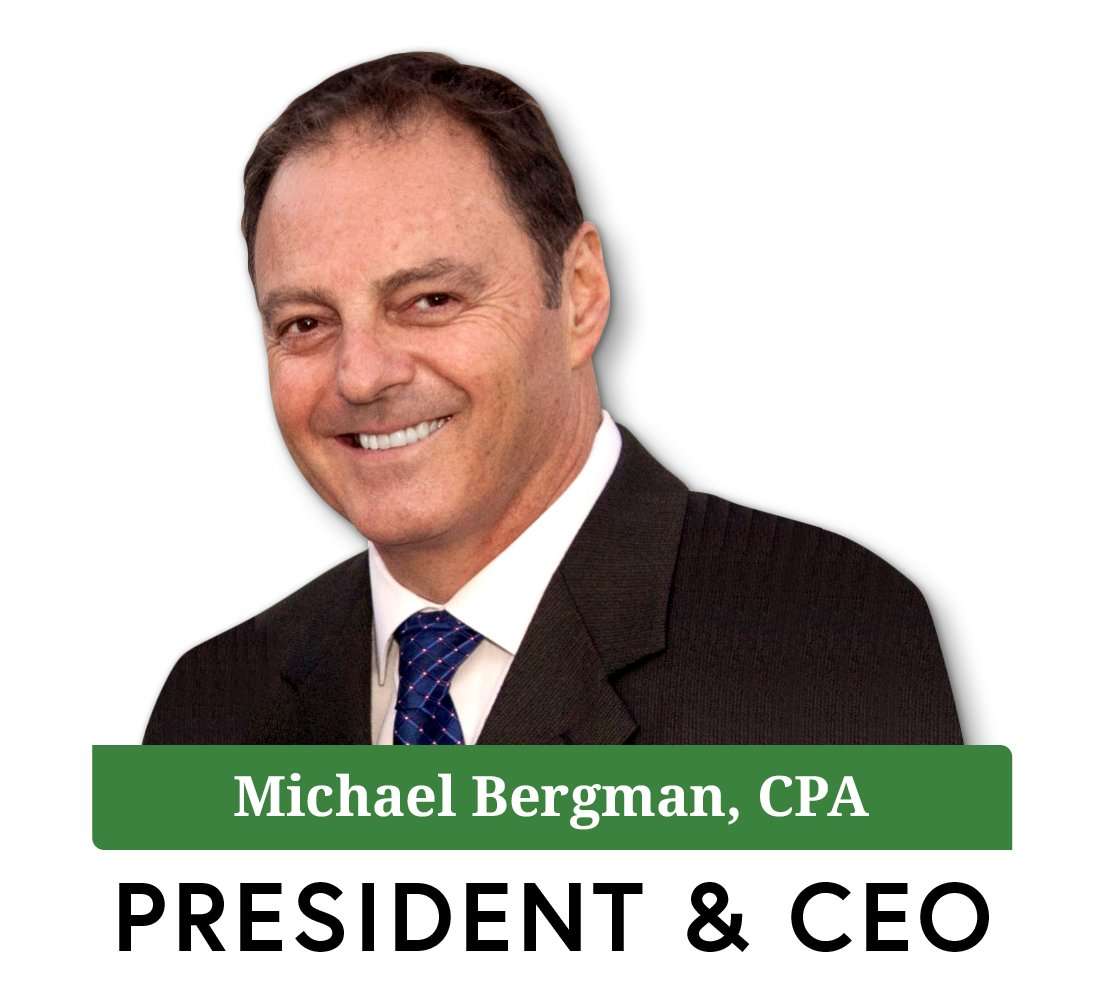
Michael Bergman, CPA
Michael Bergman is a California licensed CPA and Real Estate Broker with over 35+ years of CPA-supervised 1031 exchange experience in commercial real estate. Specializing in 1031 tax-deferred exchanges and financial oversight, his expertise covers complex real estate transactions. Michael’s unique blend of financial acumen and real estate knowledge positions him as a trusted advisor in the industry, offering sound advice and strategic insights for successful property management and investment.
Read more →

